“Thousands of feet above sea level, where towering peaks scrape the sky and harsh winters test every living organism, a mysterious black resin slowly emerges from cracks in ancient mountain rocks. For centuries, Shilajit have been treasured in traditional Ayurvedic medicine. Today, it has become one of the fastest-growing supplements in North America, attracting athletes, busy professionals, and healthy-ageing enthusiasts alike. But what exactly are Shilajit Benefits, and why has it captured the attention of both ancient healers and modern scientists?”

Part 1: From Mountain Rocks to Modern Supplements—The Extraordinary Journey of Nature’s Mineral-Rich Resin
Welcome to the fascinating world of Shilajit Benefits—a natural substance unlike almost anything else in the supplement industry.
A Substance Unlike Any Other
Most supplements begin their story in a field, a forest, or a farm.
Ashwagandha comes from roots.
Turmeric grows underground as a rhizome.
Amla develops as a fruit.
Shilajit follows none of these paths.
It isn’t a herb.
It isn’t a fruit.
It isn’t a mushroom.
Instead, Shilajit is a naturally occurring mineral-rich resin that slowly forms in mountainous regions over hundreds to thousands of years. During warm seasons, this dark, sticky substance seeps from cracks in rocks, where it has long been collected for traditional use.
This unusual origin is one reason Shilajit continues to fascinate researchers and consumers alike.
Nature’s Slowest Creation
Imagine standing in the Himalayas thousands of years ago.
Tiny alpine plants grow during the short summer season.
Microorganisms live among rocks and soil.
As seasons pass, plant material gradually decomposes under pressure, changing through natural biological and geological processes.
Year after year.
Century after century.
Eventually, this transformation gives rise to the dark resin known as Shilajit.
While scientists continue to study its exact formation, they agree that it is the result of an exceptionally long natural process—one that cannot be quickly recreated in a laboratory.
Why Is It Called “Shilajit”?
The name comes from Sanskrit.
Many scholars translate Shilajit as “conqueror of mountains” or “destroyer of weakness.”
Whether taken literally or symbolically, the name reflects how highly this substance has been regarded in traditional Ayurvedic literature.
Ancient Ayurvedic texts describe Shilajit as a Rasayana, a class of substances traditionally associated with vitality, rejuvenation, and healthy ageing.
Today, researchers investigate these traditional claims using modern scientific methods to better understand Shilajit’s composition and potential biological effects.
The Mountains That Produce Shilajit
Although the Himalayas are the best-known source, Shilajit has also been reported in other high-altitude mountain ranges, including:
- The Himalayas
- The Altai Mountains
- The Caucasus
- The Tibetan Plateau
- Parts of the Andes
However, most commercial products marketed internationally are sourced from Himalayan regions.
This popularity has also created a challenge:
Not every product labeled “Himalayan Shilajit” is necessarily authentic or of high quality.
We’ll discuss how to identify trustworthy products later.
What Makes Shilajit Different?
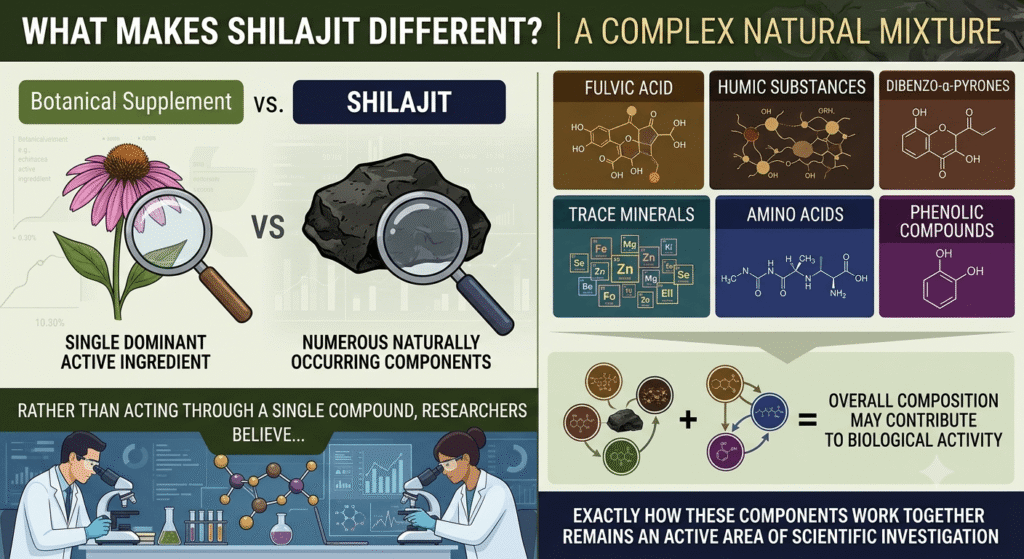 Unlike botanical supplements that contain one dominant active ingredient, Shilajit is a complex natural mixture.
Scientists have identified numerous naturally occurring components, including:
- Fulvic acid
- Humic substances
- Dibenzo-α-pyrones
- Trace minerals
- Amino acids
- Phenolic compounds
Rather than acting through a single compound, researchers believe the overall composition may contribute to Shilajit’s biological activity.
Exactly how these components work together remains an active area of scientific investigation.
The Compound Everyone Talks About: Fulvic Acid
If you’ve ever looked at a bottle of Shilajit, you’ve probably seen “Fulvic Acid” highlighted on the label.
But what is it?
Fulvic acid is a naturally occurring organic compound formed during the gradual decomposition of plant matter.
Researchers are interested in fulvic acid because of its unique chemical properties and its potential role in transporting minerals and interacting with biological systems.
However, it’s important to understand that Shilajit Benefits are much more than Fulvic acid alone.
Its overall composition—not one isolated ingredient—is what scientists continue to study.
From Ancient Ayurveda to Modern Laboratories
For centuries, Shilajit was valued based on traditional knowledge and observation.
Today, researchers analyze it using advanced scientific techniques.
Modern laboratories investigate:
- Mineral composition
- Fulvic acid concentration
- Purity
- Heavy metal contamination
- Biological activity
- Standardization methods
This scientific approach helps manufacturers improve quality control while allowing researchers to evaluate Shilajit Benefits in controlled clinical studies.
Why Has Shilajit Benefits Become So Popular?
 Only a decade ago, Shilajit Benefits was relatively unknown outside Ayurvedic communities.
Today, it’s featured in podcasts, fitness videos, supplement stores, and wellness discussions.
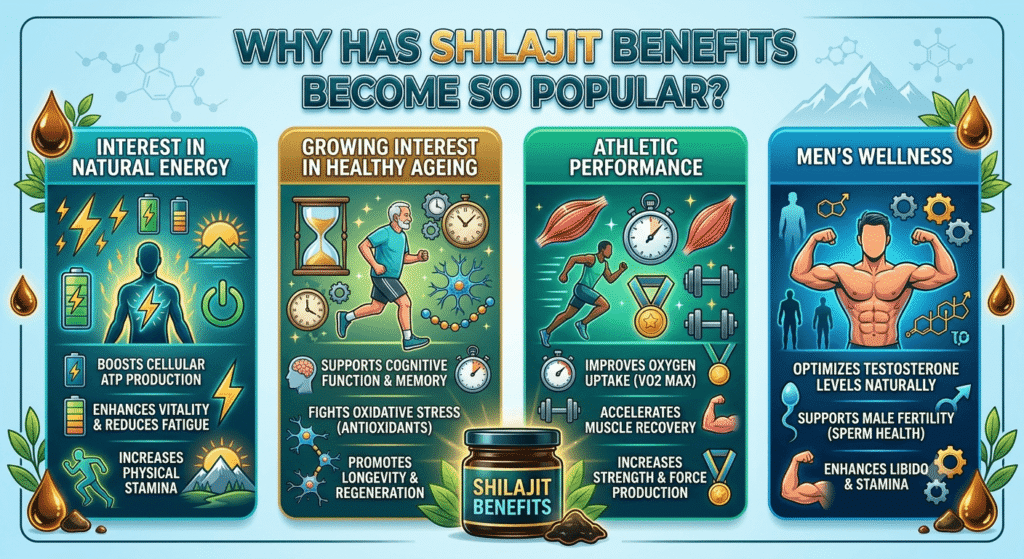
Several factors have contributed to its growing popularity:
Interest in Natural Energy
Many consumers are looking for alternatives to excessive caffeine and sugary energy drinks.
Shilajit Benefits has attracted attention because researchers are exploring its potential role in supporting normal cellular energy production.
Growing Interest in Healthy Ageing
As people live longer, interest has shifted from simply increasing lifespan to maintaining health and vitality.
Traditional Ayurvedic use, combined with emerging scientific research, has made Shilajit a subject of interest in this field.
Athletic Performance
Recreational athletes and fitness enthusiasts are increasingly exploring adaptogenic herbs and mineral-rich supplements as part of their training routines.
Although research is still evolving, Shilajit has become one of the ingredients frequently discussed in sports nutrition.
Men’s Wellness
Search trends show increasing interest in topics such as:
- Energy
- Vitality
- Physical performance
- Healthy testosterone levels
- Fertility
While some early studies are promising, it’s important to separate scientific evidence from exaggerated marketing claims.
We’ll examine the evidence objectively later.
Ancient Wisdom Meets Modern Curiosity
One of the most interesting aspects of Shilajit is how it bridges two worlds.
Traditional Ayurveda valued it for centuries based on observation and experience.
Modern science approaches it differently—asking measurable questions, conducting clinical trials, and evaluating results through peer-reviewed research.
These perspectives don’t always provide identical answers, but together they create a richer understanding of this remarkable natural substance.
Not All Shilajit Is Created Equal
As demand has increased, so has the number of products on the market.
Some contain purified resin.
Others are powders, capsules, or gummies.
Some are carefully tested for contaminants.
Others provide little information about sourcing or quality.
For consumers, choosing the right product has become just as important as deciding whether to use Shilajit at all.
Learning how to distinguish authentic, well-manufactured products from poor-quality alternatives can make a significant difference.
The Journey Has Only Just Begun
We’ve climbed into the world’s highest mountains and uncovered the remarkable origin of one of Ayurveda’s most intriguing natural substances.
But the biggest question still lies ahead.
How does Shilajit interact with the human body, and what does modern scientific research actually say about its potential benefits?
In the next chapter, we’ll leave the mountains behind and travel inside your cells—exploring mitochondria, energy production, physical performance, cognitive health, male reproductive wellness, and the latest clinical studies that are shaping our understanding of Shilajit Benefits.
Part 2: Inside Your Cells – How Scientists Think Shilajit Supports Energy, Strength & Vitality
 In Part 1, we climbed into the Himalayas to discover where Shilajit comes from and why it has fascinated Ayurvedic practitioners for centuries.
Now, it’s time for a different journey.
This time, we’re not exploring mountain peaks—we’re traveling inside your body.
Deep within nearly every cell lies a microscopic structure that determines how energetic, strong, and resilient you feel each day.
Scientists call them mitochondria.
They’re often referred to as the powerhouses of the cell, and for good reason.
Understanding mitochondria may be the key to understanding why Shilajit has become one of the most researched natural supplements for energy and vitality.
Meet Your Body’s Energy Factories
Every heartbeat.
Every breath.
Every step.
Every thought.
All of these activities require energy.
Your body produces this energy in the form of a molecule called ATP (adenosine triphosphate).
ATP is generated primarily inside mitochondria.
Imagine each cell in your body containing tiny rechargeable power stations, working around the clock to convert nutrients from food into usable energy.
When this process runs efficiently, you generally feel energetic and capable.
When it doesn’t, fatigue may become more noticeable.
Where Does Shilajit Benefits Fit In?
Unlike caffeine, which stimulates the nervous system and provides a temporary boost, researchers believe Shilajit may work differently.
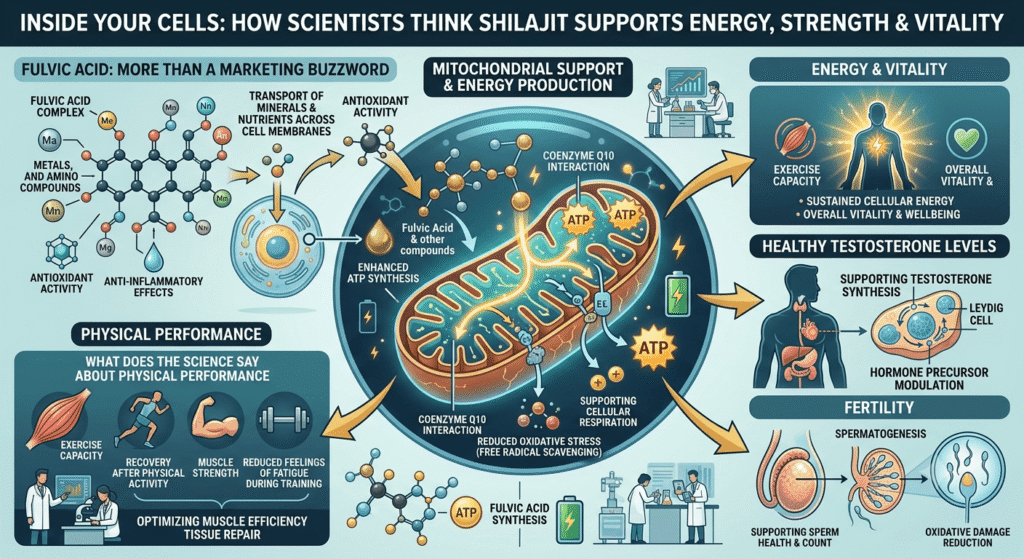
Scientists are investigating whether compounds naturally present in purified Shilajit—particularly fulvic acid and dibenzo-α-pyrones—may help support normal mitochondrial function and cellular energy production.
It’s important to emphasize that research is still developing.
While several studies are promising, Shilajit should not be viewed as an instant energy booster or replacement for healthy sleep, nutrition, and physical activity.
Fulvic Acid: More Than a Marketing Buzzword
If you compare different Shilajit products, you’ll notice many advertise their fulvic acid content.
Why?
Fulvic acid is a naturally occurring organic compound formed during the decomposition of plant material over long periods.
Researchers are interested in fulvic acid because it may:
- Help transport certain minerals
- Participate in antioxidant activity
- Interact with cellular processes
- Support nutrient availability
However, Shilajit is not simply “fulvic acid in a bottle.”
Its naturally occurring compounds appear to work together, making the complete resin more complex than any single isolated ingredient.
Energy Without the “Crash”
Many people reach for coffee or energy drinks when they feel tired.
These products often work by stimulating the central nervous system.
The result?
A quick burst of alertness, followed by a potential energy crash.
Shilajit is different.
Researchers are exploring whether Shilajit Benefits may support the body’s natural energy production at the cellular level rather than acting as a stimulant.
This distinction explains why many users describe Shilajit as promoting steady vitality rather than sudden bursts of energy.
Keep in mind that personal experiences vary, and more high-quality clinical research is needed.
What Does the Science Say About Physical Performance?
One reason athletes and fitness enthusiasts have become interested in Shilajit Benefits is its potential role in exercise performance.
Several small clinical studies suggest purified Shilajit may support:
- Exercise capacity
- Recovery after physical activity
- Muscle strength
- Reduced feelings of fatigue during training
Researchers believe these effects may be linked to cellular energy production and antioxidant activity.
However, study sizes remain relatively small, so larger trials are still needed before drawing firm conclusions.
Healthy Ageing: Can Energy Production Be Maintained?
As we age, mitochondrial efficiency naturally changes.
Scientists believe this may contribute to:
- Reduced physical endurance
- Slower recovery
- Lower energy levels
- Age-related fatigue
This has led researchers to investigate whether Shilajit Benefits could help support healthy ageing by maintaining normal cellular function.
While laboratory findings are encouraging, human research is still evolving, and Shilajit should not be promoted as an anti-ageing cure.
Healthy ageing depends on many factors, including nutrition, exercise, sleep, and preventive healthcare.
Shilajit and Cognitive Function
The brain consumes a remarkable amount of energy.
Although it accounts for only a small percentage of body weight, it uses roughly one-fifth of the body’s energy at rest.
Researchers are studying whether Shilajit’s antioxidant properties and potential effects on cellular energy may support:
- Mental clarity
- Focus
- Memory
- Cognitive performance
Current evidence is preliminary.
More high-quality human studies are needed before recommending Shilajit specifically for brain health.
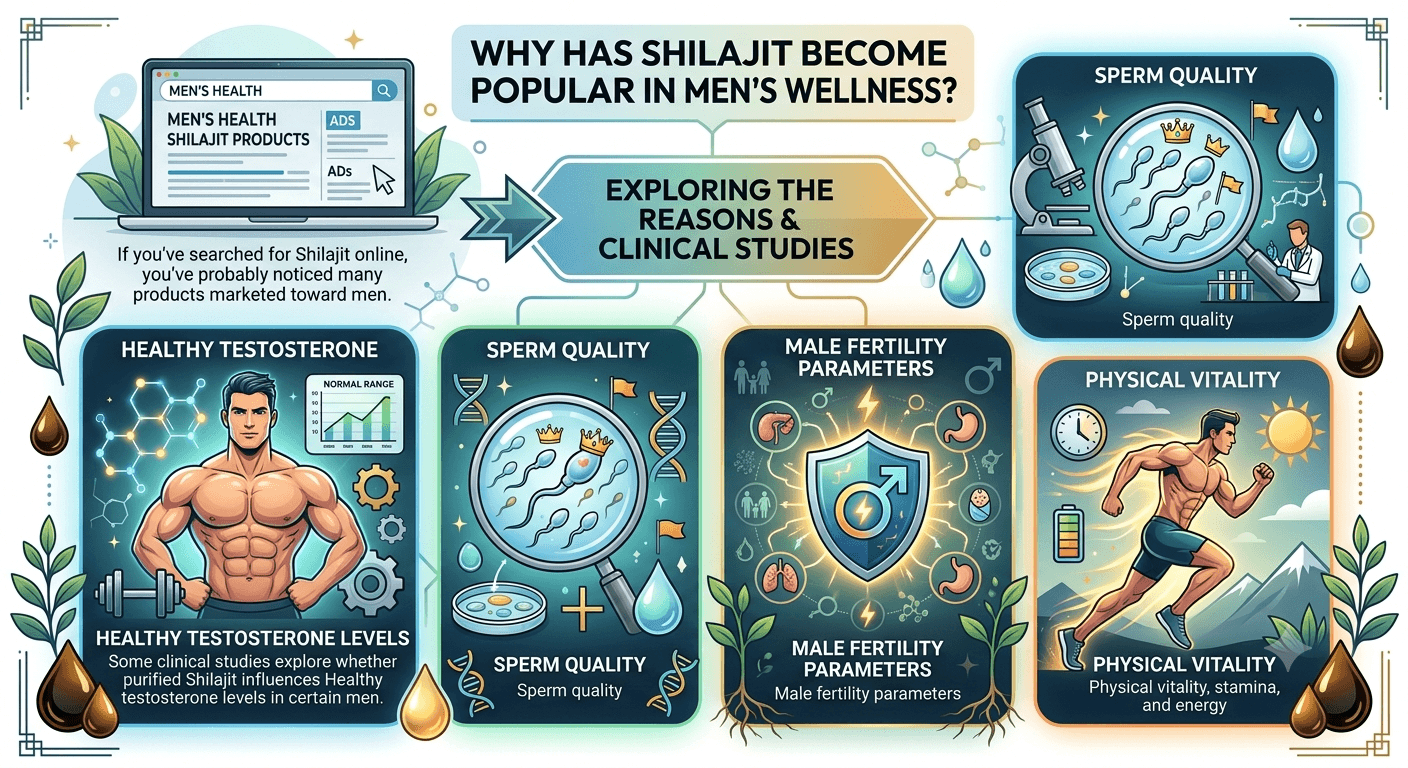
Why Is Shilajit Popular in Men’s Wellness?
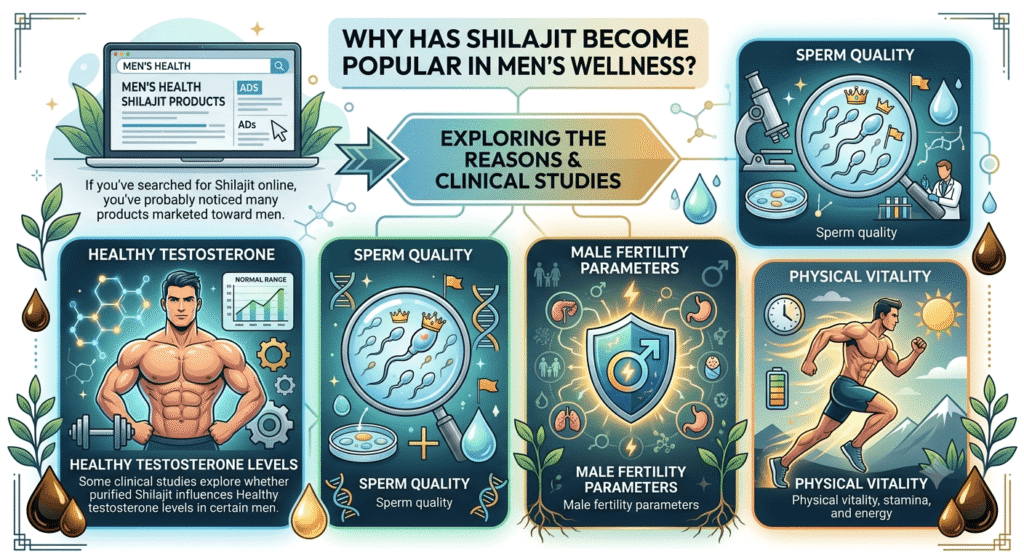 If you’ve searched for Shilajit online, you’ve probably noticed many products marketed toward men.
Why?
Some clinical studies have explored whether purified Shilajit may influence:
- Healthy testosterone levels in certain men
- Sperm quality
- Male fertility parameters
- Physical vitality
Results have been encouraging in some studies, but they are not consistent enough to support broad health claims.
Men experiencing symptoms related to hormones or fertility should seek evaluation from a qualified healthcare professional rather than relying solely on supplements.
Shilajit and Adaptogens
Ashwagandha.
Rhodiola.
Cordyceps.
These ingredients are often described as adaptogens—substances traditionally believed to help the body adapt to physical and mental stress.
Shilajit is frequently discussed alongside adaptogens because of its traditional Ayurvedic use in supporting vitality and resilience.
However, unlike many classic adaptogenic herbs, Shilajit is a mineral-rich natural resin rather than a plant root or leaf.
Its unique composition makes it difficult to compare directly with other adaptogens.
What the Research Doesn’t Say
Marketing sometimes moves faster than science.
You may encounter claims suggesting Shilajit can:
- Cure chronic fatigue
- Dramatically increase testosterone
- Reverse ageing
- Build muscle without exercise
- Treat serious diseases
These claims are not supported by current scientific evidence.
The strongest available research suggests Shilajit may support aspects of energy metabolism and physical performance in some individuals, but it is not a miracle supplement.
Understanding the limits of the evidence helps consumers make informed decisions.
Quality Matters More Than Quantity
One important finding across many studies is that researchers typically use purified and standardized Shilajit extracts.
This matters because raw or poorly processed Shilajit may contain unwanted contaminants such as heavy metals or microbial impurities.
In other words, the quality of the supplement may be just as important as the ingredient itself.
We’ll explore how to identify trustworthy products in the next chapter.
Science Continues to Evolve
Researchers around the world continue studying Shilajit Benefits to answer important questions, including:
- Which compounds contribute most to its biological activity?
- What are the ideal serving sizes?
- Which populations benefit the most?
- What are the long-term safety outcomes?
- How do different extraction and purification methods affect quality?
As new evidence emerges, recommendations may continue to evolve.
That is why relying on transparent, evidence-based information is so important.
What We’ve Learned So Far
Our journey has taken us from the mountains of the Himalayas to the microscopic powerhouses inside your cells.
While modern science doesn’t support every claim made about Shilajit Benefits, it does suggest that this remarkable natural resin has characteristics worthy of continued research—particularly in areas related to cellular energy, physical performance, and healthy aging.
The key is separating scientific evidence from marketing hype.
Part 3: The Buyer’s Guide – How to Choose Authentic Shilajit and Avoid Costly Mistakes
By now, you’ve learned two important things about Shilajit.
First, it isn’t a herb in the traditional sense—it’s a naturally occurring mineral-rich resin formed over centuries in high-altitude mountain regions.
Second, while scientific research is promising, the benefits reported in clinical studies are based on purified, standardized Shilajit, not just any product sold online.
Now comes the question every informed consumer eventually asks:
“How do I know if the Shilajit I’m buying is genuine?”
With hundreds of products available on Amazon, health stores, and supplement websites, choosing the right one can be confusing.
Some products claim to be “100% Pure Himalayan Shilajit.”
Others advertise “80% Fulvic Acid.”
Some are sold as resin, while others come as capsules, powders, or gummies.
Let’s separate marketing from meaningful quality indicators.
Why Quality Matters More Than Ever
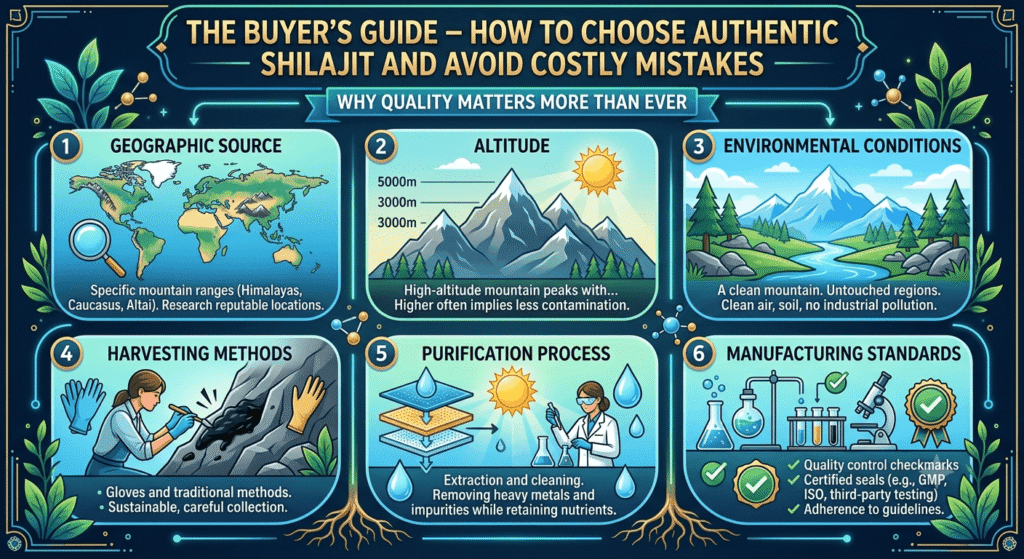 Unlike many herbal supplements, Shilajit is collected from natural mountain environments.
That means its composition can vary depending on:
- Geographic source
- Altitude
- Environmental conditions
- Harvesting methods
- Purification process
- Manufacturing standards
Poor-quality products may contain unwanted contaminants or fail to provide the composition expected from authentic Shilajit Benefits.
Quality isn’t just about effectiveness—it’s about safety.
The Different Forms of Shilajit
One of the first choices you’ll make is deciding which form fits your lifestyle.
Each has advantages and disadvantages.
- Shilajit Resin
This is considered the closest form to purified traditional Shilajit.
The thick, dark resin is usually dissolved in warm water, milk, or herbal tea before consumption.
Best For
- Experienced users
- Those seeking minimal processing
- Consumers who value traditional preparation
Pros
- Less processed
- Flexible serving size
- Often regarded as the premium option
Cons
- Strong earthy taste
- Less convenient for travel
- Requires measuring each serving
-
Shilajit Capsules
Capsules are the most popular option for busy lifestyles.
Each capsule contains a standardized amount of purified Shilajit extract.
Best For
- Daily supplementation
- Frequent travelers
- People who dislike the taste of resin
Pros
- Convenient
- Consistent serving sizes
- Easy storage
Cons
- Quality depends entirely on the extract used
- Less flexibility in adjusting servings
-
Shilajit Powder
Some manufacturers produce powdered Shilajit for mixing into drinks or smoothies.
Best For
- Homemade wellness beverages
- Smoothies
- Consumers who prefer powdered supplements
Quality varies considerably, so choose brands that provide clear sourcing and testing information.
-
Gummies
Gummies have become increasingly popular because they’re easy to consume.
However, they often contain:
- Added sugars
- Flavorings
- Coloring agents
- Lower amounts of Shilajit per serving
They’re convenient, but serious supplement users often prefer resin or capsules.
What Does “Purified Shilajit” Mean?
Raw Shilajit collected from rocks isn’t ready for consumption.
It may naturally contain:
- Sand
- Soil particles
- Plant debris
- Microorganisms
- Heavy metals
Purification removes unwanted materials while preserving the naturally occurring beneficial compounds.
This step is one of the most important quality indicators.
If a manufacturer doesn’t explain its purification process, consider that a warning sign.
Heavy Metal Testing: A Non-Negotiable Feature
Because Shilajit originates from mountain rocks, testing for contaminants is essential.
Look for companies that perform third-party laboratory testing for:
- Lead
- Arsenic
- Mercury
- Cadmium
- Microbial contamination
Reputable brands are often willing to share Certificates of Analysis (COAs) or summaries of their testing practices.
Transparency builds trust.
Fulvic Acid Percentage: Bigger Isn’t Always Better
Many labels prominently advertise their fulvic acid percentage.
Examples include:
- 20%
- 40%
- 60%
- 70%
It might seem logical to assume that the highest number is always the best.
In reality, it’s more complicated.
Fulvic acid is important, but it isn’t the only valuable component in Shilajit.
A balanced, well-purified product with transparent testing is generally a better choice than one making extreme marketing claims based solely on a single percentage.
Beware of “Miracle” Claims
The popularity of Shilajit Benefits has led to aggressive advertising.
Be cautious of products claiming to:
- Double testosterone naturally
- Replace exercise
- Cure chronic fatigue
- Reverse ageing overnight
- Eliminate all stress
- Build muscle without training
No high-quality clinical evidence supports these kinds of promises.
Trust companies that discuss quality, sourcing, and testing—not miracle outcomes.
How to Read a Shilajit Label Like an Expert
When comparing products, look beyond the front of the package.
Check whether the label includes:
Source
Does it specify where the Shilajit comes from?
Examples:
- Himalayan region
- Altai Mountains
Clear sourcing information adds credibility.
Purification
Look for statements such as:
- Purified Shilajit
- Standardized extract
- Heavy metal tested
- Laboratory verified
Standardization
Some manufacturers standardize their extracts based on naturally occurring compounds such as fulvic acid.
Consistency is generally more important than unusually high numbers.
Third-Party Testing
Independent testing is one of the strongest indicators of product quality and Shilajit Benefits.
Brands that voluntarily verify their products through accredited laboratories demonstrate greater transparency.
Five Signs of a High-Quality Shilajit Supplement
Use this quick checklist before purchasing.
✅ Clearly identifies the geographic source
✅ Uses purified Shilajit
✅ Provides third-party testing
✅ Manufactured in GMP-certified facilities
✅ Offers transparent ingredient information without exaggerated claims
If several of these are missing, it’s worth exploring other options.
Common Buying Mistakes
Consumers frequently make avoidable errors.
Mistake #1: Choosing the Cheapest Product
Authentic Shilajit requires careful collection, purification, testing, and manufacturing.
Extremely low prices may indicate lower-quality ingredients or inadequate quality control.
Mistake #2: Ignoring Laboratory Testing
Testing protects consumers.
A product without quality verification leaves too many unanswered questions.
Mistake #3: Believing Social Media Before Science
Short videos often highlight dramatic personal experiences.
While testimonials can be interesting, they don’t replace controlled clinical research.
Use personal stories as inspiration—not evidence.
Mistake #4: Assuming More Is Better
Higher serving sizes don’t necessarily produce better results.
Following the manufacturer’s recommended serving size is generally the safest approach unless otherwise advised by a healthcare professional.
Which Form Is Right for You?
| Your Goal | Recommended Form |
| Traditional experience | Purified resin |
| Daily convenience | Capsules |
| Smoothies & drinks | Powder |
| Occasional use | Gummies (from reputable brands) |
The “best” product isn’t always the most expensive—it’s the one that combines quality, transparency, and consistency.
A Smart Consumer Thinks Beyond the Label
Before purchasing any supplement, ask:
- Does the company explain where the Shilajit is sourced?
- Is purification clearly described?
- Are third-party testing results available?
- Are the health claims realistic?
- Is customer support transparent about product quality?
Companies that openly answer these questions often inspire greater confidence.
Remember: Supplements Support Healthy Habits—They Don’t Replace Them
Even the highest-quality Shilajit cannot replace:
- Nutritious eating
- Strength training
- Regular physical activity
- Restorative sleep
- Stress management
- Proper hydration
The best results come from combining supplements with healthy daily habits.
Part 4 (Final): Safe Use, Smart Supplementation & The Final Verdict
 We’ve traveled from the rugged Himalayan mountains to the microscopic powerhouses inside your cells.
Along the way, we discovered that Shilajit is far more than a wellness trend. It’s a unique natural resin with centuries of traditional use and a growing body of scientific research exploring its role in energy metabolism, healthy aging, and physical vitality.
But before adding any supplement to your daily routine, one final question deserves careful attention:
Is Shilajit safe, and who should use it?
Let’s separate evidence-based guidance from internet myths.
Is Shilajit Safe?
When purified and manufactured according to quality standards, Shilajit is generally well tolerated by healthy adults when used in the recommended amounts for short periods in clinical studies.
However, safety depends on what you’re actually buying.
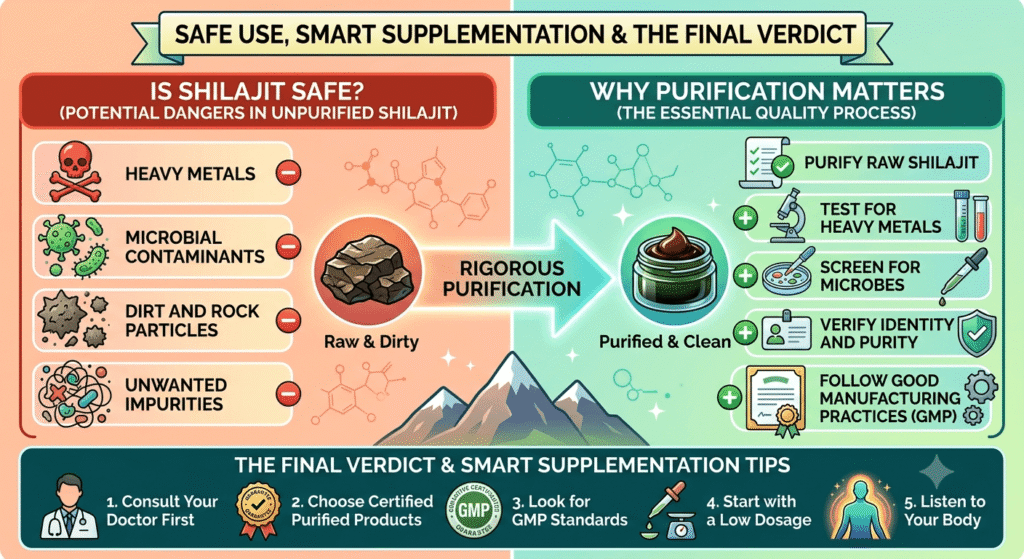
Raw or poorly processed Shilajit may contain:
- Heavy metals
- Microbial contaminants
- Dirt and rock particles
- Unwanted impurities
This is why choosing a purified, laboratory-tested product is just as important as choosing Shilajit itself.
Why Purification Matters
Unlike herbs that are harvested from farms, Shilajit naturally emerges from mountain rocks.
Without proper purification, contaminants may remain in the final product, which leads to lower Shilajit Benefits.
Reputable manufacturers typically:
- Purify raw Shilajit
- Test for heavy metals
- Screen for microbes
- Verify identity and purity
- Follow Good Manufacturing Practices (GMP)
A low price should never outweigh product quality.
Possible Side Effects
Most people tolerate purified Shilajit well.
However, some individuals may experience mild side effects, especially when first starting supplementation.
Possible effects include:
- Mild digestive discomfort
- Nausea
- Headache
- Dizziness
- Allergic reactions (rare)
If symptoms persist, discontinue use and consult a healthcare professional.
Who Should Avoid Shilajit?
Although Shilajit is natural, “natural” does not always mean Shilajit Benefits suitable for everyone.
Avoid or seek medical advice before using Shilajit if you:
- Are pregnant or breastfeeding
- Are under 18 years of age
- Have gout or elevated uric acid levels
- Have hemochromatosis (iron overload)
- Have chronic kidney disease
- Have severe liver disease
- Have active autoimmune conditions unless advised by your physician
Every person’s medical history is unique, making individualized advice essential.
Medication Interactions
Current research on Shilajit-drug interactions is limited.
However, because Shilajit may influence certain physiological processes, speak with your healthcare provider if you take:
Diabetes Medications
Some early studies suggest Shilajit may influence blood glucose regulation.
Individuals using diabetes medications should monitor blood sugar carefully and seek medical guidance before supplementation.
Blood Pressure Medications
Since Shilajit may influence cardiovascular function in some individuals, caution is appropriate when combined with medications used to manage blood pressure.
Iron Supplements
Shilajit naturally contains trace minerals, including iron.
People with iron overload disorders should avoid unnecessary iron intake.
Other Prescription Medicines
If you regularly take prescription medications, discuss Shilajit with your healthcare provider before beginning supplementation.
Can Women Take Shilajit?
Absolutely.
Although Shilajit Benefits are often marketed toward men, there is nothing inherently “male” about the ingredient itself.
Research into Shilajit Benefits has included both men and women in some studies.
Women interested in supporting general wellness or healthy ageing should select high-quality products and consult a healthcare provider if pregnant, breastfeeding, or managing chronic medical conditions.
Is Shilajit Only for Athletes?
Not at all.
While athletes appreciate its potential role in supporting exercise performance, Shilajit is also used by people interested in:
- Daily vitality
- Healthy aging
- General wellness
- Cognitive performance
- Active lifestyles
Its popularity extends well beyond the fitness community.
Can You Take Shilajit Every Day?
Many commercially available supplements are designed for daily use.
However, the appropriate duration depends on:
- The product formulation
- Individual health status
- Serving size
- Healthcare guidance
Current human research primarily examines short-term use, so more studies are needed to fully understand long-term safety.
Following the manufacturer’s instructions is generally the safest approach.
Frequently Asked Questions
Q1. Is Shilajit a herb?
No.
Unlike Ashwagandha or Turmeric, Shilajit is a naturally occurring mineral-rich resin formed over long periods through geological and biological processes.
Q2. What does Shilajit taste like?
Most people describe purified Shilajit resin as:
- Earthy
- Smoky
- Slightly bitter
- Mineral-like
Capsules eliminate the taste completely.
Q3. Resin or capsules—which is better?
Neither is universally better.
Resin offers a traditional experience with minimal processing.
Capsules provide convenience and consistent serving sizes.
Choose the format that best fits your lifestyle while prioritizing quality and third-party testing.
Q4. Does Shilajit increase energy immediately?
Unlike caffeine, Shilajit is not considered a stimulant.
Research suggests it may support normal cellular energy production over time, but it should not be expected to produce an immediate “boost.”
Q5. Can vegetarians and vegans use Shilajit?
Shilajit itself is naturally occurring and not animal-derived.
However, check capsule ingredients, as some products use gelatin instead of plant-based capsules.
Q6. How should Shilajit be stored?
Keep it in a cool, dry place away from direct sunlight.
Always follow the storage instructions provided by the manufacturer.
Building Energy Beyond Supplements
One of the biggest misconceptions in the wellness industry is believing that one supplement can replace healthy habits.
Real, sustainable energy comes from the combination of:
- Nutritious food
- Regular physical activity
- Quality sleep
- Stress management
- Proper hydration
- Healthy body weight
- Consistent daily routines
Shilajit Benefits may complement these habits—but it cannot replace them.
Think of it as one tool in a much larger toolbox for long-term vitality.
Consumer Checklist Before You Buy
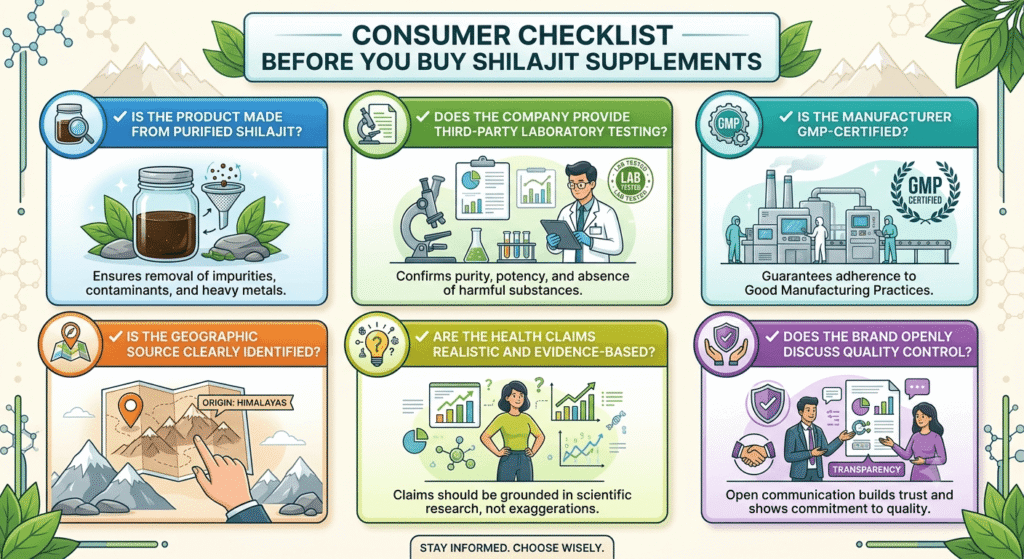 Before purchasing any Shilajit supplement, ask yourself:
✔ Is the product made from purified Shilajit?
✔ Does the company provide third-party laboratory testing?
✔ Is the geographic source clearly identified?
✔ Is the manufacturer GMP-certified?
✔ Are the health claims realistic and evidence-based?
✔ Does the brand openly discuss quality control?
If you can confidently answer “yes” to these questions, you’re far more likely to choose a trustworthy product.
Final Verdict: Is Shilajit Worth Considering?
Shilajit has earned its reputation as one of Ayurveda’s most fascinating natural substances.
Shilajit Benefits like unique formation, rich mineral profile, and naturally occurring compounds have inspired centuries of traditional use and increasing scientific interest.
Current research suggests that purified Shilajit may support normal energy metabolism, physical performance, healthy aging, and overall vitality in some individuals, particularly when combined with healthy lifestyle habits. However, the evidence is still evolving, and larger, long-term clinical studies are needed to confirm many proposed benefits.
If you choose to use Shilajit:
- Select a purified, third-party tested product.
- Follow the recommended serving size.
- Avoid products with unrealistic health claims.
- Speak with your healthcare provider if you have medical conditions or take prescription medications.
The goal isn’t to find a “magic supplement.”
The goal is to make informed choices that support long-term health.
Shilajit may become part of that journey—but it works best alongside balanced nutrition, regular movement, restorative sleep, and evidence-based healthcare.
Medical Disclaimer
This article is intended for educational and informational purposes only and should not be considered medical advice. Shilajit is a dietary supplement, not a medicine, and it is not intended to diagnose, treat, cure, or prevent any disease. Scientific research is ongoing, and individual responses may vary. Always consult a qualified healthcare professional before starting any new supplement, especially if you are pregnant, breastfeeding, have kidney disease, iron overload disorders, diabetes, cardiovascular conditions, or take prescription medications.
6 thoughts on “Shilajit Benefits: Science, Uses, Safety & How to Choose the Best Supplement”