Before you read another article about supplements, pause for a moment and think about your heart.
Not as a symbol of love.
Not as the shape on a greeting card.
But as the remarkable organ quietly keeping you alive every second of every day.
While you read this sentence, your heart has already beaten several times.
By the time you finish this paragraph, it will have pumped liters of blood throughout your body.
Unlike your muscles, it never gets a day off.
Unlike your brain, it never truly sleeps.
From before you’re born until your final breath, your heart works continuously.
It’s no wonder that ancient civilizations considered the heart the center of life itself.
Long before blood pressure monitors, cholesterol tests, or ECG machines existed, Ayurvedic physicians recognized that maintaining heart health was essential for a long and active life.
Among the many medicinal plants they documented, one tree stood apart.
Its bark became known as one of Ayurveda’s most respected herbs for supporting the cardiovascular system.
That tree is Arjuna (Terminalia arjuna). Arjuna for Heart Health.

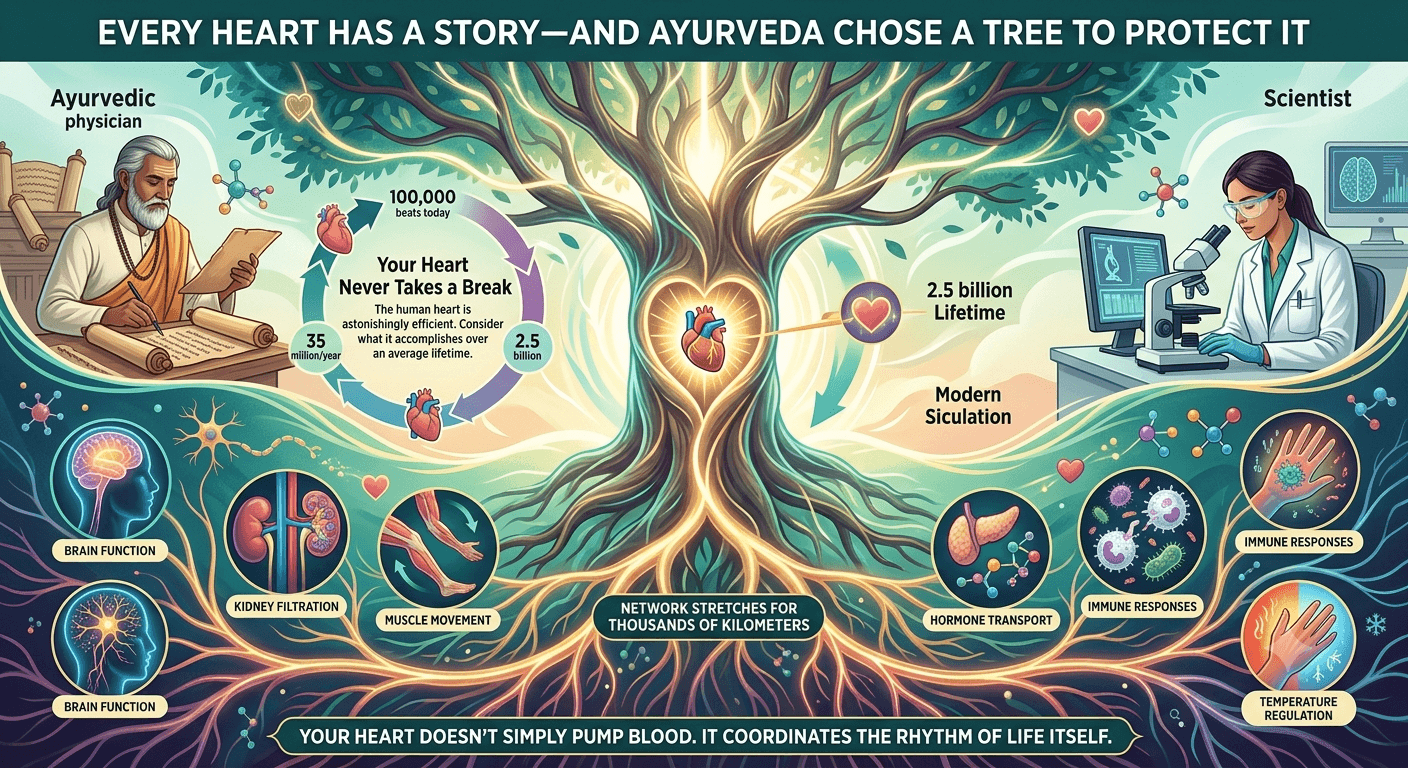
Part 1: Every Heart Has a Story—And Ayurveda Chose a Tree to Protect It
Today, after centuries of traditional use, researchers around the world are studying this remarkable tree to understand whether modern science can explain its enduring reputation.
Your Heart Never Takes a Break
The human heart is astonishingly efficient.
Consider what it accomplishes over an average lifetime.
- Around 100,000 heartbeats every day
- Approximately 35 million beats every year
- More than 2.5 billion beats over a lifetime
With every beat, it pumps oxygen-rich blood through an intricate network of arteries, veins, and capillaries.
Those blood vessels stretch for thousands of kilometers if laid end to end.
Together, they deliver oxygen and nutrients to nearly every cell in your body.
This constant circulation supports:
- Brain function
- Kidney filtration
- Muscle movement
- Hormone transport
- Immune responses
- Temperature regulation
Your heart doesn’t simply pump blood.
It coordinates the rhythm of life itself.
Why Modern Hearts Face New Challenges
Although the human heart hasn’t changed dramatically over thousands of years, our lifestyles certainly have.
Many people now spend long hours:
- Sitting at desks.
- Looking at screens.
- Managing chronic stress.
- Sleeping less than recommended.
- Eating highly processed foods.
- Exercising less frequently.
These factors can influence cardiovascular health over time.
Researchers continue studying how lifestyle choices interact with genetics, aging, inflammation, blood pressure, cholesterol, and metabolic health.
This growing interest has also renewed attention toward traditional herbs that have historically been associated with heart wellness—including Arjuna for Heart Health.
Meet the Tree Behind the Tradition
Arjuna for Heart Health comes from Terminalia arjuna, a large deciduous tree native to the Indian subcontinent.
It commonly grows near riverbanks, where it can reach heights of more than 20 meters.
Its smooth, pale bark gradually peels away in thin layers.
Unlike many medicinal plants that use leaves, flowers, or roots, Ayurveda traditionally values the inner bark of the Arjuna tree.
Today, this bark is commonly available as:
- Powder
- Capsules
- Tablets
- Standardized extracts
- Herbal formulations
Although modern packaging may look different, the botanical source remains the same.
Why Is It Called “Arjuna”?
The name isn’t accidental.
It carries deep cultural significance.
In the Indian epic Mahabharata, Arjuna is one of the greatest warriors.
He is remembered for qualities such as:
- Courage
- Precision
- Discipline
- Steadiness under pressure
Ancient Ayurvedic scholars believed the tree reflected similar characteristics.
Its strong trunk and resilient nature became symbols of endurance and protection.
Over time, the bark earned a respected place in Ayurvedic medicine, particularly in texts discussing cardiovascular wellness.
While the story is symbolic rather than scientific, it illustrates how closely nature and healing were connected in traditional medicine.
A Heart Tree Before Cardiology Existed
Imagine living two thousand years ago.
There are no:
- Stethoscopes
- Blood pressure cuffs
- Cholesterol tests
- Echocardiograms
Yet physicians still observed patterns.
They noticed that certain herbs appeared repeatedly in traditional formulations intended to support circulation and overall heart health.
Arjuna for Heart Health became one of the most prominent examples.
Importantly, ancient practitioners weren’t measuring LDL cholesterol or arterial stiffness.
They were documenting observations based on generations of clinical experience within the Ayurvedic tradition.
Today, scientists investigate whether those observations correspond with measurable biological effects.
Four Essential Jobs Your Heart Performs Every Minute
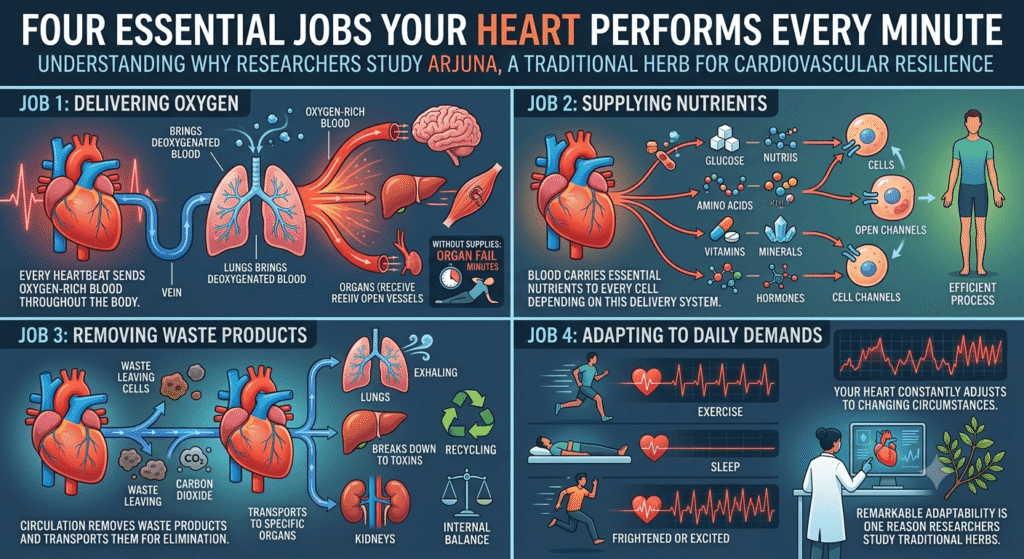 To understand why researchers study Arjuna, it’s helpful to appreciate everything your heart does beyond simply beating.
Job 1: Delivering Oxygen
Every heartbeat sends oxygen-rich blood throughout the body.
Without this constant supply, organs begin to fail within minutes.
Healthy circulation is fundamental to nearly every aspect of health.
Job 2: Supplying Nutrients
Blood carries:
- Glucose
- Amino acids
- Vitamins
- Minerals
- Hormones
Every cell depends on this delivery system.
A healthy cardiovascular system helps ensure those nutrients reach their destination efficiently.
Job 3: Removing Waste Products
Circulation doesn’t only deliver.
It also removes.
Blood transports carbon dioxide and other waste products to organs such as the lungs, liver, and kidneys for elimination.
This continuous recycling process helps maintain internal balance.
Job 4: Adapting to Daily Demands
Your heart constantly adjusts to changing circumstances.
During exercise, it pumps faster.
During sleep, it slows down.
When you’re frightened or excited, it responds almost instantly.
This remarkable adaptability is one reason researchers are interested in herbs traditionally associated with cardiovascular resilience.
From Ancient Observation to Modern Research – Arjuna for Heart Health
For centuries, Arjuna’s reputation rested almost entirely on traditional knowledge.
Modern researchers approach the herb differently.
Rather than asking,
“Has Arjuna been used for a long time?”
they ask questions such as:
- Which compounds are present in the bark?
- How do these compounds interact with cardiovascular tissues?
- Can human clinical trials demonstrate measurable benefits?
- Which traditional claims are supported—and which remain uncertain?
These questions have led to a growing body of scientific research on Terminalia arjuna-Arjuna for Heart Health.
What’s Inside Arjuna Bark?
Researchers have identified numerous naturally occurring compounds in Arjuna bark, including:
- Triterpenoids
- Flavonoids
- Tannins
- Polyphenols
- Glycosides
- Natural antioxidants
Many of these compounds are being investigated because of their biological activity.
However, it’s important to understand an essential principle of nutrition science:
Finding a compound in a plant does not automatically prove that consuming the plant produces a specific health benefit in humans.
Laboratory findings are only the beginning.
Human clinical studies provide the strongest evidence for practical recommendations.
Why the World Is Paying Attention to Arjuna Again
Interest in cardiovascular health has grown rapidly over the past two decades.
People are increasingly looking for ways to support healthy aging through:
- Nutrition
- Physical activity
- Stress management
- Sleep
- Evidence-based supplementation
As a result, researchers have revisited several traditional herbs—including Arjuna for Heart Health—to better understand their potential role alongside modern preventive healthcare.
Some findings are encouraging.
Others remain preliminary.
Separating evidence from enthusiasm is exactly what we’ll do throughout this guide.
The Real Question Isn’t “Is Arjuna Ancient?”
Its history is already well established.
The more important question is:
Can modern science explain why this bark has remained one of Ayurveda’s most respected cardiovascular herbs for centuries?
That’s where the evidence becomes truly interesting.
Part 2: What Does Modern Research Actually Say About Arjuna?
For centuries, Ayurvedic practitioners valued Arjuna Bark because they observed its role in supporting cardiovascular wellness.
Modern science approaches the herb differently.
Instead of relying on historical use, researchers ask:
- Can Arjuna improve measurable heart-health markers?
- Which compounds are biologically active?
- Have benefits been demonstrated in human clinical trials?
- Which claims are supported—and which are exaggerated?
Let’s examine the evidence one claim at a time.
To keep things clear, we’ll use four evidence levels:
- 🟢 Moderate Human Evidence
- 🟡 Limited but Promising
- 🔵 Early or Laboratory Research
- 🔴 Insufficient Evidence
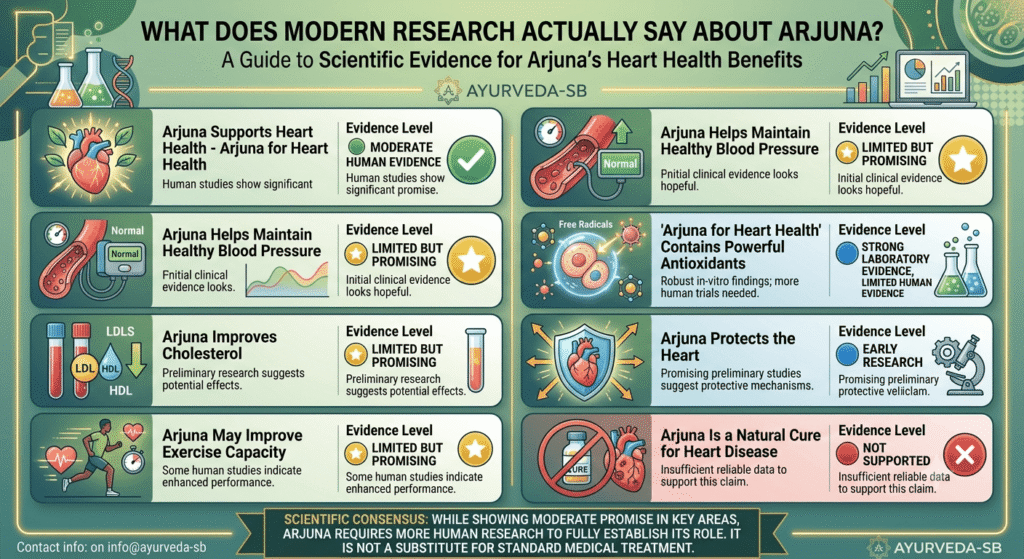
Claim 1: Arjuna Supports Heart Health – Arjuna for Heart Health
Evidence: 🟢 Moderate Human Evidence
This is the area where Arjuna for Heart Health has received the greatest scientific attention.
Several human studies have investigated Terminalia arjuna – Arjuna for Heart Health as a complementary herbal supplement for cardiovascular wellness. Researchers have explored its effects on heart function, exercise tolerance, and overall cardiovascular performance in specific patient groups.
However, it’s important to understand that most studies have involved relatively small numbers of participants, and Arjuna has generally been evaluated alongside standard medical care, not as a replacement.
What this means?
Current evidence suggests Arjuna may have a supportive role in cardiovascular health, but it should never replace prescribed heart medications or medical treatment.
Claim 2: Arjuna Helps Maintain Healthy Blood Pressure
Evidence: 🟡 Limited but Promising
High blood pressure is one of the world’s leading cardiovascular risk factors.
Some preliminary clinical studies suggest Arjuna may contribute to maintaining healthy blood pressure in certain individuals.
Researchers believe this could be related to its antioxidant properties and potential influence on blood vessel function.
However:
- Results vary between studies.
- Sample sizes remain relatively small.
- More large-scale clinical trials are needed.
Practical takeaway
Arjuna for Heart Health should not be viewed as a substitute for blood pressure medication, but ongoing research continues to explore its supportive role.
Claim 3: Arjuna Improves Cholesterol
Evidence: 🟡 Limited but Promising
Another area attracting scientific interest is cholesterol management.
Some studies have reported modest improvements in lipid profiles after Arjuna supplementation.
Researchers have examined effects on:
- Total cholesterol
- LDL (“bad”) cholesterol
- HDL (“good”) cholesterol
- Triglycerides
While these findings are encouraging, they have not been consistent enough to establish Arjuna for Heart Health as a proven cholesterol-lowering supplement.
Practical takeaway
Healthy eating, regular exercise, and medical guidance remain the cornerstones of cholesterol management.
Claim 4: ‘Arjuna for Heart Health’ Contains Powerful Antioxidants
Evidence: 🔵 Strong Laboratory Evidence, Limited Human Evidence
Arjuna Bark naturally contains compounds such as:
- Flavonoids
- Polyphenols
- Triterpenoids
- Tannins
Many of these compounds demonstrate antioxidant activity in laboratory experiments.
Why does this matter?
Oxidative stress occurs when unstable molecules called free radicals outnumber the body’s antioxidant defenses. Over time, oxidative stress is associated with aging and cardiovascular disease.
The challenge is that positive laboratory findings don’t automatically translate into measurable clinical benefits in people.
Practical takeaway
Arjuna for Heart Health is a rich source of plant antioxidants, but more human research is needed to determine how much these effects influence long-term health.
Claim 5: Arjuna May Improve Exercise Capacity
Evidence: 🟡 Limited but Promising
Several studies have investigated whether Arjuna supplementation may help improve exercise tolerance in individuals with certain cardiovascular conditions.
Researchers have measured outcomes such as:
- Walking distance
- Physical endurance
- Exercise capacity
- Fatigue levels
Some improvements have been reported, although the evidence remains preliminary.
Practical takeaway
Healthy physical activity remains the most effective strategy for improving cardiovascular fitness. Supplements should be viewed as complementary, not primary, interventions.
Claim 6: Arjuna Protects the Heart
Evidence: 🔵 Early Research
This is one of the most common marketing claims.
Laboratory and animal studies have explored whether compounds in Arjuna may help protect heart tissue from oxidative stress.
These findings are scientifically interesting, but they do not prove that Arjuna prevents heart disease in humans.
Large, long-term clinical studies would be required before making such claims.
Practical takeaway
Treat phrases such as “heart protection” with caution unless they are supported by robust human evidence.
Claim 7: Arjuna Is a Natural Cure for Heart Disease
Evidence: 🔴 Not Supported
This claim appears on many websites and social media posts.
Current scientific evidence does not support the idea that Arjuna for Heart Health can:
- Cure heart disease
- Replace prescribed medication
- Reverse blocked arteries
- Eliminate cardiovascular risk
Anyone with symptoms such as chest pain, shortness of breath, or irregular heartbeat should seek immediate medical evaluation rather than relying on supplements.
Evidence Snapshot
| Claim | Evidence Level |
| Supports cardiovascular wellness | 🟢 Moderate Human Evidence |
| Helps maintain healthy blood pressure | 🟡 Limited but Promising |
| May improve cholesterol markers | 🟡 Limited but Promising |
| Rich in antioxidants | 🔵 Strong laboratory evidence |
| May improve exercise tolerance | 🟡 Limited but Promising |
| Protects heart tissue | 🔵 Early research |
| Cures heart disease | 🔴 Not supported |
Why Research Results Sometimes Differ
If you’ve read multiple articles on Arjuna for Heart Health, you’ve probably noticed conflicting conclusions.
That’s because not all studies use the same:
- Part of the bark
- Extraction methods
- Dosages
- Study duration
- Participant age
- Existing medical conditions
Some trials use whole bark powder, while others use standardized extracts. These differences make direct comparisons difficult.
This is one reason researchers continue to call for larger, better-designed clinical trials.
Tradition Meets Modern Science
One of the most interesting aspects of ‘Arjuna for Heart Health’ is how traditional knowledge has inspired modern research.
Ayurveda observed that this tree was valuable for cardiovascular wellness long before scientists understood concepts like oxidative stress, endothelial function, or antioxidants.
Today’s research doesn’t confirm every traditional claim—but it does suggest there may be scientific reasons why ‘Arjuna for Heart Health’ has remained an important herb for centuries.
That’s an encouraging place to be: respecting tradition while allowing evidence to guide modern recommendations.
Part 3: How to Choose the Right Arjuna Supplement (Without Falling for Marketing Hype)
By now, you know that Arjuna Bark has a long history in Ayurveda and encouraging—though still evolving—scientific evidence for cardiovascular wellness.
The next question is practical:
If you decide to try Arjuna for Heart Health, how do you choose a quality supplement?
Search online for “Arjuna supplement” and you’ll find dozens of products claiming to be:
- Premium Ayurvedic Formula
- Maximum Heart Support
- Organic Arjuna
- High-Potency Extract
- Clinically Proven
- Doctor Recommended
Some labels are genuinely informative.
Others rely more on marketing than meaningful information.
Here’s how to tell the difference.
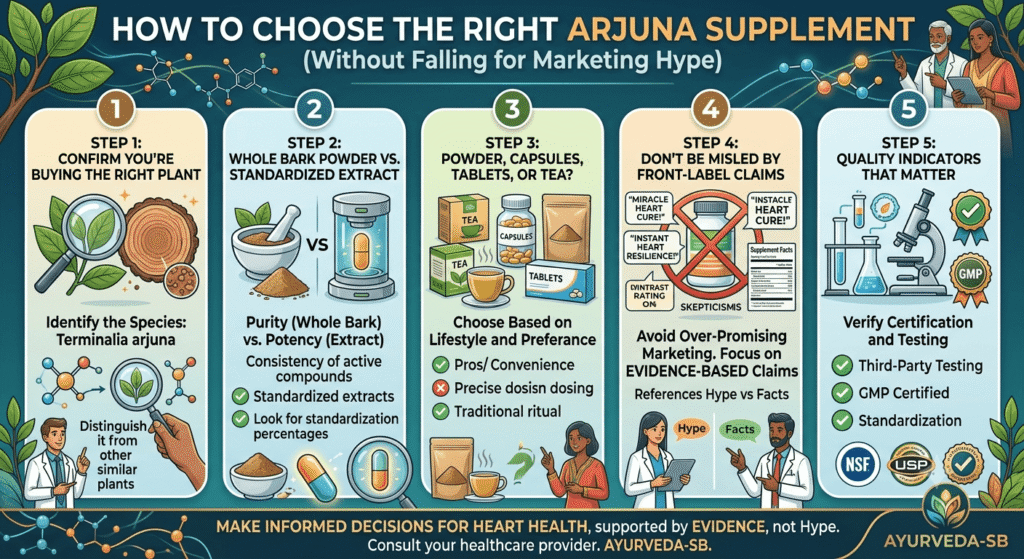
Step 1: Confirm You’re Buying the Right Plant
The first thing to check isn’t the brand—it’s the botanical name.
A quality supplement should clearly list:
Terminalia arjuna – Arjuna for Heart Health
It should also specify the plant part used: Bark.
This matters because research and traditional Ayurvedic use are based specifically on the bark, not the leaves, fruit, or roots.
If the botanical name isn’t listed, that’s a sign to be cautious.
Step 2: Whole Bark Powder vs. Standardized Extract
Most Arjuna for Heart Health supplements fall into one of two categories.
Whole Bark Powder
The bark is dried, ground into a fine powder, and packed into capsules or sold as loose powder.
Pros
- Closest to traditional Ayurvedic use.
- Minimal processing.
- Often more affordable.
Cons
- Larger serving sizes.
- Natural variation in active compounds.
- Earthy, woody taste if taken as powder.
Whole bark powder is a good choice for people who prefer traditional preparations.
Standardized Extract
Modern extracts are processed to provide more consistent levels of naturally occurring plant compounds.
Pros
- Smaller capsules.
- Better consistency between batches.
- Convenient daily use.
Cons
- Different manufacturers standardize different compounds.
- A higher concentration isn’t always more effective.
Don’t assume “10:1 extract” or “50:1 extract” automatically means better quality.
The extraction process matters just as much as the concentration.
Step 3: Powder, Capsules, Tablets, or Tea?
Arjuna for Heart Health is available in several forms.
Each has practical advantages.
Capsules
The most common option.
Best for people who:
- Want convenience.
- Travel frequently.
- Prefer measured servings.
Powder
Traditional Ayurvedic practice often uses bark powder.
It can be mixed with:
- Warm water
- Milk
- Herbal preparations
Some people enjoy following traditional methods, while others prefer the convenience of capsules.
Tablets
Tablets are easy to carry but may contain additional binders or fillers.
Always read the ingredient list.
Herbal Tea
Arjuna tea is available, but most modern research has focused on bark powder or extracts rather than tea.
That means it’s difficult to compare tea with the products evaluated in clinical studies.
Step 4: Don’t Be Misled by Front-Label Claims
Supplement packaging is designed to attract attention.
Here are some phrases worth questioning.
🚩 “Clinically Proven”
Ask:
- Was the exact product studied?
- Was the research conducted in humans?
- How many participants were involved?
One small study doesn’t prove that every Arjuna supplement works the same way.
🚩 “Supports Healthy Cholesterol”
This claim may be based on limited studies, but it shouldn’t be interpreted as a guarantee.
Heart health depends on many factors, including diet, physical activity, genetics, and overall lifestyle.
🚩 “Natural Heart Cure”
This is a major red flag.
No herbal supplement has been proven to cure heart disease.
Any company making such claims should be viewed with skepticism.
🚩 “Ancient Secret Formula”
Arjuna isn’t a secret.
It’s one of Ayurveda’s best-known medicinal trees.
Companies often use words like “secret” or “miracle” to create excitement rather than provide useful information.
Step 5: Quality Indicators That Matter
Instead of focusing on advertising, look for signs of good manufacturing practices.
A trustworthy supplement should include:
✔ Botanical name (Terminalia arjuna)
✔ Plant part (bark)
✔ Amount per serving
✔ Batch or lot number
✔ Expiration date
✔ Manufacturer contact details
✔ Good Manufacturing Practices (GMP) certification or similar quality standards
Transparent labeling usually reflects a more responsible manufacturer.
Five Common Buying Mistakes
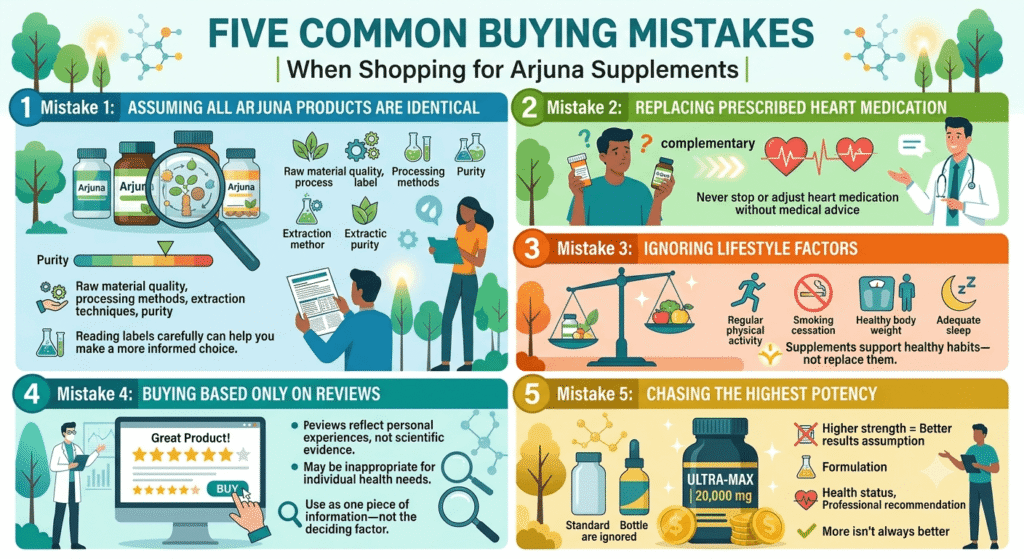 Mistake 1: Assuming All Arjuna Products Are Identical
Different products may vary in:
- Raw material quality
- Processing methods
- Extraction techniques
- Purity
Reading labels carefully can help you make a more informed choice.
Mistake 2: Replacing Prescribed Heart Medication
This is the most serious mistake.
Arjuna for Heart Health has been studied as a complementary supplement—not as a replacement for medications prescribed for cardiovascular disease.
Never stop or adjust heart medication without medical advice.
Mistake 3: Ignoring Lifestyle Factors
Even the highest-quality supplement cannot replace:
- A balanced diet
- Regular physical activity
- Smoking cessation
- Healthy body weight
- Adequate sleep
Think of supplements as supporting healthy habits—not replacing them.
Mistake 4: Buying Based Only on Reviews
Online reviews reflect personal experiences, not scientific evidence.
A product with thousands of positive reviews may still be inappropriate for your individual health needs.
Use reviews as one piece of information—not the deciding factor.
Mistake 5: Chasing the Highest Potency
Many shoppers assume:
Higher strength = Better results
In reality, the most appropriate serving depends on:
- The product formulation.
- Individual health status.
- Healthcare professional recommendations.
More isn’t always better.
Your Arjuna Buyer’s Checklist
Before purchasing an Arjuna for Heart Health supplement, ask:
✔ Does the label clearly state Terminalia arjuna?
✔ Is the bark identified as the ingredient used?
✔ Is the serving size transparent?
✔ Does the company provide manufacturing and quality information?
✔ Are the claims realistic rather than exaggerated?
✔ Does the supplement fit your health goals?
If you can answer “yes” to most of these questions, you’re making a more informed choice.
One More Question Before You Buy
Perhaps the most important question isn’t:
“Which Arjuna supplement is the strongest?”
Instead, ask:
“Am I trying to support a healthy cardiovascular lifestyle—or am I trying to self-treat a condition that needs medical care?”
If you have chest pain, shortness of breath, irregular heartbeat, or diagnosed cardiovascular disease, professional medical evaluation should always come first.
Supplements can play a supportive role, but they are not a substitute for diagnosis or treatment.
Part 4: The Final Verdict – Where Does Arjuna Fit in Modern Heart Health?
We’ve traveled from ancient Ayurveda to modern clinical research, explored what Arjuna Bark is, examined the evidence, and learned how to choose a quality supplement.
Now comes the most important question:
Should you take Arjuna for heart health?
The answer isn’t simply “yes” or “no.”
It depends on your health status, your goals, and your expectations.
Arjuna is best understood as a supportive herbal supplement with a long history of traditional use and promising scientific evidence—not a replacement for modern cardiovascular medicine.
A Four-Step Decision Guide
 Before adding Arjuna to your daily routine, ask yourself these questions.
1. What Is Your Goal?
People consider Arjuna for many reasons, including:
- Supporting long-term cardiovascular wellness.
- Complementing a heart-healthy lifestyle.
- Learning about evidence-based Ayurvedic herbs.
- Exploring traditional approaches alongside conventional healthcare.
If your goal is to treat chest pain, uncontrolled blood pressure, or diagnosed heart disease, self-treatment is not appropriate.
2. Has Your Heart Health Been Evaluated?
Heart-related symptoms should never be ignored.
Seek medical evaluation if you experience:
- Chest pain or pressure.
- Shortness of breath.
- Fainting episodes.
- Irregular heartbeat.
- Swelling in the legs.
- Persistent fatigue without explanation.
A supplement should never delay diagnosis of potentially serious cardiovascular conditions.
3. Are You Already Following the Basics?
No supplement can compensate for poor lifestyle habits.
The strongest evidence for heart health still supports:
- A balanced diet rich in fruits, vegetables, whole grains, and healthy fats.
- Regular physical activity.
- Maintaining a healthy weight.
- Not smoking.
- Managing stress.
- Adequate sleep.
- Following prescribed medical treatment.
Think of Arjuna as a possible addition to these habits—not a replacement.
4. Are Your Expectations Realistic?
Arjuna is not a “miracle heart herb.”
Current research suggests it may support aspects of cardiovascular wellness, but it has not been proven to:
- Cure heart disease.
- Reverse blocked arteries.
- Eliminate cardiovascular risk.
- Replace cholesterol or blood pressure medications.
Understanding these limits helps you make informed decisions.
Who May Consider Arjuna?
After discussing it with a healthcare professional, Arjuna may be worth considering for adults who:
✔ Want an evidence-informed Ayurvedic herb.
✔ Are interested in supporting long-term cardiovascular wellness.
✔ Prefer supplements that have both traditional use and emerging scientific research.
✔ Understand that supplements work best alongside healthy lifestyle habits.
✔ Are willing to evaluate benefits over time rather than expecting immediate results.
Who Should Avoid or Use Extra Caution?
Arjuna isn’t appropriate for everyone.
Speak with your healthcare provider before using it if you:
- Have diagnosed heart disease.
- Take medications for blood pressure or heart rhythm.
- Use blood-thinning medications.
- Are pregnant or breastfeeding.
- Have scheduled heart surgery or another major operation.
- Have unexplained cardiovascular symptoms.
Because Arjuna may influence cardiovascular function, professional guidance is especially important for individuals already receiving treatment.
Possible Side Effects
Most studies suggest Arjuna is generally well tolerated when used appropriately.
However, some people may experience mild side effects such as:
Digestive Discomfort
- Upset stomach
- Nausea
- Constipation or loose stools (less commonly)
Taking supplements with food may help reduce digestive irritation, depending on the product.
Dizziness
If Arjuna is taken alongside blood pressure medications, some individuals may experience light-headedness.
Any persistent dizziness should be discussed with a healthcare professional.
Allergic Reactions
Although uncommon, discontinue use and seek medical attention if you develop:
- Rash
- Swelling
- Difficulty breathing
Arjuna Compared with Other Heart-Support Supplements
Many readers wonder how Arjuna compares with other well-known supplements.
| Supplement | Primary Area of Research | Traditional Origin |
| Arjuna Bark | Cardiovascular wellness | Ayurveda |
| Hawthorn Berry | Heart and circulation | European herbal medicine |
| CoQ10 | Cellular energy production | Modern nutritional science |
| Omega-3 Fatty Acids | Cardiovascular health | Nutrition research |
| Garlic | Heart and vascular health | Traditional medicine & nutrition |
Each has a different evidence base and mechanism of action.
Rather than asking “Which is best?”, ask:
“Which option best fits my health needs, current medications, and medical advice?”
Frequently Asked Questions
Q1. Can healthy people take Arjuna?
Some adults choose Arjuna as part of a broader wellness routine.
However, supplements should complement healthy habits—not replace them.
Q2. How long does Arjuna take to work?
There is no single timeline.
Clinical studies have evaluated Arjuna over several weeks to months, depending on the health outcome being studied.
Q3. Can Arjuna lower cholesterol?
Some studies suggest modest improvements in cholesterol markers, but evidence is not yet strong enough to recommend Arjuna as a cholesterol treatment.
Q4. Can Arjuna replace blood pressure medication?
No.
Never stop prescribed medication without consulting your healthcare provider.
Q5. Powder or capsules?
- Powder reflects traditional Ayurvedic use.
- Capsules offer greater convenience and consistent serving sizes.
The best option depends on your preferences and the quality of the product.
Five Key Takeaways
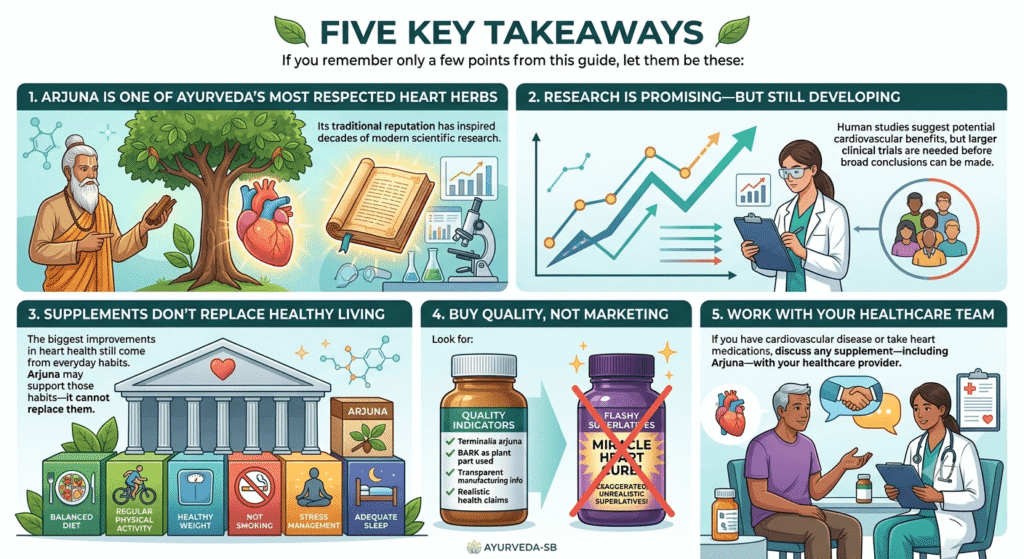 If you remember only a few points from this guide, let them be these:
1. Arjuna Is One of Ayurveda’s Most Respected Heart Herbs
Its traditional reputation has inspired decades of modern scientific research.
2. Research Is Promising—but Still Developing
Human studies suggest potential cardiovascular benefits, but larger clinical trials are needed before broad conclusions can be made.
3. Supplements Don’t Replace Healthy Living
The biggest improvements in heart health still come from everyday habits.
Arjuna may support those habits—it cannot replace them.
4. Buy Quality, Not Marketing
Look for:
- Terminalia arjuna on the label.
- Bark as the plant part used.
- Transparent manufacturing information.
- Realistic health claims.
5. Work With Your Healthcare Team
If you have cardiovascular disease or take heart medications, discuss any supplement—including Arjuna—with your healthcare provider.
Final Verdict
Arjuna Bark occupies a unique place in both traditional medicine and modern research.
Few Ayurvedic herbs have been studied as extensively for cardiovascular wellness.
That doesn’t mean every traditional claim has been proven.
But it does mean Arjuna deserves attention—not because it promises miracles, but because it represents an interesting meeting point between ancient observation and modern clinical investigation.
If you’re looking for a natural way to complement a heart-healthy lifestyle, Arjuna may be worth discussing with your healthcare professional.
If you’re searching for a substitute for exercise, balanced nutrition, or prescribed treatment, no supplement—including Arjuna—can fill that role.
The healthiest heart is rarely built by one capsule.
It’s built by thousands of small, consistent choices made over a lifetime.
Continue Your Ayurveda Wellness Journey
If you found this guide helpful, explore other evidence-based articles in our Ayurveda Wellness Journey:
Related Ayurvedic Wellness Articles
Ashwagandha Benefits: Uses, Dosage, Side Effects & More
Shilajit Benefits: Science, Uses, Safety & How to Choose the Best Supplement