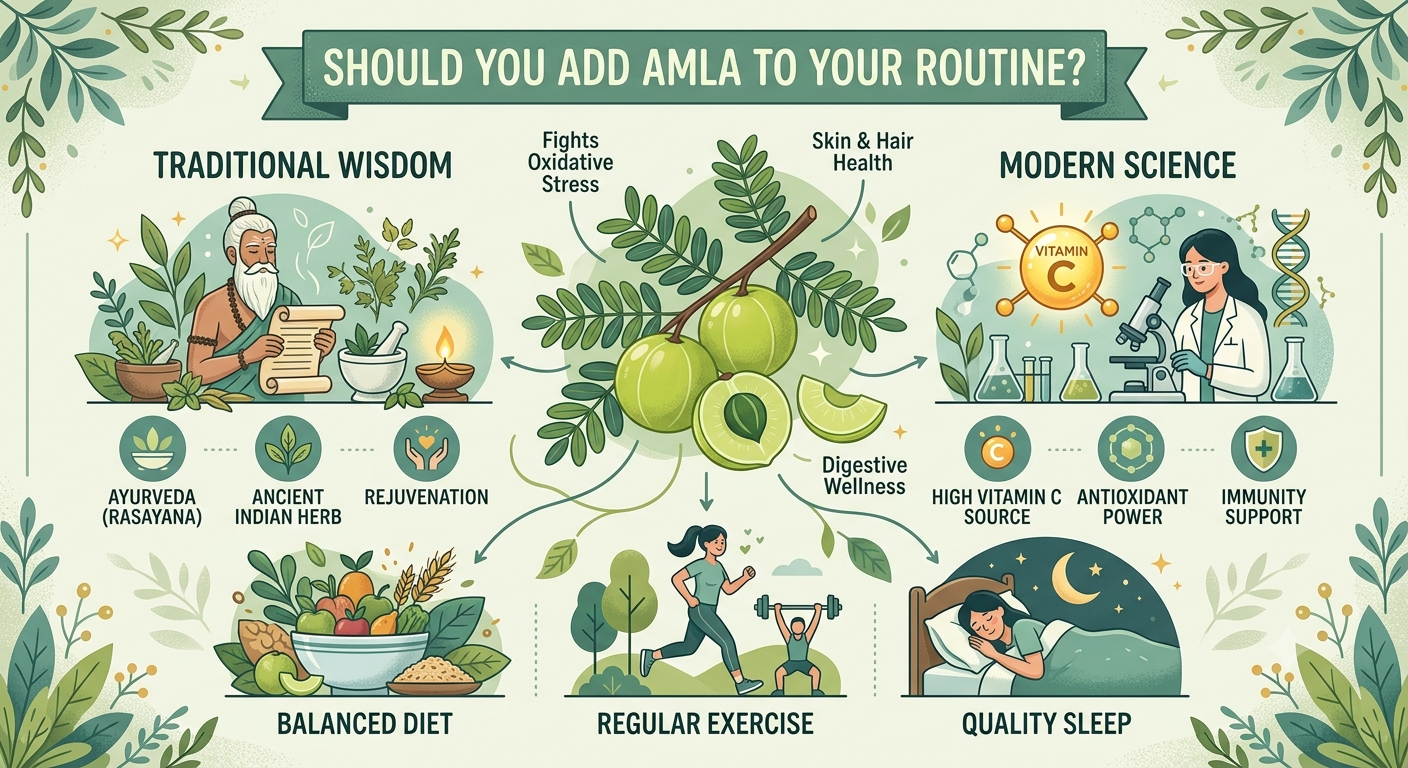
Some foods become popular because of marketing. Others survive for thousands of years because generation after generation continues to use them. Amla belongs to the second category.
Walk through an Indian marketplace in winter, and you’ll likely find baskets filled with small, pale-green fruits that many people bite into despite their intensely sour taste. To someone trying Amla for the first time, the flavor can be surprising. Yet after the initial tartness fades, a subtle sweetness often follows—a reminder that nature doesn’t always reveal its value immediately.
Long before terms like superfood, antioxidants, or immune support became popular, Amla benefits were already an important part of traditional wellness practices. Today, this humble fruit has attracted worldwide attention as scientists explore whether centuries of traditional use are supported by modern research.
So what makes this small fruit so special? And does it deserve a place in your daily routine?
Let’s take a closer look.
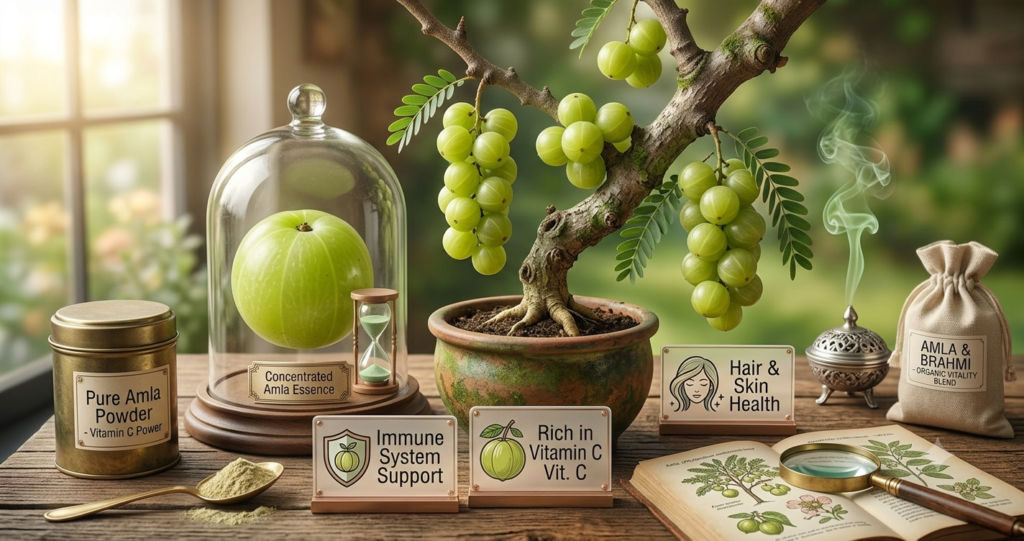
A Fruit With a History Longer Than Most Medicines
Amla, also known as Indian Gooseberry, grows on the tree Phyllanthus emblica (also called Emblica officinalis).
For thousands of years, it has been used in Ayurveda, one of the world’s oldest traditional systems of medicine.
Rather than focusing on a single health concern, traditional Ayurvedic texts describe Amla as a fruit that supports overall vitality and balance.
Even today, it remains a key ingredient in many well-known Ayurvedic preparations, including Triphala and Chyawanprash.
Its continued popularity isn’t based on trends—it has endured because people have incorporated it into their diets for generations.
Why Scientists Became Interested in Amla Benefits
Traditional use alone doesn’t prove that something works.
That’s why researchers have spent the last few decades studying Amla’s benefits in laboratories and clinical settings.
Their interest began with one simple observation:
Amla contains an unusually rich combination of naturally occurring plant compounds.
Instead of relying on one active ingredient, the fruit provides a diverse mix of nutrients and phytochemicals that may work together.
Among the most studied are:
- Vitamin C
- Polyphenols
- Tannins
- Gallic acid
- Ellagic acid
- Flavonoids
Researchers believe these compounds contribute to Amla’s antioxidant activity, although the exact mechanisms continue to be investigated.
More Than Just Vitamin C
Ask most people why they take Amla, and the answer is usually the same:
“Because it’s high in Vitamin C.”
That’s true—but it’s only part of the story.
Unlike many fruits that lose Vitamin C rapidly after harvesting, Amla also contains naturally occurring compounds that may help stabilize some of its antioxidant properties during processing.
This doesn’t mean every Amla supplement contains the same amount of Vitamin C. Processing methods, drying techniques, storage conditions, and manufacturing practices all influence the final product.
That’s one reason why product quality matters.
The Body Doesn’t Need Superfoods—It Needs Consistency
Health headlines often promise dramatic transformations from a single ingredient.
Reality is usually much less exciting—and much more practical.
No fruit, herb, or supplement can compensate for:
- Poor sleep
- A highly processed diet
- Lack of physical activity
- Chronic stress
- Smoking
Amla works best when viewed as one small part of an overall healthy lifestyle.
Think of it as adding another healthy habit to your routine rather than searching for a miracle solution.
Where Amla Benefits Fit Into Everyday Life
One reason Amla has remained popular for centuries is its versatility and Amla benefits.
Depending on regional traditions and personal preferences, people consume it in many different forms.
Fresh fruit offers the most traditional experience, though its intensely sour flavor isn’t for everyone.
Others prefer:
- Amla powder mixed into smoothies
- Herbal teas
- Capsules
- Juice
- Sugar-free preserves
- Homemade chutneys
Each option has advantages, and the best choice often depends on convenience rather than superiority.
Why Nutrition Experts Still Recommend Eating Whole Foods First
Dietary supplements can be helpful, but nutrition experts consistently emphasize one important principle:
Whole foods should remain the foundation of good health.
Fresh fruits provide:
- Fiber
- Water
- Vitamins
- Minerals
- Numerous naturally occurring plant compounds
Supplements can help fill nutritional gaps, but they shouldn’t replace a varied, balanced diet rich in fruits and vegetables.
Modern studies have explored Amla’s potential role in supporting:
- Antioxidant defenses
- Healthy immune function
- Heart health
- Healthy cholesterol levels
- Blood sugar management
- Skin health
- Hair health
- Healthy aging
The overall findings are encouraging, but researchers also point out that many studies are relatively small and additional high-quality clinical trials are needed.
That’s an important distinction.
Good science doesn’t make promises—it measures probabilities.
Why Amla Is Becoming Popular Outside Asia
For centuries, Amla was primarily known in South Asia.
Today, it’s appearing on the shelves of health food stores throughout North America and Europe.
Several trends have contributed to its growing popularity:
- Increasing interest in plant-based nutrition
- Growing awareness of Ayurvedic wellness
- Consumer demand for natural antioxidant sources
- Expansion of functional foods and supplements
This global interest has also encouraged manufacturers to develop new forms such as capsules, gummies, powders, and drink mixes.
One Fruit, Many Claims: How to Separate Marketing From Evidence
Browse online, and you’ll see claims that Amla can:
- Detox your body
- Reverse aging
- Cure diabetes
- Melt belly fat
- Regrow hair overnight
These statements are not supported by strong scientific evidence.
Current research suggests Amla Benefits may support certain aspects of health, but it is not a cure for chronic diseases and should never replace medical care.
When evaluating supplements, it’s wise to be sceptical of products that promise dramatic or guaranteed results.
Reliable health information usually includes both benefits and limitations.
The Bottom Line
Perhaps the most interesting thing about Amla isn’t that it’s trendy.
It’s that, despite thousands of years of use, scientists are still discovering new things about it.
That combination of ancient tradition and modern research explains why this small green fruit continues to attract attention around the world.
Whether you enjoy it fresh, as a powder, or in capsule form, Amla Benefits offers an opportunity to increase your intake of beneficial plant compounds while connecting with one of the oldest nutritional traditions still practiced today.
And sometimes, the foods that stand the test of time are worth paying attention to.
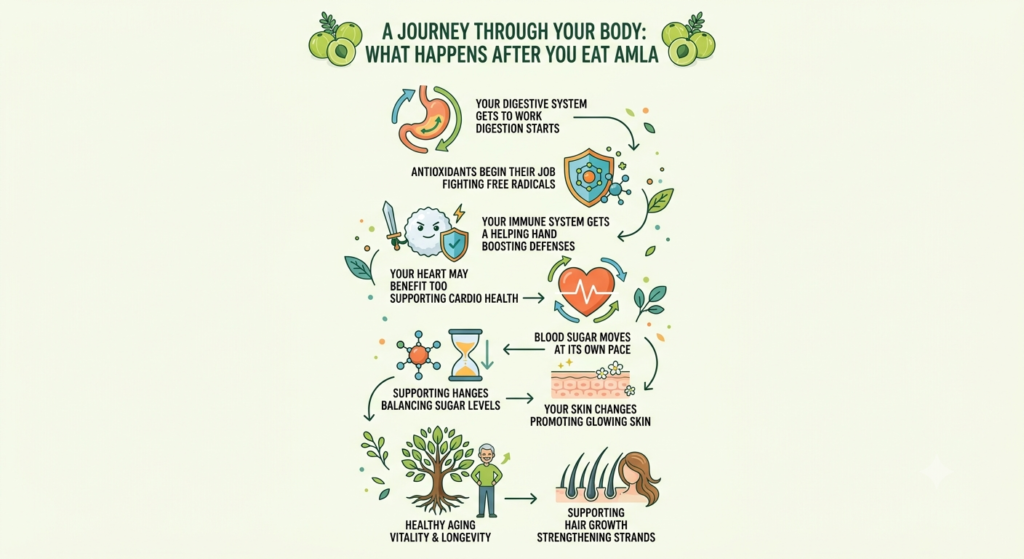
A Journey Through Your Body – What Happens After You Eat Amla?
Imagine taking a spoonful of Amla powder with warm water or biting into a fresh Indian gooseberry. At first, all you notice is its sharp, tangy taste. But once swallowed, a fascinating series of events begins inside your body.
No, Amla doesn’t perform miracles overnight. Instead, it quietly interacts with different systems in ways that researchers continue to study. Think of it less as a “magic fruit” and more as a supporting player that helps your body do what it was already designed to do.
Let’s follow Amla’s journey.
Stop 1: Your Digestive System Gets to Work
The moment Amla reaches your stomach, digestion begins breaking down its natural compounds. Alongside vitamins and minerals, Amla contains dietary fiber and a wide range of plant-based antioxidants.
Fiber doesn’t just help food move through your digestive tract—it also supports the environment where beneficial gut bacteria thrive.
A healthy gut microbiome has been linked to many aspects of wellness, including digestion, metabolism, and immune function.
Researchers are exploring how polyphenol-rich foods like Amla may contribute to a healthier gut ecosystem, though this area of science is still evolving.
Stop 2: Antioxidants Begin Their Job
Every day, your body naturally produces unstable molecules known as free radicals. They’re a normal byproduct of breathing, exercising, and converting food into energy.
Problems arise when free radicals outnumber your body’s antioxidant defenses, creating what’s known as oxidative stress.
Over time, oxidative stress has been associated with aging and several chronic health conditions.
This is where Amla has attracted scientific attention.
Its naturally occurring antioxidants—including vitamin C, flavonoids, and polyphenols—may help support your body’s own defense systems against oxidative stress.
Think of antioxidants as part of your body’s maintenance crew. They don’t stop aging, but they help keep everyday wear and tear under control.
Stop 3: Your Immune System Gets a Helping Hand
Your immune system works around the clock, whether you notice it or not.
It relies on many nutrients, adequate sleep, regular exercise, and overall good nutrition to function properly.
Vitamin C plays an important role in supporting normal immune function, and Amla is one of nature’s richest sources of this essential nutrient.
Researchers are also studying whether other plant compounds in Amla work alongside vitamin C to provide additional immune-supporting effects.
While Amla won’t prevent every cold or infection, including antioxidant-rich foods in your diet is one way to support a healthy immune system.
Stop 4: Your Heart May Benefit Too
Your heart doesn’t just depend on exercise—it also depends on the foods you eat every day.
Scientists have investigated whether Amla may support cardiovascular health through several mechanisms.
Some clinical studies suggest Amla may help support:
- Healthy cholesterol levels already within the normal range
- Normal blood vessel function
- Healthy circulation
- Antioxidant protection for cardiovascular tissues
Researchers believe these effects may result from the fruit’s combination of antioxidants and polyphenols.
However, Amla should never replace medications prescribed for heart disease or high cholesterol.
Stop 5: Blood Sugar Moves at Its Own Pace
After eating a meal, your body converts carbohydrates into glucose.
For many people, keeping blood sugar within a healthy range is an important part of long-term wellness.
Early research suggests Amla may support healthy glucose metabolism when combined with balanced nutrition and physical activity.
Scientists continue to investigate how its plant compounds influence carbohydrate digestion and insulin sensitivity.
The evidence is promising, but larger human studies are still needed.
Stop 6: Your Skin Doesn’t Change Overnight
Many beauty products advertise “glowing skin” after just a few days.
Real skin health doesn’t work that way.
Healthy skin depends on factors such as:
- Nutrition
- Hydration
- Sun protection
- Sleep
- Hormonal balance
- Genetics
Because Amla contains antioxidants and vitamin C, researchers have explored whether it may support collagen production and help protect skin cells from oxidative stress.
These effects are gradual and should be viewed as part of an overall healthy lifestyle—not as an instant cosmetic solution.
Stop 7: What About Hair?
If you’ve searched for Amla Benefits online, you’ve probably seen claims that it can stop hair loss or make hair grow dramatically faster.
The truth is more nuanced.
Amla has been used traditionally in hair oils and herbal formulations for centuries.
Its antioxidant content and nutritional profile have made it a popular ingredient in shampoos, oils, and hair masks.
However, high-quality clinical evidence supporting dramatic hair growth claims remains limited.
Healthy hair depends on many factors, including:
- Genetics
- Hormones
- Overall nutrition
- Stress levels
- Scalp health
In Amla Benefits, they say it may contribute to overall hair care, but it shouldn’t be viewed as a guaranteed solution for hair loss.
Stop 8: Supporting Healthy Ageing
Ageing is a natural process that no supplement can stop.
What scientists are interested in is healthy ageing—maintaining physical function, cognitive performance, and overall well-being as we grow older.
Because oxidative stress is one factor associated with ageing, antioxidant-rich foods like Amla continue to attract research interest.
While it’s too early to draw firm conclusions, diets rich in fruits and vegetables remain consistently associated with better long-term health outcomes.
Why Consistency Matters More Than Quantity
One of the biggest misconceptions about supplements is that taking more automatically produces better results.
With Amla, consistency is far more important than large servings.
Think about brushing your teeth.
Doing it once for an hour isn’t nearly as effective as brushing for two minutes every day.
Nutrition works in a similar way.
Small, sustainable habits often have a greater long-term impact than occasional extremes.
Amla Benefits are Part of the Story—Not the Whole Story
It’s tempting to search for one food that solves every health concern.
Unfortunately, no such food exists.
Amla works best alongside:
- Plenty of colorful fruits and vegetables
- Whole grains
- Lean protein
- Healthy fats
- Regular exercise
- Good sleep
- Stress management
When combined with these habits, Amla becomes another valuable tool in your overall wellness routine.
What Scientists Are Still Trying to Learn
Although Amla Benefits have been studied extensively, several questions remain.
Researchers continue investigating:
- The ideal daily intake for different populations
- Long-term effects of supplementation
- Differences between fresh fruit, juice, powder, and extracts
- Which active compounds contribute most to its health effects
- How processing methods influence nutrient retention
As research continues, our understanding of this traditional fruit will likely become even more refined.
A Different Way to Think About Amla Benefits
Instead of asking:
“What disease does Amla cure?”
A better question might be:
“How can Amla contribute to a healthier overall lifestyle?”
That shift in perspective aligns with both modern nutrition science and traditional dietary wisdom.
Health isn’t built from one extraordinary meal or one extraordinary supplement.
It’s built from hundreds of small choices repeated over months and years.
Amla simply has the advantage of being one of those choices that has stood the test of time.
How Amla Fits Into Modern Life – Finding the Right Form, Building Healthy Habits & Choosing a Quality Supplement
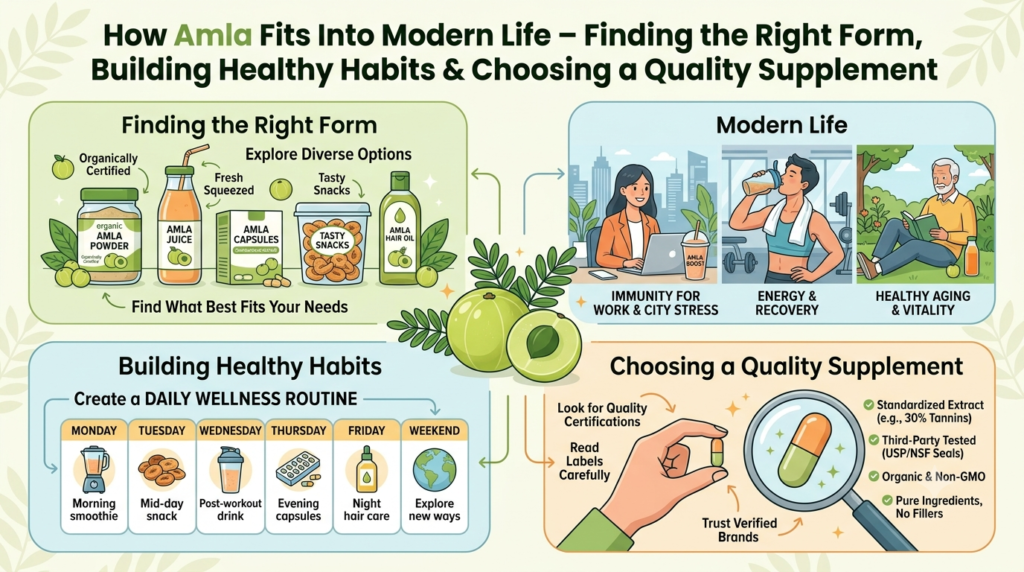
Walk into any health food store today, and you’ll find Amla in more forms than ever before. Fresh fruit, powders, capsules, juices, gummies—even beauty products.
This raises an important question:
If all of them contain Amla, does it really matter which one you choose?
The answer depends less on what’s “best” and more on what fits your lifestyle.
A supplement that sits unopened in your kitchen cabinet won’t benefit your health. The one that becomes part of your daily routine is usually the better choice.
Let’s explore how different people use Amla in everyday life.
If You Have a Busy Schedule
For many professionals, mornings are rushed. Breakfast is often quick, lunch happens between meetings, and healthy habits can easily slip down the priority list.
If this sounds familiar, convenience matters.
Many busy adults prefer:
- Amla capsules with breakfast
- Amla powder added to a morning smoothie
- Unsweetened Amla juice diluted with water
The goal isn’t perfection—it’s consistency.
A simple habit that’s easy to repeat every day is often more effective than an elaborate wellness routine that lasts only a week.
If You Exercise Regularly
People who exercise often pay close attention to protein intake but sometimes overlook antioxidants and overall nutrition.
A balanced diet rich in fruits and vegetables remains the foundation of athletic recovery.
Some active individuals include Amla because of its naturally occurring vitamin C and polyphenols, which researchers continue to study for their role in supporting the body’s response to exercise-related oxidative stress.
Amla isn’t a pre-workout supplement, and it won’t replace proper recovery practices, but it can complement a nutrient-rich diet.
If Healthy Ageing Is Your Priority
As people grow older, nutritional needs often change.
Maintaining muscle, heart health, brain function, and immune health becomes increasingly important.
Rather than searching for one supplement that promises to “reverse ageing,” many older adults focus on building sustainable habits.
For some, Amla becomes part of that routine alongside:
- A balanced diet
- Regular walking or resistance exercise
- Quality sleep
- Routine medical checkups
- Stress management
Healthy ageing is about supporting long-term function—not chasing quick fixes.
If You’re Focused on Heart Health
Heart health isn’t determined by one meal or one supplement.
It’s influenced by years of daily choices.
Some people choose Amla because emerging research suggests it may support:
- Healthy cholesterol levels already within the normal range
- Antioxidant protection
- Overall cardiovascular wellness
Think of Amla as one supporting piece of a heart-healthy lifestyle rather than the center of it.
If You Want Better Skin and Hair
Walk through any beauty store, and you’ll notice how often Amla appears in:
- Hair oils
- Shampoos
- Face masks
- Serums
- Herbal cosmetics
Its popularity comes from centuries of traditional use and its antioxidant-rich profile.
However, healthy skin and hair depend on much more than one ingredient.
They reflect:
- Nutrition
- Hydration
- Sun protection
- Sleep quality
- Hormonal balance
- Genetics
Using Amla Benefits as part of a comprehensive self-care routine is a more realistic expectation than expecting dramatic cosmetic changes.
Fresh Amla vs. Powder vs. Capsules vs. Juice
Each form offers unique advantages.
Rather than asking which one is “best,” ask which one you’ll actually use consistently.
| Form | Best For | Things to Consider |
| Fresh Amla | Traditional use and whole-food nutrition | Seasonal availability and very sour taste |
| Powder | Smoothies, yogurt, recipes | Requires mixing and has a tangy flavor |
| Capsules | Convenience and travel | Easy to take but often cost more per serving |
| Juice | Those who dislike chewing the fruit | Check labels for added sugar or preservatives |
| Gummies | Beginners and occasional users | Usually contain less Amla and may include added sugar |
No single option is universally superior.
Choose the format that fits naturally into your daily routine.
What to Look for When Buying Amla
The supplement market has grown rapidly, and product quality can vary significantly.
Before purchasing, spend a few minutes reading the label.
A trustworthy product should provide clear information rather than relying on vague marketing claims.
Look for products that clearly state:
- The botanical name (Phyllanthus emblica or Emblica officinalis)
- The form of Amla used (powder, extract, or whole fruit)
- Serving size
- Ingredient list
- Manufacturer information
Transparency is often a good sign of quality.
Signs of a High-Quality Supplement
Although no single feature guarantees a superior product, these characteristics are worth looking for:
Third-Party Testing
Independent testing helps verify product identity and quality.
Brands that voluntarily test their products often provide greater transparency.
Good Manufacturing Practices (GMP)
Supplements produced in GMP-certified facilities are manufactured according to established quality standards.
Minimal Ingredients
The simplest formulas are often the best.
Choose products with few unnecessary fillers, artificial colors, or excessive sweeteners.
Clear Labeling
Avoid products that rely heavily on terms like:
- Miracle cure
- Instant detox
- Guaranteed results
- Clinically proven to cure
Responsible companies describe potential benefits without making unrealistic promises.
Questions Smart Shoppers Ask
Before clicking “Buy Now,” consider these questions:
- Is this made from whole fruit or an extract?
- Does the label clearly list the amount of Amla per serving?
- Are there unnecessary additives?
- Is the company transparent about manufacturing?
- Does the serving size fit my budget for long-term use?
- Will I realistically take this every day?
These questions often matter more than flashy packaging.
Building an Amla Routine That Lasts
Instead of focusing on perfection, think about building habits that are easy to maintain.
A simple daily routine might include:
Morning
- Balanced breakfast
- A serving of Amla (capsule, powder, or juice)
- A glass of water
Afternoon
- Fiber-rich lunch
- Fresh fruit or vegetables
Evening
- A nutrient-rich dinner
- Light physical activity, such as a walk
This approach emphasizes overall nutrition rather than relying on a single supplement.
Common Mistakes New Users Make
Many people give up on Amla Benefits because of unrealistic expectations.
Avoid these common mistakes:
Expecting Immediate Results
Nutritional supplements generally work gradually.
Consistent use over weeks or months is more realistic than expecting changes within a few days.
Ignoring Product Quality
Not every supplement is manufactured to the same standards.
Choosing reputable brands can make a significant difference.
Forgetting the Basics
No supplement can replace:
- Healthy eating
- Regular exercise
- Good sleep
- Stress management
Amla Benefits works best when these foundations are already in place.
A Practical Way to Think About Supplements
Imagine your health as a house.
Exercise is the foundation.
Nutrition builds the walls.
Sleep forms the roof.
Stress management keeps everything stable.
Supplements like Amla are the finishing touches—they can improve the overall structure, but they can’t support the house if the foundation is weak.
Keeping this perspective helps set realistic expectations.
Is Amla Safe? Side Effects, Smart Buying Decisions, FAQs & Final Verdict
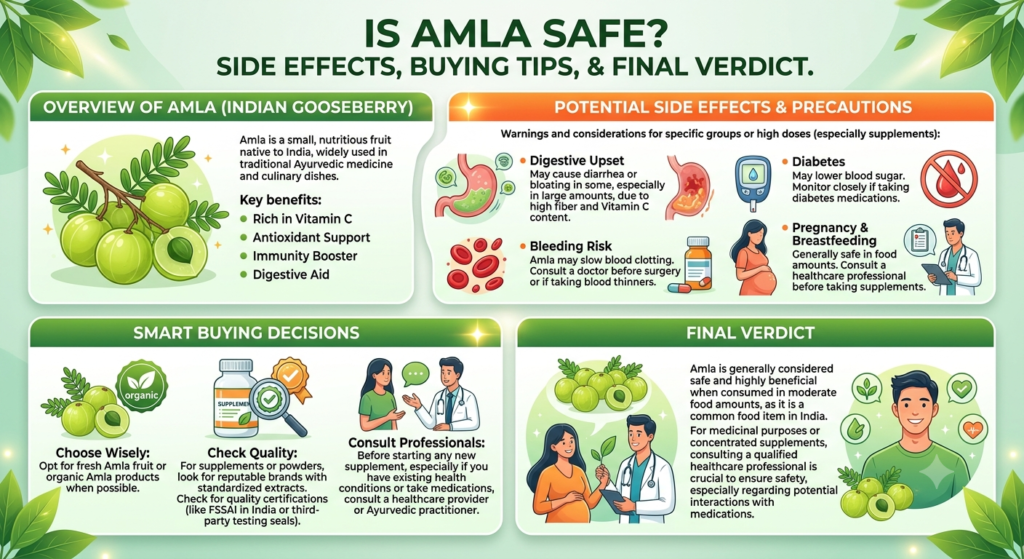
For thousands of years, Amla has been part of traditional diets and wellness practices. Today, it has also earned attention from nutrition researchers and health-conscious consumers worldwide.
But before making Amla part of your daily routine, one important question remains:
Is it safe for everyone?
Like any food or dietary supplement, Amla offers potential benefits—but it’s not without considerations. Understanding who can use it safely, who should exercise caution, and how to choose a quality product helps you make an informed decision rather than relying on marketing claims.
Let’s finish our journey with the practical information every consumer should know.
Is Amla Safe for Daily Use?
For most healthy adults, Amla is generally considered safe when consumed in moderate amounts, whether as fresh fruit or as a dietary supplement used according to the manufacturer’s directions.
In many parts of India, Amla has been eaten as food for generations, which provides a long history of traditional use.
Modern research has also reported a favorable safety profile in many studies, although long-term research on concentrated supplements is still developing.
The key is moderation and choosing products from reputable manufacturers.
Possible Side Effects
Most people tolerate Amla well.
However, some individuals may experience mild side effects, particularly when consuming large amounts or introducing it too quickly into their diet.
Possible side effects include:
- Mild stomach discomfort
- Increased bowel movements
- Diarrhea
- Acidic sensation in sensitive individuals
- Nausea (rare)
These effects are usually temporary and often improve by reducing the serving size.
Can Amla Cause Allergic Reactions?
Although uncommon, allergies to plant-based supplements are possible.
Stop using Amla and seek medical attention if you experience symptoms such as:
- Difficulty breathing
- Swelling of the lips, face, or throat
- Severe skin rash
- Persistent itching
If you have known allergies to herbal products, consult your healthcare provider before trying Amla supplements.
Who Should Speak With a Healthcare Provider First?
While Amla is suitable for many adults, some groups should seek medical advice before using concentrated supplements.
These include people who:
- Have diabetes and take blood sugar-lowering medications
- Take blood-thinning medications
- Have chronic kidney or liver disease
- Are preparing for surgery
- Have ongoing digestive disorders
- Have any serious medical condition requiring regular medication
A healthcare professional can help determine whether Amla is appropriate for your individual circumstances.
Pregnancy and Breastfeeding
Fresh Amla is commonly consumed as part of a normal diet in many cultures.
However, research on high-dose Amla supplements during pregnancy and breastfeeding remains limited.
If you are:
- Pregnant
- Trying to conceive
- Breastfeeding
it’s best to consult your healthcare provider before taking concentrated Amla extracts or supplements.
Can Amla Interact With Medications?
Amla contains biologically active compounds that may influence how the body responds to certain medications.
Possible interactions may include:
Blood Sugar Medications
Some studies suggest Amla may support healthy glucose metabolism.
People taking insulin or other diabetes medications should monitor their blood sugar as advised by their healthcare provider.
Blood-Thinning Medications
There is limited evidence suggesting Amla may influence blood clotting.
Individuals taking anticoagulant or anti-platelet medications should consult their physician before using Amla supplements regularly.
Blood Pressure Medications
Because research is still evolving, people taking medication for high blood pressure should discuss supplementation with their healthcare provider.
Fresh Fruit vs. Supplement: Which Should You Choose?
One of the biggest questions consumers ask is whether supplements are necessary at all.
The answer depends on your goals.
Fresh Amla
Best for people who:
- Enjoy whole foods
- Have access to fresh fruit
- Want fiber along with natural nutrients
Amla Powder
A practical option for:
- Smoothies
- Yogurt
- Oatmeal
- Homemade recipes
Capsules
Ideal for:
- Busy schedules
- Travel
- Consistent daily intake
Juice
Convenient but always check for:
- Added sugar
- Artificial flavors
- Preservatives
Whole foods remain the preferred choice whenever practical, while supplements can help when convenience is important.
Five Signs of a Quality Amla Supplement
Not every product on the market offers the same quality.
When shopping, look for:
1. Botanical Name Clearly Listed
The label should identify:
Phyllanthus emblica (also known as Emblica officinalis)
2. Transparent Ingredients
Choose products with simple formulations and minimal unnecessary additives.
3. Third-Party Testing
Independent quality testing helps confirm product identity and purity.
4. GMP-Certified Manufacturing
Good Manufacturing Practice (GMP) certification indicates that products are made under recognized quality standards.
5. Honest Marketing
Be cautious of products claiming to:
- Cure diseases
- Reverse aging overnight
- Produce instant weight loss
- Guarantee hair regrowth
Responsible brands describe evidence-based benefits rather than making unrealistic promises.
Frequently Asked Questions
Q1. Can I Take Amla Every Day?
Many people include Amla as part of their daily diet or wellness routine.
If you’re using a supplement, follow the manufacturer’s instructions or your healthcare provider’s advice.
Q2. Is Fresh Amla Better Than Capsules?
Neither is universally “better.”
Fresh Amla provides fiber and is closer to its natural form.
Capsules offer convenience and consistent serving sizes.
Choose the option that fits your lifestyle and helps you stay consistent.
Q3. Can Amla Help with Weight Loss?
Amla is not a weight-loss supplement.
It may support overall nutrition and healthy eating habits, but lasting weight management depends on:
- Balanced nutrition
- Physical activity
- Adequate sleep
- Sustainable lifestyle changes
Q4. Is Amla Good for Hair?
Amla has a long history of traditional use in hair care products.
Its antioxidant content and vitamin C have made it a popular ingredient in oils and shampoos.
However, current scientific evidence does not support claims of dramatic hair regrowth.
Q5. Can Children Eat Amla?
Fresh Amla is commonly eaten as a fruit in many cultures.
However, concentrated supplements should only be given to children after consulting a qualified healthcare professional.
Q6. Does Cooking Destroy Amla’s Nutrients?
Heat can reduce vitamin C levels, but Amla also contains other beneficial plant compounds that remain after processing.
The exact nutrient content depends on preparation and manufacturing methods.
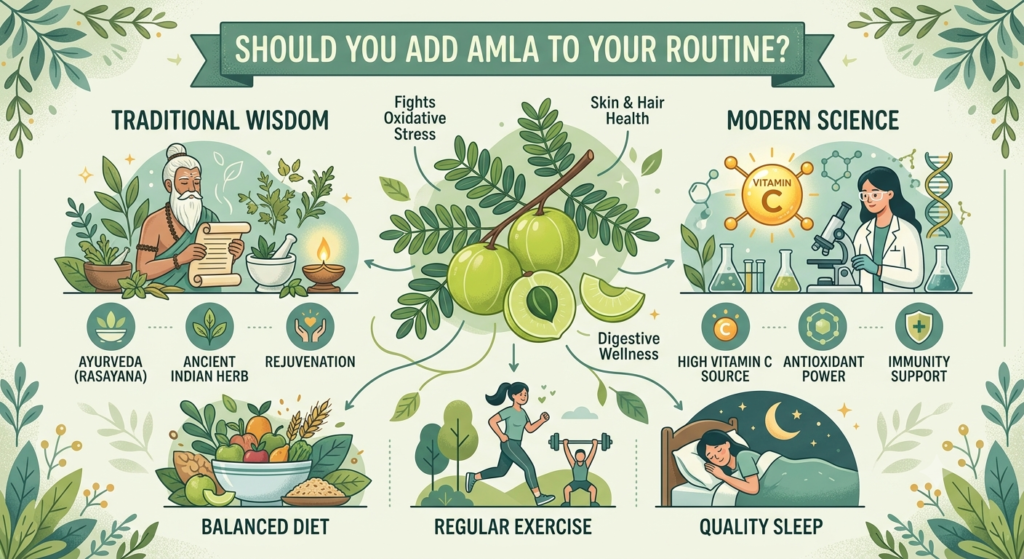
Final Verdict: Should You Add Amla to Your Routine?
If one lesson stands out from this guide, it’s that Amla isn’t popular because of clever marketing—it has remained relevant because generations of people have continued to use it, and modern science has found several reasons to keep studying it.
Rich in vitamin C, polyphenols, and other naturally occurring plant compounds, Amla may support antioxidant defenses, immune function, cardiovascular health, and overall wellness when included as part of a balanced lifestyle.
At the same time, it’s important to keep expectations realistic.
Amla won’t replace a nutritious diet, regular exercise, quality sleep, or medical care. But when viewed as one piece of a healthy routine, it can be a valuable addition for many people.
Medical Disclaimer
This article is intended for educational and informational purposes only and should not be considered medical advice. Research on dietary supplements continues to evolve, and individual responses may vary. Always consult a qualified healthcare professional before starting Amla or any dietary supplement, particularly if you are pregnant, breastfeeding, have a medical condition, or take prescription medications. Never stop or replace prescribed treatment without professional guidance.
Continue Your Ayurveda Wellness Journey
If you found this guide helpful, explore other evidence-based articles in our Ayurveda Wellness Journey:
Related Ayurvedic Wellness Articles
Ashwagandha Benefits: Uses, Dosage, Side Effects & More
Shilajit Benefits: Science, Uses, Safety & How to Choose the Best Supplement