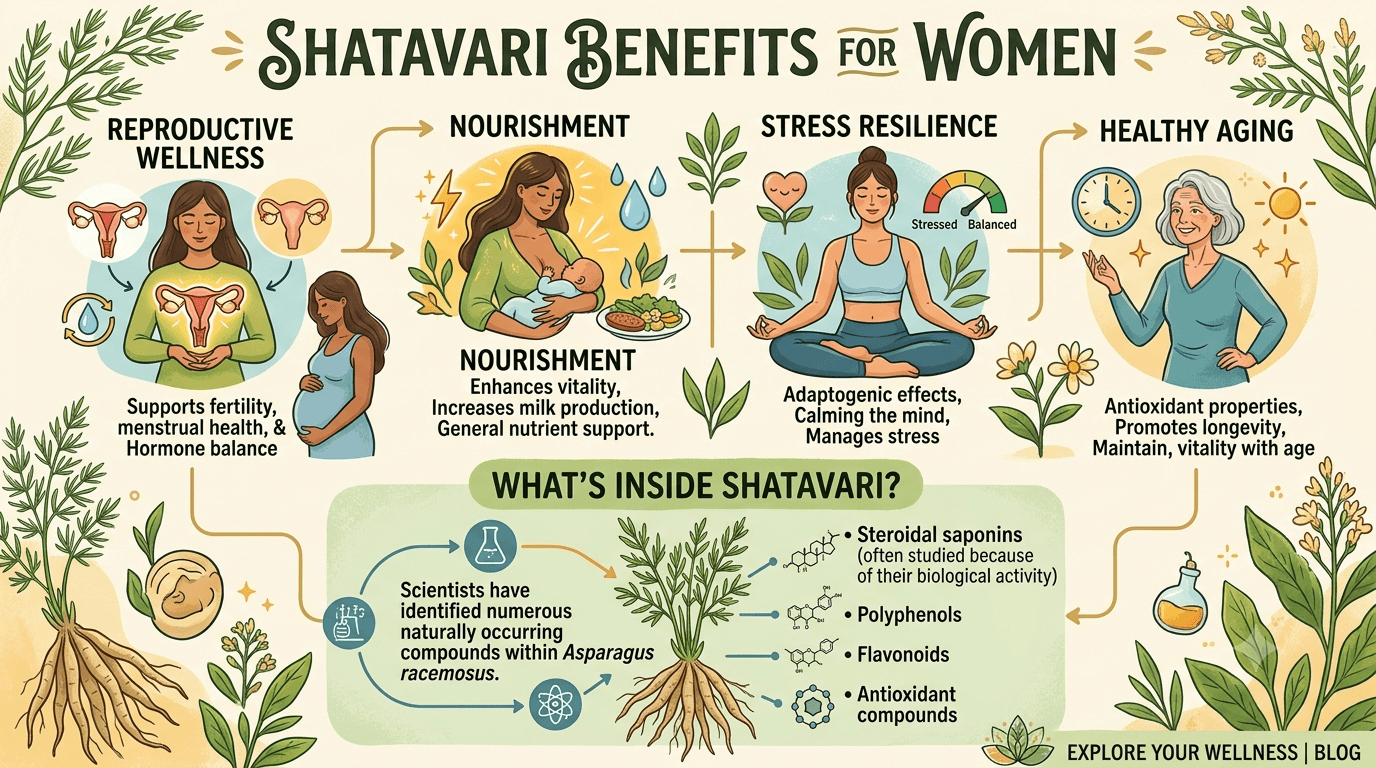
The Story of an Herb That Was Never Meant to Treat Just One Symptom.
Let us know more about Shatavari Benefits for Women.
Imagine visiting an Ayurvedic practitioner over a thousand years ago.
You complain about fatigue.
Another woman seeks help for digestive discomfort.
Someone else has recently become a mother.
Another is entering menopause.
Surprisingly, the practitioner may recommend the same herb to each woman—but for different reasons.
That herb is Shatavari.
At first, this sounds confusing. How could one plant possibly fit into so many different situations? Modern medicine usually works differently. A medicine is developed for one disease or one biological target. Ayurveda, however, has traditionally focused on supporting the body’s overall balance, believing that many aspects of health are interconnected. That’s why Shatavari isn’t traditionally described as a herb “for hormones” or “for menopause.”
Instead, it has long been viewed as a botanical that supports women’s overall vitality throughout adulthood. This difference in philosophy explains why Shatavari continues to attract attention—not only among practitioners of Ayurveda but also among researchers exploring traditional herbal medicine.
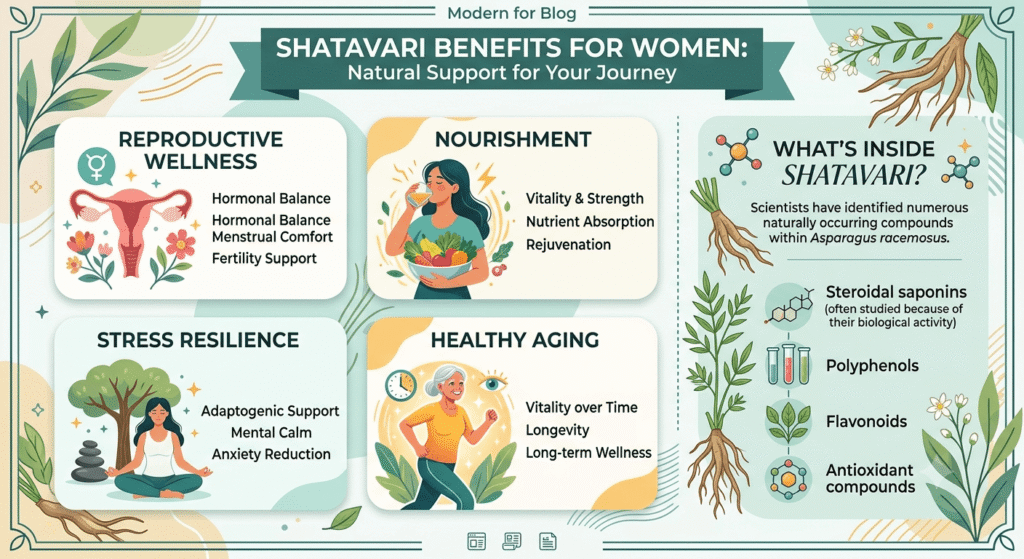
What Does “Shatavari” Actually Mean?
Shatavari comes from the plant Asparagus racemosus, a climbing species native to India and several parts of Asia.
Its Sanskrit name has fascinated people for generations.
One common interpretation is:
“She who possesses one hundred husbands.”
To modern readers, that phrase can sound unusual or even misleading.
It isn’t meant to be taken literally.
In Ayurvedic tradition, the name symbolizes:
- Feminine vitality
- Strength
- Resilience
- Nourishment
- The ability to adapt to life’s changing demands
Rather than referring to romance or fertility alone, the name reflects the herb’s long-standing association with supporting women’s well-being.
Understanding this cultural context helps avoid many of the misconceptions often repeated online.
Why Is Shatavari Benefits for Women So Important in Ayurveda?
Many herbs become famous because they are linked to a single benefit.
For example:
- One herb may be associated with digestion.
- Another with sleep.
- Another with immunity.
Shatavari has traditionally occupied a broader role. Ayurveda views health as a network of interconnected systems rather than isolated organs.
Instead of asking:
“Which symptom do you have?”
Ayurvedic practitioners often ask:
“Which systems need support?”
This perspective is one reason Shatavari appears in so many classical Ayurvedic formulations.
Its traditional role extends beyond reproductive wellness into areas such as nourishment, resilience, and healthy aging.
Four Pillars of Traditional Shatavari Use
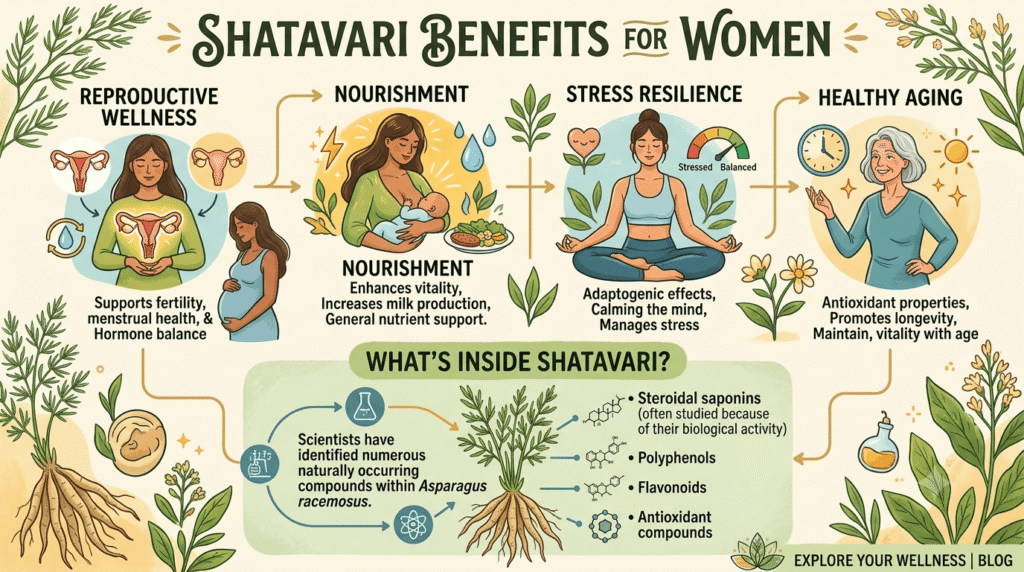 To understand why Shatavari Benefits for Women has remained relevant for centuries, imagine four pillars supporting women’s wellness.
Each pillar represents an area where Ayurveda has traditionally valued the herb.
Pillar One: Reproductive Wellness
This is the aspect most people already know.
Shatavari has long been used in Ayurvedic practice to support women’s reproductive health during different phases of adulthood.
Importantly, traditional use should not be confused with proven medical treatment.
Instead, it provides historical context for why researchers continue studying the herb today.
Pillar Two: Nourishment
Ayurveda often describes Shatavari as a nourishing herb.
Rather than acting like a stimulant that produces immediate effects, it has traditionally been viewed as supporting gradual restoration and overall vitality.
This philosophy differs from modern supplements marketed for quick results.
Pillar Three: Stress Resilience
Life places demands on every system in the body.
Ayurvedic texts have traditionally associated Shatavari Benefits for Women with helping the body adapt to those demands.
Modern science explores this idea through concepts such as adaptation, stress response, and homeostasis.
We’ll examine what research says about these concepts later in the article.
Pillar Four: Healthy Aging
Ayurveda doesn’t separate youth, adulthood, and older age into completely independent health categories.
Instead, it emphasizes maintaining strength and balance throughout life.
For that reason, Shatavari Benefits for Women has traditionally been valued as a long-term wellness herb rather than a short-term remedy.
One Herb, Four Different Women
Let’s imagine four women.
Each has different priorities.
Emily, Age 26
She works long hours.
Her biggest challenge is managing stress while maintaining overall wellness.
Amanda, Age 35
She’s balancing work and family responsibilities.
She wants to support her general health without relying solely on temporary solutions.
Jessica, Age 48
She’s entering perimenopause and notices that her body’s needs are changing.
She’s interested in learning about traditional approaches alongside evidence-based healthcare.
Linda, Age 62
She isn’t searching for a miracle supplement.
She simply wants to maintain vitality and healthy aging.
These women have different lifestyles, different health goals, and different life experiences.
Yet Ayurveda has traditionally viewed Shatavari as a herb that could play a supportive role for each of them—not because they share the same symptoms, but because they all seek long-term well-being.
This broader perspective is one of Shatavari’s defining characteristics.
Shatavari Benefits for Women: From Ancient Texts to Modern Laboratories
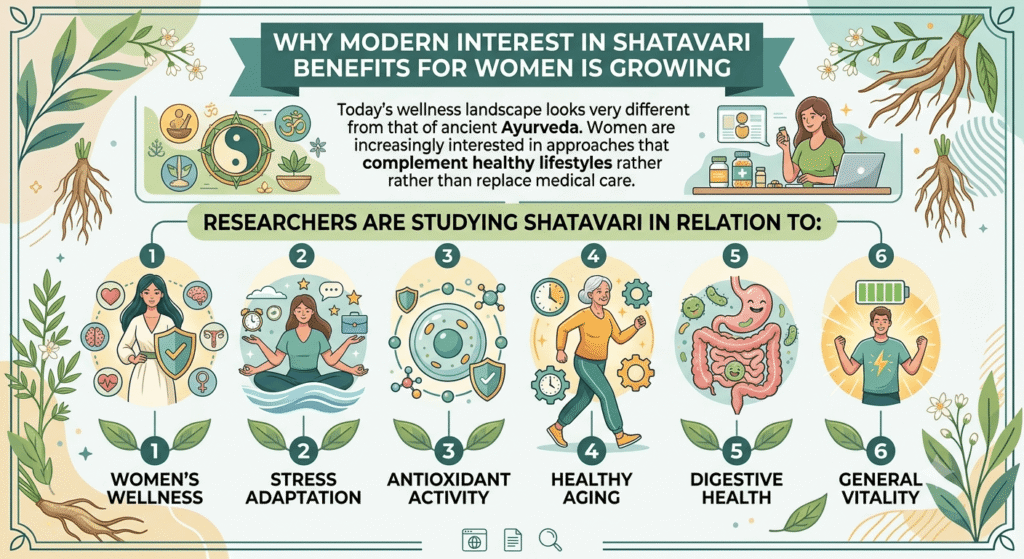 For centuries, Shatavari’s reputation rested on traditional knowledge.
Today, researchers ask more specific questions.
Instead of relying only on historical use, they investigate:
- Which natural compounds does Shatavari contain?
- How do these compounds behave in laboratory studies?
- Can human clinical trials confirm traditional claims?
- Which benefits are supported by evidence—and which remain uncertain?
This transition from tradition to science is important.
Ancient use can inspire research.
Modern research determines which claims are supported by measurable evidence.
What’s Inside Shatavari?
Scientists have identified numerous naturally occurring compounds within Asparagus racemosus.
These include:
- Steroidal saponins (often studied because of their biological activity)
- Polyphenols
- Flavonoids
- Antioxidant compounds
Researchers are exploring how these constituents may interact with different physiological systems.
However, identifying a compound in a laboratory doesn’t automatically prove a health benefit in humans.
Clinical research is essential.
Why Modern Interest in Shatavari Benefits for Women Is Growing
Today’s wellness landscape looks very different from that of ancient Ayurveda.
Women are increasingly interested in approaches that complement healthy lifestyles rather than replace medical care.
Researchers are therefore studying Shatavari in relation to topics such as:
- Women’s wellness
- Stress adaptation
- Antioxidant activity
- Healthy aging
- Digestive health
- General vitality
Some findings are encouraging.
Others remain preliminary.
Separating evidence from marketing is one of the main goals of this article.
Traditional Wisdom vs. Modern Expectations
One reason people become disappointed with herbal supplements is unrealistic expectations.
Some advertisements imply that one capsule can solve years of complex health challenges.
Traditional systems such as Ayurveda rarely make such promises.
Instead, herbs like Shatavari have historically been used as part of a broader approach that includes:
- Nutritious food
- Daily routines
- Adequate rest
- Physical activity
- Stress management
- Individualized care
Whether or not someone chooses to use Shatavari, these lifestyle factors remain the foundation of long-term health.
The Real Question Isn’t “Does Shatavari Work?”
A better question is:
Which traditional uses have been supported by modern scientific research—and which still rely mainly on historical experience?
That’s exactly what we’ll explore next.
Which Traditional Shatavari Benefits for Women Are Supported by Modern Science?
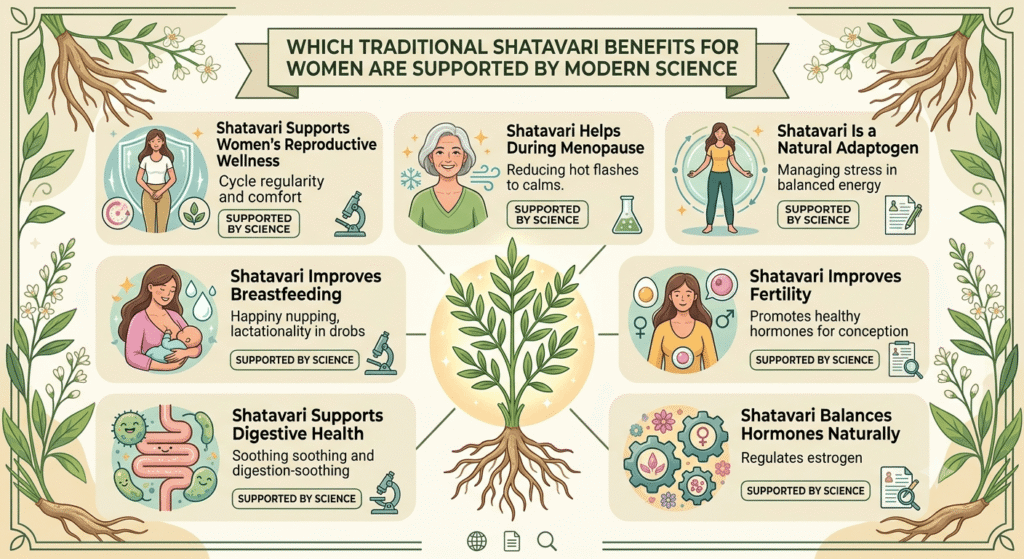 For thousands of years, Shatavari earned its reputation through observation.
Ayurvedic practitioners recommended it based on centuries of practical experience.
Modern researchers ask different questions.
Instead of asking,
“Has this herb been used for a long time?”
they ask,
“Can its traditional uses be confirmed through carefully designed human studies?”
Sometimes traditional wisdom and scientific research align remarkably well.
Sometimes the evidence is encouraging but incomplete.
And sometimes popular marketing claims go far beyond what current science can support.
Let’s examine the major claims one by one.
We’ll classify each using four evidence levels:
🟢 Moderate Evidence
🟡 Promising but Limited Evidence
🔵 Emerging Research
🔴 Claims Beyond Current Evidence
Claim 1: “Shatavari Supports Women’s Reproductive Wellness”
Verdict
🟡 Promising but Limited Evidence
This is Shatavari’s most recognized traditional use.
Classical Ayurvedic texts describe it as a nourishing herb for women throughout adulthood.
Modern clinical research has investigated Shatavari in several aspects of women’s reproductive health, but the available studies are generally:
- Small
- Short-term
- Conducted in limited populations
Some findings are encouraging, particularly regarding overall women’s wellness, but researchers agree that larger, high-quality human trials are still needed.
Practical Takeaway
Traditional use is extensive, but current clinical evidence should be viewed as supportive rather than definitive.
Claim 2: “Shatavari Helps During Menopause“
Verdict
🟡 Promising but Limited Evidence
As estrogen naturally declines during menopause, many women explore herbal supplements to support their well-being.
Several studies have investigated whether Shatavari may help improve aspects of quality of life during this transition.
Some research suggests possible improvements in:
- General comfort
- Overall well-being
- Certain menopause-related symptoms
However, study results have not been entirely consistent.
Researchers continue investigating which women may benefit most and under what circumstances.
Practical Takeaway
Shatavari may have a supportive role for some women, but it should not replace evidence-based medical treatments when those are appropriate.
Claim 3: “Shatavari Is a Natural Adaptogen”
Verdict
🔵 Emerging Research
The word adaptogen has become one of the most overused terms in the supplement industry.
Traditionally, Shatavari has been described as a rejuvenating herb that helps the body maintain balance during periods of physical and emotional stress.
Modern scientists are exploring this concept through research on:
- Stress response
- Physiological adaptation
- Homeostasis
Laboratory and animal studies have produced interesting findings, but human evidence remains relatively limited.
Practical Takeaway
The adaptogenic potential of Shatavari is scientifically interesting, but more robust human research is needed before firm conclusions can be drawn.
Claim 4: “Shatavari Improves Breastfeeding”
Verdict
🟡 Promising but Limited Evidence
One of Shatavari’s traditional uses involves supporting lactation after childbirth.
Some clinical studies have explored whether Shatavari may help support breast milk production.
Several reported positive findings, but limitations remain:
- Small sample sizes
- Different study designs
- Variable supplement formulations
Because breastfeeding is a sensitive area of health, supplements should always be discussed with a healthcare professional.
Practical Takeaway
Current research is encouraging but not strong enough to recommend Shatavari universally for increasing milk supply.
Claim 5: “Shatavari Improves Fertility”
Verdict
🔴 Claims Beyond Current Evidence
This is one of the most exaggerated claims found online.
Although Shatavari Benefits for Women has traditionally been associated with reproductive wellness, there is insufficient evidence to conclude that it improves fertility in healthy women or treats infertility.
Fertility depends on many factors, including:
- Ovulation
- Egg quality
- Hormonal function
- Male fertility
- Age
- Medical conditions
No herbal supplement should be viewed as a standalone fertility treatment.
Practical Takeaway
Couples experiencing difficulty conceiving should seek comprehensive medical evaluation rather than relying solely on supplements.
Claim 6: “Shatavari Supports Digestive Health”
Verdict
🔵 Emerging Research
Ayurveda has long viewed digestion as the foundation of overall health.
Traditionally, Shatavari has been used to support digestive comfort and nourishment.
Modern laboratory studies suggest that certain compounds within Shatavari possess biological properties that may be relevant to gastrointestinal health.
However, human clinical evidence remains limited, and more research is required before specific digestive health claims can be confirmed.
Claim 7: “Shatavari Supports Healthy Aging”
Verdict
🔵 Emerging Research
Researchers have identified antioxidant compounds in Shatavari that may help protect cells from oxidative stress.
Oxidative stress is associated with many aspects of aging and chronic disease.
While these laboratory findings are encouraging, they do not automatically translate into proven anti-aging effects in humans.
Practical Takeaway
Shatavari may contribute to a healthy lifestyle, but it should not be marketed as an anti-aging miracle.
Claim 8: “Shatavari Balances Hormones Naturally”
Verdict
🔴 Claims Beyond Current Evidence
This phrase appears on countless supplement labels.
Unfortunately, it oversimplifies a highly complex biological system.
Hormonal health involves numerous glands, feedback mechanisms, and chemical messengers.
Current research does not demonstrate that Shatavari universally “balances hormones” for every woman.
Practical Takeaway
A more accurate statement would be:
Shatavari Benefits for Women is traditionally used to support women’s wellness, while research continues to investigate its effects on various physiological pathways.
That wording reflects the current state of evidence much more accurately.
Evidence Snapshot
|
Traditional Claim |
Current Evidence |
| Supports women’s reproductive wellness | 🟡 Promising but Limited |
| May support menopause wellness | 🟡 Promising but Limited |
| Adaptogenic properties | 🔵 Emerging Research |
| May support breastfeeding | 🟡 Promising but Limited |
| Improves fertility | 🔴 Evidence Insufficient |
| Supports digestive wellness | 🔵 Emerging Research |
| Supports healthy aging | 🔵 Emerging Research |
| Balances hormones naturally | 🔴 Marketing Exceeds Evidence |
Why Are Shatavari Benefits for Women- Difficult to Study?
Unlike pharmaceutical drugs, Shatavari presents several research challenges.
Researchers must account for differences in:
- Whole root powder versus standardized extracts
- Cultivation methods
- Growing conditions
- Processing techniques
- Dosage
- Study duration
- Participant characteristics
In addition, many traditional Ayurvedic formulations combine Shatavari with other herbs.
When multiple botanicals are studied together, it’s difficult to determine which ingredient is responsible for the observed effects.
This explains why research conclusions often appear more cautious than traditional claims.
Tradition and Science Don’t Have to Compete
One common misconception is that traditional medicine and modern science must always disagree.
In reality, they answer different questions.
Traditional systems ask:
“What has been observed over generations?”
Scientific research asks:
“Can those observations be consistently reproduced under controlled conditions?”
These approaches complement one another.
Traditional knowledge often guides researchers toward promising plants.
Scientific studies then determine where those traditional observations are strongly supported, partially supported, or still uncertain.
Shatavari Benefits for Women are an excellent example of this ongoing conversation between ancient wisdom and modern evidence.
The Most Helpful Question to Ask
Instead of asking:
“Does Shatavari work?”
Ask:
“Which specific health concern am I hoping to support, and what does the evidence say for that concern?”
That question leads to more informed decisions than relying on broad marketing promises.
Choosing the Right Shatavari Supplement – From Traditional Churna to Modern Capsules
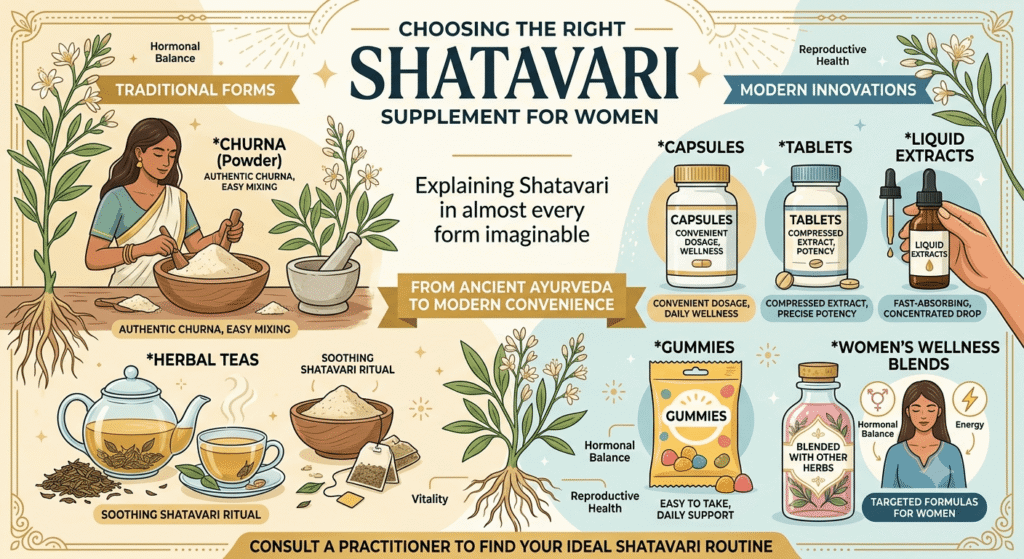 Walk into an Ayurvedic pharmacy or browse an online supplement store, and you’ll find Shatavari in almost every form imaginable.
- Powder
- Capsules
- Tablets
- Liquid extracts
- Herbal teas
- Gummies
- Women’s wellness blends
Some products promise:
“Ancient Ayurvedic Formula.”
Others claim:
“Maximum Strength Hormonal Balance.”
Some emphasize being organic. Others highlight extraction technology. For someone new to Ayurveda, it can feel overwhelming.
Fortunately, choosing a quality Shatavari supplement doesn’t have to be complicated.
Instead of chasing marketing buzzwords, focus on understanding what you’re actually buying.
Step 1: Understand Which Part of the Plant Is Used
Unlike many medicinal plants where leaves or flowers are used, Shatavari supplements are primarily made from the plant’s root.
The botanical name is:
Asparagus racemosus
A trustworthy label should clearly state:
- Botanical name
- Plant part used (root)
- Amount per serving
If this information is missing, the manufacturer isn’t being fully transparent.
Step 2: Traditional Powder vs. Modern Extract
This is the biggest decision you’ll make.
Traditional Shatavari Powder (Churna)
In Ayurveda, Shatavari has traditionally been consumed as a finely ground root powder, often called churna.
Advantages
✔ Traditional preparation
✔ Minimal processing
✔ Can be mixed with warm milk or water
✔ Often more economical
Limitations
- Earthy taste that some people dislike
- Larger serving sizes
- Less convenient for travel
For people who appreciate traditional Ayurvedic practices, powder remains a popular choice.
Standardized Extract
Modern supplements often use concentrated extracts.
These are processed to provide a more consistent amount of certain naturally occurring compounds.
Advantages
- Smaller capsules
- Greater consistency between batches
- Convenient daily use
Limitations
- Different companies standardize different compounds
- Higher concentration doesn’t always mean better effectiveness
Remember:
A standardized extract is different from a superior extract.
Quality depends on much more than potency alone.
Step 3: Capsule, Tablet, Powder, or Liquid?
Each format has strengths and weaknesses.
Capsules
The most popular option.
Ideal for people who:
- Prefer convenience
- Travel frequently
- Dislike the taste of herbal powders
Tablets
Very similar to capsules.
However, tablets sometimes contain more binding agents than capsules.
Powder
Best suited for people who enjoy traditional Ayurvedic routines.
Some practitioners recommend mixing the powder into:
- Warm milk
- Plant-based milk
- Warm water
The taste is naturally earthy and slightly bitter.
Liquid Extracts
Liquid preparations are less common than capsules but offer flexible serving sizes.
Some tinctures contain alcohol, so always read the label carefully.
Gummies
Although increasingly popular, gummies often contain:
- Added sugars
- Flavorings
- Lower herbal content
They’re convenient but may not reflect traditional use or research formulations.
Step 4: Organic Doesn’t Automatically Mean Better
Many buyers immediately choose products labelled Organic.
Organic certification can indicate responsible agricultural practices and reduced pesticide exposure.
However, it doesn’t automatically guarantee:
- Higher potency
- Better extraction methods
- More active compounds
- Superior clinical effectiveness
Think of organic certification as one positive factor, not the only measure of quality.
Step 5: Single Herb or Women’s Wellness Blend?
You’ll notice two major product categories.
Standalone Shatavari
Contains only Asparagus racemosus.
Advantages of Shatavari Benefits for Women include:
- Easier to monitor your response
- Simpler ingredient list
- Lower risk of unnecessary ingredients
This is often a sensible starting point for first-time users.
Multi-Herb Formulas
Some supplements combine Shatavari with herbs such as:
- Ashwagandha
- Dong Quai
- Vitex (Chasteberry)
- Maca Root
- Black Cohosh
- Licorice Root
Combination products may be convenient, but they also make it difficult to identify which ingredient is producing benefits—or side effects.
Step 6: Learn to Read Beyond the Front Label
Marketing language is designed to attract attention.
Some claims deserve a closer look.
🚩 “Hormone Balance Formula”
This phrase has no standardized medical definition.
Ask yourself:
- Which hormones?
- Based on what evidence?
- In which population?
If the company doesn’t explain its claims, be cautious.
🚩 “Clinically Proven”
Always investigate further.
Questions to ask include:
- Was the exact product studied?
- Was the study conducted in humans?
- How many participants were involved?
- Was there a placebo group?
One small study should not be interpreted as universal proof.
🚩 “Ancient Secret”
Shatavari isn’t a secret.
It’s one of the best-known herbs in Ayurveda.
Companies using mysterious language often emphasize storytelling over evidence.
🚩 “Instant Results”
Traditional Ayurvedic herbs are generally intended to support long-term wellness.
Any product promising dramatic overnight changes should be viewed skeptically.
Step 7: Quality Markers That Actually Matter
Instead of focusing only on advertising, look for signs of manufacturing quality.
A reputable company should provide:
✔ Botanical name (Asparagus racemosus)
✔ Plant part used
✔ Serving size
✔ Manufacturing standards (such as GMP)
✔ Batch or lot number
✔ Expiration date
✔ Contact information
✔ Clear ingredient list
Transparency is often a stronger indicator of quality than flashy packaging.
Five Common Buying Mistakes
Mistake 1: Assuming Every Shatavari Product Is the Same
Different products may vary in:
- Processing
- Raw material quality
- Concentration
- Purity
Comparing labels is worthwhile.
Mistake 2: Buying the Strongest Product Available
Higher concentration isn’t always necessary.
More isn’t automatically better.
The appropriate product depends on the individual’s goals and professional guidance.
Mistake 3: Taking Too Many Women’s Supplements Together
Some people combine:
- Shatavari
- Vitex
- Dong Quai
- Maca
- Black Cohosh
all at once. While the intention is understandable, combining several botanicals can make it difficult to determine which product is helping—or causing side effects.
Mistake 4: Ignoring Lifestyle Factors
Ayurveda traditionally views herbs as one part of a larger wellness strategy.
A supplement cannot replace:
- Balanced nutrition
- Sleep
- Physical activity
- Stress management
- Medical care when needed
Even the highest-quality supplement has limitations if these foundations are neglected.
Mistake 5: Buying Based Only on Social Media
Influencers often share personal experiences.
These stories can be interesting, but they are not a substitute for scientific evidence.
A supplement that works well for one individual may not produce the same results for another.
Your Shatavari Buyer’s Checklist
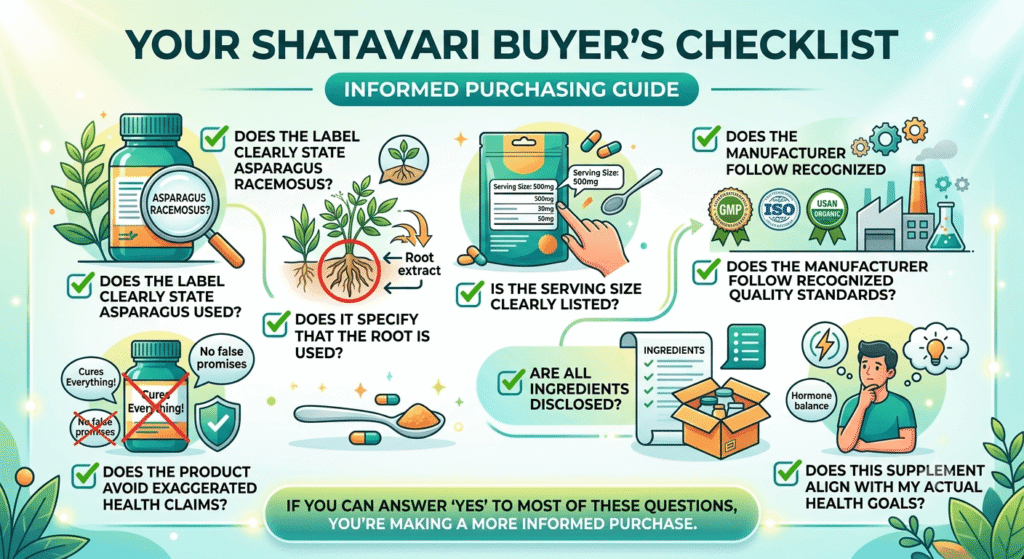 Before purchasing any product, ask yourself:
✔ Does the label clearly state Asparagus racemosus?
✔ Does it specify that the root is used?
✔ Is the serving size clearly listed?
✔ Does the manufacturer follow recognized quality standards?
✔ Does the product avoid exaggerated health claims?
✔ Are all ingredients disclosed?
✔ Does this supplement align with my actual health goals?
If you can answer “yes” to most of these questions, you’re making a more informed purchase.
One Final Thought Before You Buy
In Ayurveda, herbs like Shatavari were never viewed as quick fixes.
They were traditionally used alongside:
- Thoughtful nutrition
- Daily routines
- Restorative sleep
- Mind-body balance
- Individualized care
Modern supplement shopping often encourages the opposite mindset:
“Buy one product and solve every problem.”
The truth lies somewhere in between.
A high-quality Shatavari supplement may become a valuable part of a wellness plan—but it should complement healthy habits and professional healthcare, not replace them.
The Final Verdict – Is Shatavari the Right Herb for Your Wellness Journey?
After exploring Shatavari’s Ayurvedic heritage, examining modern scientific research, and learning how to choose a quality supplement, one important question remains:
Is Shatavari the right herb for your specific health goals?
The answer depends on something Ayurveda has emphasized for thousands of years:
The right herb depends on the right person, at the right time, for the right reason.
Unlike supplements marketed as universal solutions, Shatavari Benefits for Women has traditionally been viewed as a long-term wellness companion rather than a quick fix.
Let’s summarize everything we’ve learned.
A Simple Decision Guide
Before adding Shatavari to your routine, ask yourself four questions.
- What Is Your Primary Goal?
Shatavari Benefits for Women has traditionally been associated with:
- Women’s wellness
- General nourishment
- Stress resilience
- Digestive support
- Healthy aging
If your goal is treating a diagnosed medical condition, remember that supplements should complement—not replace—professional medical care.
- Are Your Symptoms Explained?
Many symptoms often blamed on “hormones” may actually have other causes.
Examples include:
- Thyroid disorders
- PCOS
- Iron deficiency
- Vitamin deficiencies
- Chronic stress
- Sleep disorders
- Perimenopause
A proper diagnosis provides far more value than guessing based on internet articles.
- Are You Looking for Long-Term Support?
Traditional Ayurvedic herbs are generally intended to support gradual wellness.
If you’re expecting dramatic changes within a few days, you’re likely to be disappointed.
Patience and consistency are essential.
- Does Shatavari Match Your Lifestyle?
Ayurveda has never treated herbs as isolated solutions.
The traditional approach combines herbal support with:
- Balanced nutrition
- Healthy digestion
- Quality sleep
- Daily movement
- Stress management
When these foundations are ignored, no supplement can fully compensate.
Who May Consider Shatavari?
After discussing it with a healthcare professional, Shatavari Benefits for Women may be worth exploring for individuals who:
✔ Want an evidence-informed Ayurvedic herb.
✔ Prefer gradual wellness support over quick fixes.
✔ Are interested in traditional herbal practices alongside modern healthcare.
✔ Value whole-body wellness rather than focusing on a single symptom.
✔ Understand that research is still evolving in many areas.
Who Should Be Cautious?
Shatavari isn’t appropriate for everyone.
Medical advice is especially important if you:
- Are pregnant.
- Are breastfeeding (despite traditional use, professional guidance is still recommended).
- Have hormone-sensitive medical conditions.
- Take prescription medications regularly.
- Have unexplained vaginal bleeding.
- Have severe digestive symptoms.
- Have known allergies to plants in the asparagus family.
When in doubt, consult your physician or qualified healthcare practitioner before starting supplementation.
Possible Side Effects
Human studies generally suggest that Shatavari is well tolerated when used appropriately.
However, like any herbal supplement, side effects are possible.
Digestive Effects
Some individuals may experience:
- Mild stomach discomfort
- Gas
- Loose stools
- Nausea
These symptoms are usually temporary but should be monitored.
Allergic Reactions
Because Shatavari belongs to the asparagus family, individuals with known asparagus allergies should exercise caution.
Possible signs include:
- Rash
- Itching
- Swelling
- Difficulty breathing (requires immediate medical attention)
Medication Considerations
Although research is still developing, discuss Shatavari with your healthcare provider if you take medications for:
- Hormonal conditions
- Diabetes
- Blood pressure
- Immune disorders
Potential interactions have not been fully studied.
Shatavari Compared with Other Women’s Herbs
Each herb has its own traditional philosophy and research focus.
| Herb | Traditional Strength | Best Known For |
| Shatavari | Ayurvedic whole-body nourishment | Women’s wellness and vitality |
| Vitex (Chasteberry) | Hormone signaling support | PMS and menstrual wellness |
| Dong Quai | Traditional Chinese Medicine | Women’s reproductive wellness |
| Maca Root | Adaptogenic nutrition | Energy and resilience |
| Black Cohosh | North American herbal tradition | Menopause symptom support |
Rather than asking which herb is “best,” ask:
Which herb best matches my current health goals and the available scientific evidence?
Frequently Asked Questions
Q1. Can men take Shatavari?
Yes. Although Shatavari Benefits for Women are most commonly associated with women’s health, traditional Ayurvedic practice has also used it for general vitality.
However, research in men is limited.
Q2. Does Shatavari increase estrogen?
Current evidence does not support the claim that Shatavari directly increases estrogen levels in humans.
Some laboratory studies have explored estrogen-like activity, but human evidence remains insufficient.
Q3. Can Shatavari improve fertility?
There is not enough high-quality evidence to recommend Shatavari as a fertility treatment.
Couples experiencing infertility should seek a comprehensive medical evaluation.
Q4. How long should I take Shatavari?
There is no universal answer.
Duration depends on:
- Your health goals
- Product formulation
- Healthcare provider recommendations
Follow the manufacturer’s directions unless advised otherwise by your clinician.
Q5. Is powder better than capsules?
Not necessarily.
Powder reflects traditional Ayurvedic use.
Capsules provide greater convenience and consistent serving sizes.
The best option depends on your preferences and lifestyle.
Key Lessons from This Guide
If you remember only five things from this article, let them be these:
- Shatavari Is More Than a “Hormone Herb”
Ayurveda has traditionally valued it for whole-body nourishment and long-term wellness.
- Tradition and Science Both Matter
Ancient use provides valuable historical context, while modern clinical research helps determine which benefits are supported by evidence.
- Marketing Often Oversimplifies
Claims such as “balances hormones naturally” should be interpreted carefully.
Women’s health is far more complex than any single supplement.
- Quality Matters More Than Hype
A transparent manufacturer, accurate labeling, and good manufacturing practices are more important than flashy promises.
- Supplements Are Only One Piece of Wellness
Healthy habits remain the foundation of long-term health.
No herb can replace:
- Nutritious food
- Regular movement
- Restorative sleep
- Stress management
- Appropriate medical care

Final Verdict
Shatavari Benefits for Women occupies a unique position among women’s wellness herbs.
Unlike many supplements that focus on one symptom or one stage of life, Ayurveda has traditionally regarded Shatavari as a herb that supports overall nourishment, resilience, and vitality throughout adulthood.
Modern science has begun exploring Shatavari Benefits for Women, particularly in areas such as women’s wellness, menopause, lactation, and stress adaptation.
While some findings are encouraging, many questions remain.
This means Shatavari Benefits for Women deserves both respect for its traditional heritage and careful evaluation through ongoing scientific research.
If your goal is to support long-term wellness with realistic expectations—and under appropriate professional guidance—Shatavari may be a valuable addition to your health routine.
If you’re searching for a single herb to solve every hormonal concern, it’s unlikely to meet those expectations.
The strongest health strategy is rarely built around one supplement. It’s built around informed choices, healthy habits, and evidence-based care.
Continue Your Ayurveda Wellness Journey
If you found this guide helpful, explore other evidence-based articles in our Ayurveda Wellness Journey:
Related Ayurvedic Wellness Articles
Ashwagandha Benefits: Uses, Dosage, Side Effects & More
Shilajit Benefits: Science, Uses, Safety & How to Choose the Best Supplement