
Giloy: Miracle Herb or Misunderstood Plant? Separating Ancient Wisdom from Modern Science
“One herb. Hundreds of claims. But how much of it is actually supported by science?”
If you’ve searched for natural immune boosters over the past few years, you’ve almost certainly come across Giloy.
Some websites describe it as an “immunity miracle.” Others claim it detoxifies the body, lowers blood sugar, improves digestion, fights infections, and even slows aging.
On the other hand, you’ve probably also seen headlines questioning whether Giloy supplements are safe.
So what’s the truth?
Has this climbing vine been unfairly criticized, or has marketing gone too far?
Instead of repeating the same claims you’ll find on hundreds of websites, let’s investigate what Giloy really is, where its reputation comes from, and what current scientific evidence actually tells us.
Part 1: Meet the Vine That Refuses to Die
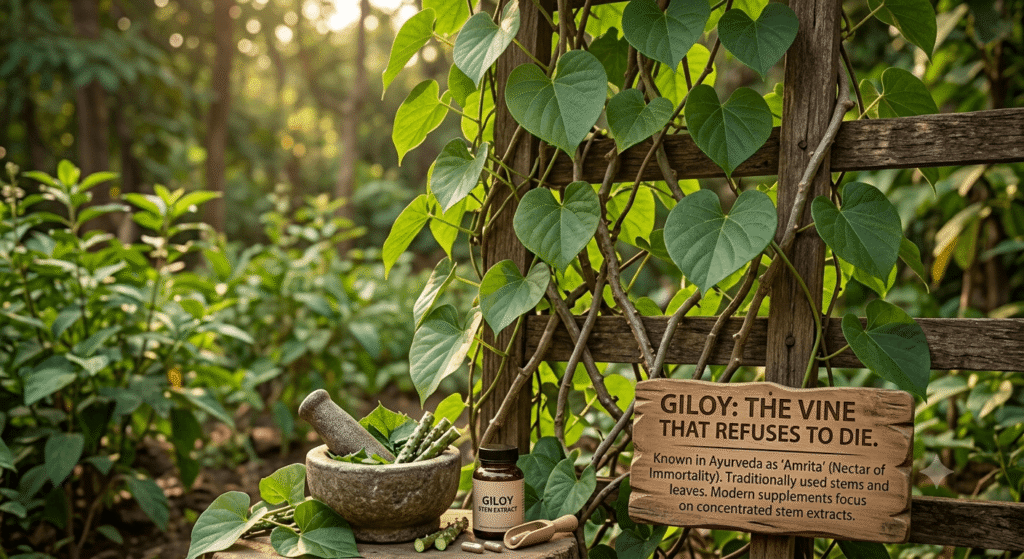 Giloy isn’t a newly discovered superfood.
It’s a climbing shrub scientifically known as Tinospora cordifolia, native to India and several neighboring countries.
In Ayurveda, it has been used for centuries and is traditionally known as “Amrita,” a Sanskrit word often translated as the nectar of immortality.
That name alone explains why expectations surrounding Giloy have become so high.
Traditionally, Ayurvedic practitioners used different parts of the plant—including its stems and leaves—for a variety of wellness purposes.
Modern supplements, however, are usually made from concentrated stem extracts.
Understanding this difference is important because traditional preparations and commercial supplements are not always identical.
Why Has Giloy Become So Popular?
The answer isn’t complicated.
People today are looking for ways to support:
- Immune health
- Energy
- Healthy aging
- Better resilience
During recent years, interest in immune-supporting supplements increased dramatically worldwide.
Giloy quickly became one of the most searched Ayurvedic herbs because of its long history in traditional medicine.
Popularity, however, doesn’t automatically prove effectiveness.
That’s why researchers have begun studying it more closely.
Myth #1: “Giloy Cures Every Disease”
This is one of the biggest misconceptions.
No reputable scientific organization states that Giloy cures chronic diseases.
Current research suggests Giloy contains biologically active compounds that may support certain aspects of health.
But there’s an important difference between:
Supporting normal body function
and
Treating or curing disease.
Understanding this distinction protects consumers from unrealistic expectations.
Inside the Plant: Why Researchers Are Interested
Giloy contains a wide variety of naturally occurring compounds.
Among the best studied are:
- Alkaloids
- Diterpenoids
- Glycosides
- Steroids
- Polysaccharides
- Phenolic compounds
Researchers believe these substances may contribute to the plant’s biological activity.
Rather than relying on one “magic ingredient,” Giloy appears to work through multiple naturally occurring compounds acting together.
Exactly how these compounds interact remains an active area of scientific research.
Myth #2: “Traditional Use Is the Same as Scientific Proof”
Traditional knowledge deserves respect.
After all, Giloy has remained part of Ayurvedic practice for centuries.
However, modern medicine asks different questions.
Researchers want to know:
- Which compounds are active?
- What serving sizes are effective?
- Who benefits most?
- What are the risks?
- What does high-quality clinical research show?
Traditional use often inspires scientific studies—but it doesn’t replace them.
This balance between history and evidence is one of the most fascinating aspects of herbal medicine.
Where Does Modern Research Look Most Promising?
 Although studies are ongoing, researchers have explored Giloy’s potential role in supporting:
Immune Function
Some laboratory and preliminary human studies suggest Giloy may influence certain aspects of immune system activity.
However, more large-scale clinical trials are needed before firm conclusions can be made.
Antioxidant Activity
Like many medicinal plants, Giloy contains antioxidant compounds that may help protect cells from oxidative stress.
Researchers continue investigating how these compounds contribute to overall wellness.
Blood Sugar Regulation
Early research suggests Giloy may influence glucose metabolism.
These findings are promising but should never replace prescribed diabetes treatment.
Joint Comfort
Traditional Ayurvedic medicine has long used Giloy in formulations intended to support joint health.
Modern researchers continue exploring whether these traditional applications are supported by clinical evidence.
Why Scientists Still Use Words Like “May” and “Might”
Some readers wonder why health articles avoid making bold promises.
The answer is simple.
Good science recognizes uncertainty.
When researchers write that Giloy “may support immune health,” they’re acknowledging that:
- Results differ between studies.
- Individuals respond differently.
- More research is often needed.
Using careful language isn’t weakness—it’s scientific honesty.
A Lesson Every Supplement Shopper Should Remember
Whenever you see phrases like:
- Miracle herb
- Guaranteed immunity
- Instant detox
- Disease cure
- Scientifically proven to cure
it’s worth slowing down.
Reliable health information usually explains both the potential benefits and the limitations of current evidence.
That’s one reason Giloy continues to be studied rather than universally recommended for every health condition.
Looking Beyond the Hype
One of the most interesting things about Giloy isn’t what marketers say.
It’s that researchers are still trying to understand it.
Some findings are encouraging.
Others remain inconclusive.
That’s exactly how science progresses.
Instead of asking whether Giloy is a miracle herb, perhaps the better question is:
“Can Giloy become one useful part of a healthy lifestyle?”
For many researchers, that’s a far more realistic—and more useful—question.
Part 2: Inside Your Body – How Giloy May Support Wellness (According to Science)
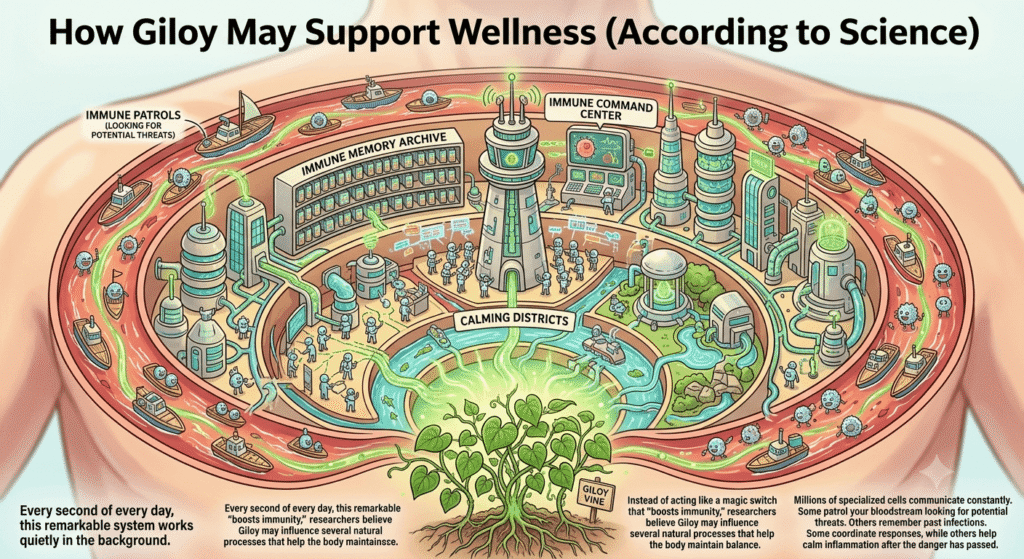 When people hear the word “immunity,” they often imagine a single shield protecting the body from illness.
In reality, your immune system is more like a highly organized city.
Millions of specialized cells communicate constantly. Some patrol your bloodstream looking for potential threats. Others remember past infections. Some coordinate responses, while others help calm inflammation after the danger has passed.
Every second of every day, this remarkable system works quietly in the background.
So where does Giloy fit into this picture?
Instead of acting like a magic switch that “boosts immunity,” researchers believe Giloy may influence several natural processes that help the body maintain balance.
Let’s take a tour through your body’s defense system.
First Stop: Your Body’s Security Team
Imagine your immune system as the security department of a busy airport.
Most travelers pass through without issue.
Occasionally, something suspicious appears.
That’s when the security team becomes active.
Your immune system works similarly.
It identifies bacteria, viruses, and other potentially harmful substances while trying to avoid attacking your own healthy tissues.
This balance is incredibly important.
An immune system that reacts too weakly may struggle to respond to infections.
An immune system that reacts too aggressively may contribute to unnecessary inflammation or autoimmune conditions.
Researchers are studying whether Giloy may help support this natural balance rather than simply “making the immune system stronger.”
Why Balance Matters More Than “Boosting”
The phrase “immune booster” appears everywhere in supplement marketing.
Scientifically, however, the immune system isn’t something most healthy people simply want to “boost.”
Think about a car engine.
More power isn’t always better.
What you really want is smooth, efficient performance.
Researchers often describe healthy immunity using terms such as:
- Balanced
- Regulated
- Well-functioning
- Responsive
These words better reflect how the immune system actually works.
Current studies suggest Giloy may influence certain immune pathways, but researchers are still determining exactly how these effects translate into human health.
Meet Oxidative Stress: The Everyday Wear and Tear
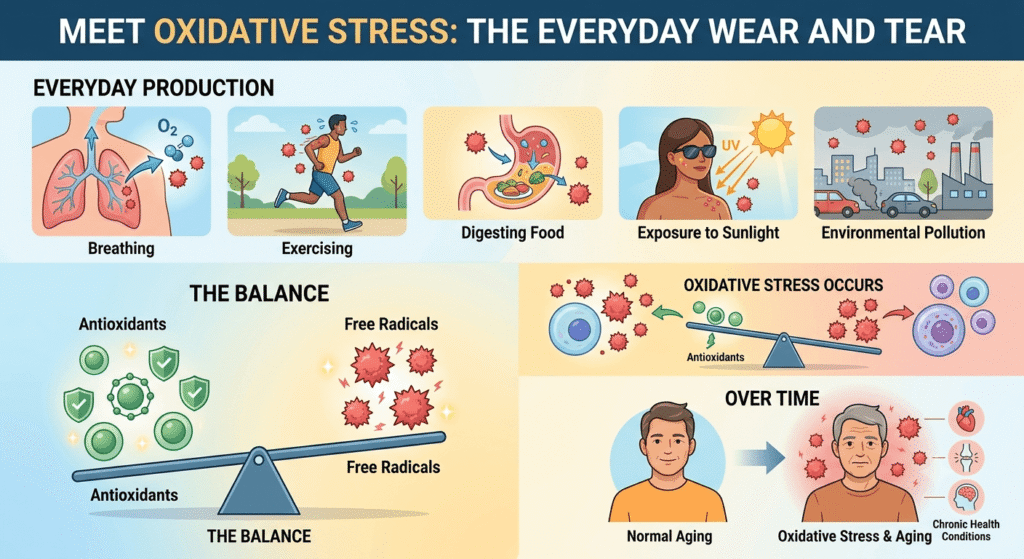 Every day, your body produces unstable molecules called free radicals.
They’re created during perfectly normal activities such as:
- Breathing
- Exercising
- Digesting food
- Exposure to sunlight
- Environmental pollution
Normally, your body controls these molecules using antioxidants.
When free radicals become excessive, oxidative stress may occur.
Over time, oxidative stress has been associated with aging and several chronic health conditions.
Where Giloy Enters the Story
Giloy contains several naturally occurring antioxidant compounds.
Scientists believe these plant chemicals may help support your body’s natural antioxidant defenses.
Rather than acting as a replacement for your own protective systems, these compounds may work alongside them.
This is one reason Giloy continues to attract research interest.
It’s not because it eliminates oxidative stress completely—but because it may contribute to maintaining a healthy balance.
The Inflammation Conversation
Inflammation often gets a bad reputation.
But not all inflammation is harmful.
Imagine cutting your finger while cooking.
The redness and swelling you notice afterward are signs that your immune system has started the healing process.
This is called acute inflammation, and it’s a normal part of recovery.
Problems arise when inflammation becomes prolonged or inappropriate.
Researchers continue investigating whether certain plant compounds in Giloy may help support the body’s normal inflammatory response.
However, this doesn’t mean Giloy should replace treatments prescribed for inflammatory diseases.
Your Gut: An Unexpected Connection
For years, people viewed the digestive system as simply a place where food was broken down.
Today, scientists know it’s much more than that.
Your gut is home to trillions of microorganisms collectively known as the gut microbiome.
These microbes influence digestion, metabolism, and immune function.
Researchers are beginning to explore how traditional herbs, including Giloy, may interact with the gut microbiome.
Although this field is still developing, it’s one of the most exciting areas of nutritional science.
Energy Isn’t Just About Caffeine
Many supplements promise more energy.
Giloy takes a different path.
Rather than stimulating the nervous system like caffeine, researchers are studying whether its plant compounds may support overall vitality by helping the body respond to oxidative stress and maintain normal physiological function.
If these effects occur, they’re likely to be gradual rather than immediate.
That’s one reason traditional herbal practices often emphasize consistent use instead of expecting overnight changes.
Can Giloy Help You Recover Faster?
After strenuous exercise, poor sleep, or periods of stress, your body works hard to restore balance.
Nutrition, hydration, and rest remain the most important recovery tools.
Researchers continue studying whether antioxidant-rich plants like Giloy may complement these healthy habits.
So far, evidence is promising but still limited.
Giloy should be viewed as a supportive addition—not a shortcut to faster recovery.
Why Product Quality Makes a Difference
Not every Giloy supplement is the same.
The concentration of active compounds can vary depending on:
- Which part of the plant is used
- Harvesting methods
- Extraction techniques
- Manufacturing quality
- Storage conditions
This helps explain why two products with “Giloy” on the label may not be identical.
Choosing reputable manufacturers becomes especially important with herbal supplements.
Why More Isn’t Better
One of the biggest misconceptions in the supplement world is that doubling the dose doubles the benefits.
That’s rarely true.
Herbs contain complex mixtures of natural compounds.
Taking more than recommended may increase the likelihood of unwanted effects without providing additional benefits.
Responsible supplementation is about consistency, not excess.
What Researchers Still Don’t Know
Despite centuries of traditional use, several important questions remain unanswered.
Scientists continue investigating:
- Which compounds contribute most to Giloy’s effects
- The ideal serving sizes for different populations
- Long-term safety of concentrated extracts
- Differences between whole stems, powders, and standardized extracts
- Why individuals respond differently
These unanswered questions don’t diminish Giloy’s potential—they simply highlight the need for continued research.
The Bigger Picture
If you’ve noticed a pattern throughout this article, it’s intentional.
Modern nutrition science is moving away from asking:
“What miracle ingredient fixes everything?”
Instead, researchers ask:
“How does this food or herb support the body’s normal functions?”
Giloy fits into this modern perspective surprisingly well.
Its greatest potential may lie not in dramatic claims but in quietly supporting the body’s natural systems alongside a balanced diet, regular exercise, adequate sleep, and appropriate medical care.
Sometimes, the most valuable health habits are the ones that work gradually—and almost unnoticed.
Part 3: Before You Buy Giloy – A Smart Consumer’s Guide to Choosing, Using, and Avoiding Common Mistakes
You’ve read about Giloy’s history. You’ve seen what current research suggests about its potential role in supporting the body’s natural processes.
Now comes the practical question:
“Should I actually buy a Giloy supplement?”
The answer isn’t the same for everyone.
Choosing a supplement isn’t just about finding the highest-rated product or the biggest discount. It’s about understanding whether it fits your lifestyle, your health goals, and your individual needs.
Let’s approach the decision like an informed consumer—not just a shopper.
Step One: Ask Yourself Why You’re Interested in Giloy
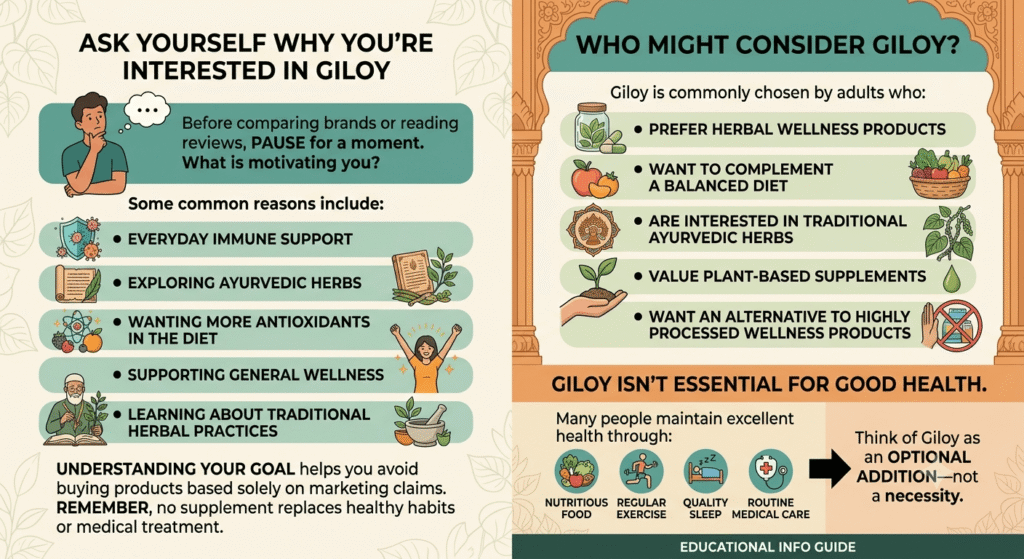 Before comparing brands or reading reviews, pause for a moment.
What is motivating you to consider Giloy?
Some common reasons include:
- Looking for everyday immune support
- Exploring Ayurvedic herbs
- Wanting more antioxidants in the diet
- Supporting general wellness
- Learning about traditional herbal practices
Understanding your goal helps you avoid buying products based solely on marketing claims.
Remember, no supplement replaces healthy habits or medical treatment.
Who Might Consider Giloy?
Giloy is commonly chosen by adults who:
- Prefer herbal wellness products
- Want to complement a balanced diet
- Are interested in traditional Ayurvedic herbs
- Value plant-based supplements
- Want an alternative to highly processed wellness products
However, Giloy isn’t essential for good health.
Many people maintain excellent health through nutritious food, regular exercise, quality sleep, and routine medical care without taking herbal supplements.
Think of Giloy as an optional addition—not a necessity.
Fresh Stem, Powder, Capsules, or Juice?
One reason Giloy has become popular is the variety of products available.
Each has its own advantages.
Fresh Giloy Stem
This is the traditional form used in many Ayurvedic preparations.
Advantages:
- Minimal processing
- Traditional preparation methods
- Whole plant material
Considerations:
- Difficult to find outside South Asia
- Requires preparation
- Short shelf life
Giloy Powder
Popular among people who enjoy smoothies or herbal drinks.
Advantages:
- Flexible serving options
- Can be mixed into beverages
- Usually less expensive than capsules
Considerations:
- Bitter taste
- Requires measuring
- Needs proper storage
Giloy Capsules
Perhaps the most convenient option.
Advantages:
- Easy to carry
- Consistent serving size
- No bitter taste
Considerations:
- Usually more expensive
- Quality varies between manufacturers
Giloy Juice
Often marketed as a daily wellness drink.
Advantages:
- Convenient
- Easy for people who dislike powders
Considerations:
Always check for:
- Added sugar
- Artificial sweeteners
- Preservatives
- Flavor enhancers
Some products contain surprisingly little Giloy compared to other ingredients.
Five Questions Every Smart Buyer Should Ask
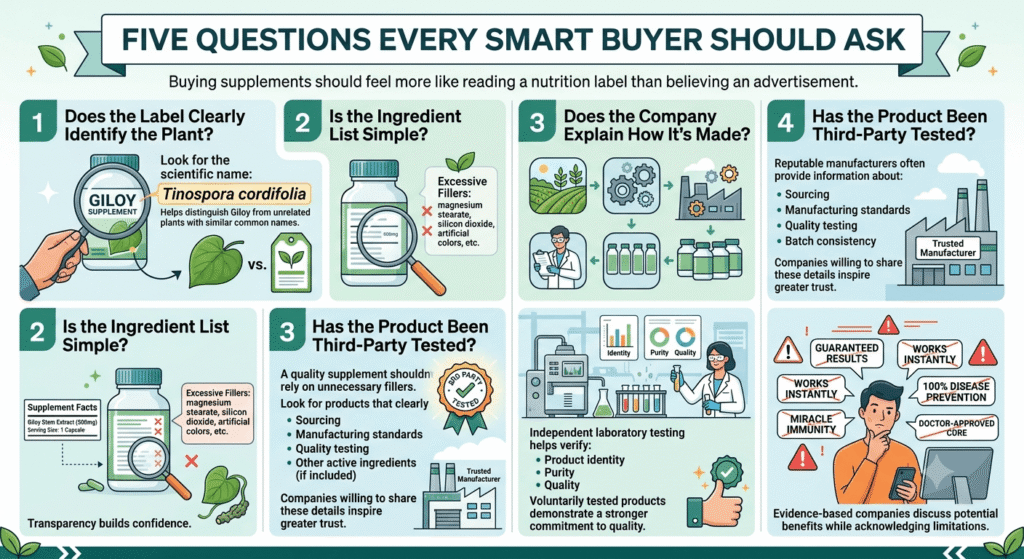 Buying supplements should feel more like reading a nutrition label than believing an advertisement.
Before purchasing, ask yourself:
1. Does the Label Clearly Identify the Plant?
Look for the scientific name:
Tinospora cordifolia
This helps distinguish Giloy from unrelated plants with similar common names.
2. Is the Ingredient List Simple?
A quality supplement shouldn’t rely on a long list of unnecessary fillers.
Look for products that clearly state:
- Giloy content
- Serving size
- Other active ingredients (if included)
Transparency builds confidence.
3. Does the Company Explain How It’s Made?
Reputable manufacturers often provide information about:
- Sourcing
- Manufacturing standards
- Quality testing
- Batch consistency
Companies willing to share these details generally inspire greater trust.
4. Has the Product Been Third-Party Tested?
Independent laboratory testing helps verify:
- Product identity
- Purity
- Quality
While not every excellent supplement is third-party certified, brands that voluntarily test their products often demonstrate a stronger commitment to quality.
5. Does the Marketing Sound Realistic?
Healthy skepticism is valuable.
Be cautious of phrases like:
- “Guaranteed results”
- “Works instantly”
- “Miracle immunity”
- “100% disease prevention”
- “Doctor-approved cure”
Evidence-based companies usually discuss potential benefits while acknowledging limitations.
Building a Routine That Fits Your Life
One of the biggest reasons people stop taking supplements is complexity.
Instead of creating an elaborate wellness routine, build one that’s easy to maintain.
Morning Routine
- Eat a balanced breakfast.
- Take Giloy according to the product directions, if you’ve chosen to use it.
- Drink enough water.
During the Day
Support your overall health with:
- Fruits and vegetables
- Whole grains
- Regular movement
- Good hydration
Evening
Focus on habits that supplements can’t replace:
- Adequate sleep
- Stress management
- Limiting excessive alcohol
- Consistent bedtime
Giloy works best as one small piece of a healthy lifestyle.
Common Buying Mistakes
Even experienced supplement users make avoidable mistakes.
Buying the Cheapest Product
Low prices can be appealing, but extremely inexpensive supplements may cut corners in sourcing or quality control.
Value matters more than price alone.
Assuming “Natural” Means Risk-Free
Natural products can still:
- Cause side effects
- Interact with medications
- Be unsuitable for certain individuals
Responsible use is always important.
Ignoring the Label
Serving sizes differ between products.
Always follow the manufacturer’s instructions unless your healthcare provider recommends otherwise.
Expecting Immediate Results
Many herbal supplements are designed to complement long-term wellness rather than produce noticeable effects within days.
Patience and consistency are more realistic expectations.
Can You Combine Giloy With Other Supplements?
Many wellness products combine Giloy with herbs such as:
- Ashwagandha
- Amla
- Tulsi
- Turmeric
Combination products may be convenient, but they also make it harder to know which ingredient is responsible for any benefits—or side effects.
If you’re trying Giloy for the first time, a single-ingredient product may make it easier to evaluate how it fits into your routine.
What About Organic Products?
Many consumers prefer organic supplements because they are produced according to certified organic farming standards.
When available, choosing a certified organic Giloy product may reduce concerns about certain agricultural chemicals.
However, organic certification does not automatically guarantee that a supplement is more effective. Product quality also depends on sourcing, manufacturing practices, and quality control.
A Practical Perspective
Imagine you’re planting a garden.
One healthy plant won’t transform the entire landscape.
But if you consistently care for every part of the garden—watering, pruning, feeding the soil—over time it flourishes.
Health works much the same way.
Giloy isn’t the garden.
It’s one plant within it.
The real transformation comes from caring for the whole system.
Before You Click “Buy”
Ask yourself these final questions:
✔ Do I understand why I want this supplement?
✔ Am I choosing a reputable brand?
✔ Does the label clearly identify Tinospora cordifolia?
✔ Am I willing to use it consistently?
✔ Am I maintaining healthy habits alongside supplementation?
If you answered “yes” to those questions, you’re approaching supplementation thoughtfully rather than impulsively.
Part 4 (Final): Safety, Side Effects, FAQs, Smart Buying Tips & Final Verdict
 Every herbal supplement eventually leads to one important question:
“Is it actually safe?”
Giloy has been used in traditional Ayurvedic medicine for centuries, but modern consumers deserve answers based on both historical use and current scientific evidence.
The reality is neither as simple as “Giloy is completely harmless” nor as alarming as “Giloy is dangerous.”
Like many botanical supplements, its safety depends on the product, the person using it, the dosage, and the reason for taking it.
Let’s separate the facts from the headlines.
The Headlines That Sparked Concern
Over the past few years, Giloy attracted attention not only for its potential health benefits but also because of reports linking some herbal products containing Tinospora cordifolia to rare cases of liver injury, including immune-mediated liver inflammation.
It’s important to understand what these reports do—and do not—mean.
Current evidence does not show that every Giloy product causes liver problems. However, these reports have prompted researchers and healthcare professionals to recommend caution, particularly with high-dose or long-term use and in people with certain underlying conditions.
Scientists are continuing to investigate whether these reactions are related to Giloy itself, product quality, contamination, incorrect plant identification, or individual susceptibility.
The takeaway isn’t to fear Giloy—it’s to use it responsibly and choose products from reputable manufacturers.
Is Giloy Safe for Most Adults?
For many healthy adults, Giloy has been used traditionally without widespread reports of serious adverse effects.
When taken according to the manufacturer’s instructions and under appropriate guidance, many people tolerate it well.
However, herbal supplements are biologically active, which means they can affect the body in different ways depending on the individual.
If you have a chronic medical condition or take prescription medications, consulting your healthcare provider before starting Giloy is a wise step.
Possible Side Effects
Most reported side effects are mild and temporary.
Some users may experience:
- Mild stomach discomfort
- Nausea
- Constipation or diarrhea
- Headache
- Changes in appetite
Not everyone experiences these effects, and many people tolerate Giloy without noticeable problems.
If symptoms persist or worsen, discontinue use and seek medical advice.
Who Should Avoid Giloy?
Giloy may not be appropriate for everyone.
Speak with a healthcare professional before using Giloy if you:
- Have an autoimmune disease
- Have a history of liver disease
- Are taking immunosuppressant medications
- Have recently received an organ transplant
- Have chronic kidney disease
- Have unexplained abnormal liver function tests
Because Giloy may influence immune activity, it may not be suitable for individuals whose immune systems are intentionally suppressed.
Pregnancy and Breastfeeding
There is currently insufficient high-quality clinical evidence regarding the safety of concentrated Giloy supplements during pregnancy or breastfeeding.
Although Giloy has a long history of traditional use, modern medical guidelines generally recommend avoiding herbal supplements during pregnancy unless specifically advised by a qualified healthcare provider.
If you are:
- Pregnant
- Planning pregnancy
- Breastfeeding
consult your healthcare provider before using Giloy supplements.
Can Giloy Interact With Medications?
Yes.
Because Giloy contains biologically active compounds, it may interact with certain medications.
Possible interactions include:
Diabetes Medications
Some preliminary studies suggest Giloy may influence blood sugar regulation.
People taking insulin or oral diabetes medications should monitor their blood glucose as recommended by their healthcare provider.
Immunosuppressant Drugs
Giloy has traditionally been associated with supporting immune function.
People taking medications that intentionally suppress immune activity should discuss supplementation with their physician.
Liver-Active Medications
Individuals taking medicines that affect liver function should seek medical advice before combining them with herbal supplements, including Giloy.
Choosing a Safe Giloy Supplement
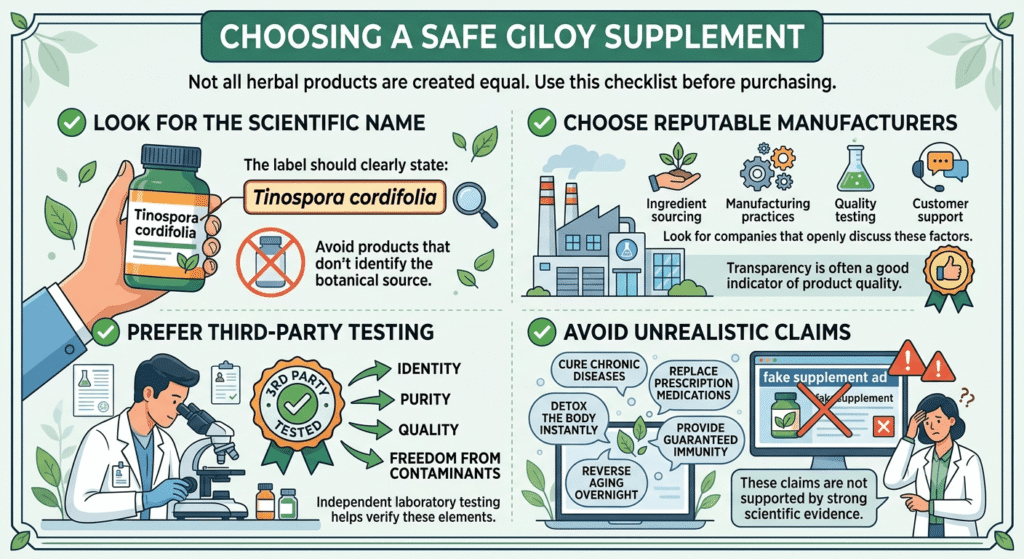 Not all herbal products are created equal.
Use this checklist before purchasing.
✔ Look for the Scientific Name
The label should clearly state:
Tinospora cordifolia
Avoid products that don’t identify the botanical source.
✔ Choose Reputable Manufacturers
Look for companies that openly discuss:
- Ingredient sourcing
- Manufacturing practices
- Quality testing
- Customer support
Transparency is often a good indicator of product quality.
✔ Prefer Third-Party Testing
Independent laboratory testing helps verify:
- Identity
- Purity
- Quality
- Freedom from certain contaminants
✔ Avoid Unrealistic Claims
Be cautious of products claiming to:
- Cure chronic diseases
- Replace prescription medications
- Detox the body instantly
- Provide guaranteed immunity
- Reverse aging overnight
These claims are not supported by strong scientific evidence.
Frequently Asked Questions
Q1. Can I Take Giloy Every Day?
Some people use Giloy daily as part of their wellness routine.
However, long-term use of concentrated supplements should ideally be discussed with a healthcare professional, especially if you have an existing medical condition.
Q2. Is Fresh Giloy Better Than Capsules?
Neither is universally better.
Fresh preparations are closer to traditional Ayurvedic use, while capsules offer convenience and consistent serving sizes.
The best option depends on your preferences and access to quality products.
Q3. Can Giloy Prevent Illness?
No dietary supplement can guarantee prevention of infections or diseases.
Giloy may support aspects of normal immune function, but it should not replace vaccinations, medical treatment, or healthy lifestyle practices.
Q4. Is Giloy Good for Joint Health?
Traditional Ayurvedic medicine has long used Giloy in formulations intended to support joint comfort.
Some early research is encouraging, but larger clinical studies are needed before firm conclusions can be drawn.
Q5. Can Children Use Giloy?
Fresh foods containing Giloy are different from concentrated supplements.
Children should only receive Giloy supplements under the guidance of a qualified healthcare professional.
Q6. Does Giloy Work Immediately?
No.
Herbal supplements generally support long-term wellness rather than producing immediate or dramatic effects.
Consistency and realistic expectations are important.
Final Verdict: Should You Consider Giloy?
After exploring Giloy from multiple perspectives—its history, traditional use, modern research, practical applications, and safety—the conclusion is clear:
Giloy is neither a miracle cure nor a herb to dismiss outright.
It is a traditional Ayurvedic plant with a long history of use and growing scientific interest. Early research suggests it may support immune function, antioxidant defenses, and overall wellness, but many claims still require stronger clinical evidence.
If you decide to use Giloy:
- Choose products from reputable manufacturers.
- Follow the recommended serving size.
- Avoid exaggerated marketing claims.
- Talk to your healthcare provider if you have medical conditions or take prescription medications.
The most effective wellness strategy has never been one supplement—it has always been a combination of nutritious food, regular physical activity, quality sleep, stress management, and informed healthcare decisions.
Giloy may complement that lifestyle, but it cannot replace it.
Medical Disclaimer
This article is intended for educational purposes only and should not be interpreted as medical advice. Scientific understanding of herbal supplements continues to evolve, and individual responses may vary. Always consult a qualified healthcare professional before using Giloy or any dietary supplement, especially if you are pregnant, breastfeeding, have liver disease, an autoimmune condition, or take prescription medications. Never discontinue prescribed treatment based on information from an online article.