Resveratrol Benefits: An Evidence-Based Review of the World’s Most Talked-About Longevity Supplement
“What if one naturally occurring compound could help scientists better understand the biology of aging?”
That’s the question that transformed Resveratrol from an obscure plant compound into one of the most researched dietary supplements of the 21st century.
It has been featured in bestselling books on longevity, discussed in documentaries, and investigated in thousands of scientific studies. Health influencers praise it, biohackers include it in their daily routines, and researchers continue exploring its potential role in healthy aging.
But there’s a problem.
The excitement surrounding Resveratrol has often outpaced the evidence.
Part 1: The Longevity Molecule Everyone Is Talking About
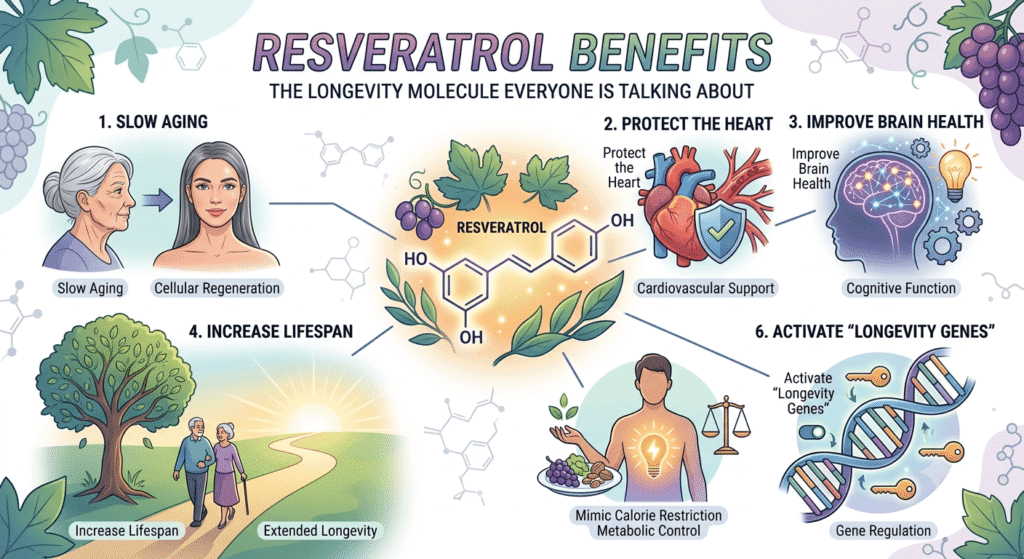
Depending on where you look, you’ll find claims that it can:
- Slow aging
- Protect the heart
- Improve brain health
- Increase lifespan
- Mimic calorie restriction
- Activate “longevity genes”
Some of these claims are supported by promising research.
Others are based primarily on laboratory studies—or are simply exaggerated marketing.
If you’re considering adding Resveratrol to your supplement routine, the real question isn’t “Is it popular?”
It’s:
“What does the current scientific evidence actually support?”
That’s exactly what this guide will help you discover.
Welcome to the first article in our Longevity & Modern Wellness series, where we separate scientific evidence from supplement hype—one ingredient at a time.
Why Longevity Has Become One of the Biggest Wellness Trends
Not long ago, conversations about aging focused mainly on adding more years to life.
Today, the conversation has changed.
People are increasingly interested in health span—the number of years spent living actively, independently, and in good health.
Instead of asking:
“How can I live longer?”
many people now ask:
“How can I stay healthier as I get older?”
This shift has fueled interest in nutrition, exercise, sleep, stress management, and supplements that may support healthy aging.
Resveratrol has become one of the most recognizable names in that conversation.
So, What Exactly Is Resveratrol?
Resveratrol is a naturally occurring polyphenol, a group of plant compounds produced as part of a plant’s natural defense system.
Think of it as one of nature’s protective molecules.
Plants produce Resveratrol when they’re exposed to environmental stressors such as:
- UV radiation
- Fungal infections
- Physical injury
- Harsh weather conditions
Scientists believe these compounds help protect the plant itself.
The next question became:
Could they also support human health?
That curiosity sparked decades of scientific research.
Where Does Resveratrol Come From?
One of the reasons Resveratrol became famous is that it occurs naturally in foods many people already consume.
Natural dietary sources include:
- Red grapes
- Red wine
- Blueberries
- Cranberries
- Peanuts
- Pistachios
- Japanese knotweed (Polygonum cuspidatum)
Although these foods contain Resveratrol, the amounts are generally much lower than those found in dietary supplements.
For example, drinking red wine solely to increase Resveratrol intake isn’t considered a practical or recommended strategy, as the potential risks of alcohol outweigh any possible benefit from its Resveratrol content.
This is one reason supplement manufacturers began offering concentrated Resveratrol extracts.
The Discovery That Changed Everything: The French Paradox
If you’ve read about Resveratrol Benefits before, you’ve probably come across the term “French Paradox.”
Here’s the story.
In the late 20th century, researchers noticed something unusual.
Despite consuming diets that included relatively high amounts of saturated fat, populations in parts of France appeared to have comparatively lower rates of coronary heart disease than expected.
One proposed explanation was their regular—but generally moderate—consumption of red wine.
Since red wine contains Resveratrol, scientists wondered whether this plant compound might help explain the observation.
The hypothesis generated enormous interest and led to years of research into Resveratrol and cardiovascular health.
However, it’s important to remember:
The French Paradox is an observation—not proof that Resveratrol Benefits alone protects heart health.
Diet, lifestyle, physical activity, healthcare access, and many other factors also influence cardiovascular outcomes.
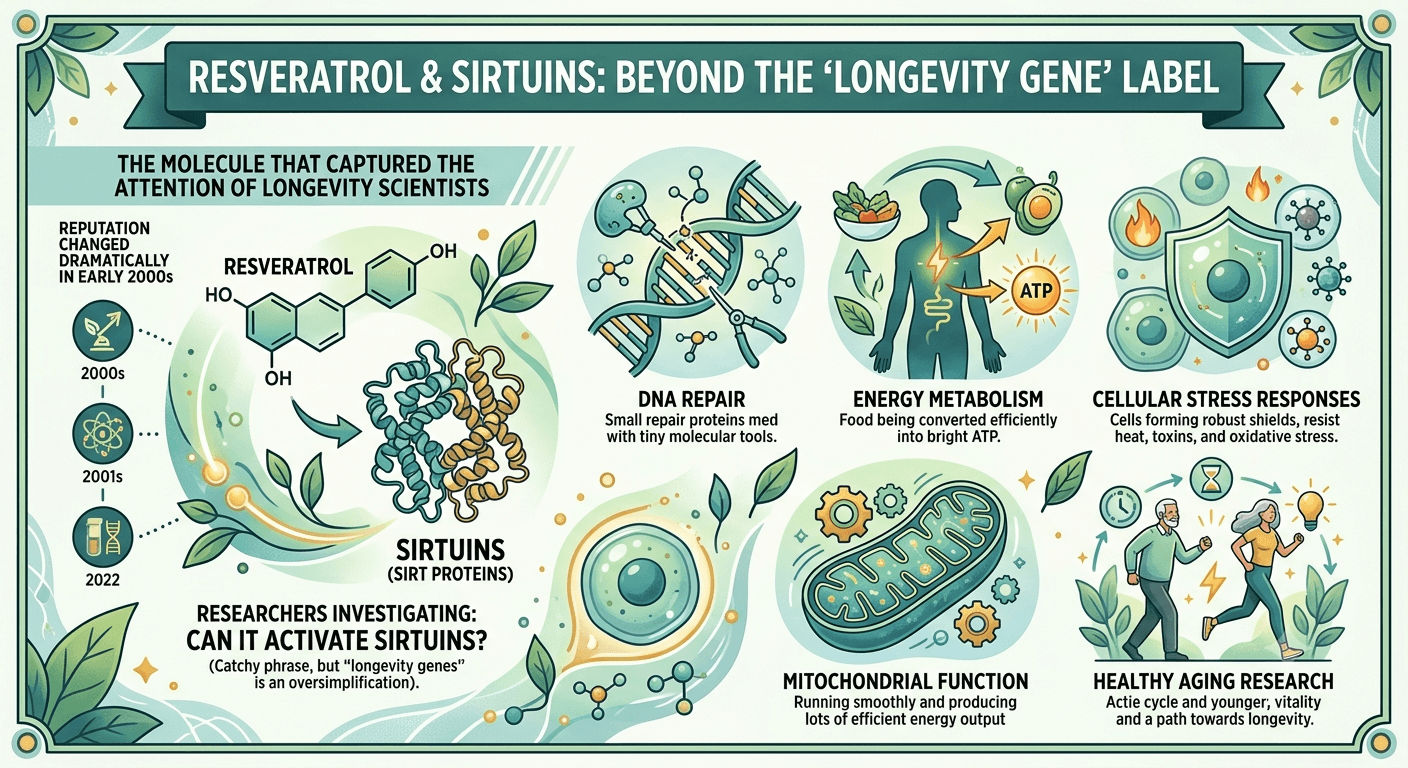
The Molecule That Captured the Attention of Longevity Scientists
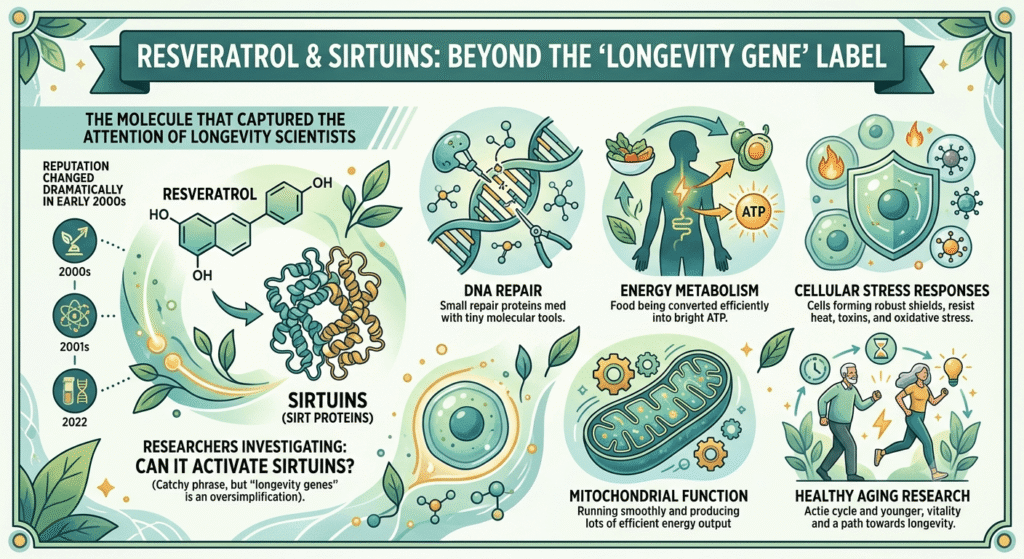
Resveratrol’s reputation changed dramatically in the early 2000s.
Researchers began investigating whether it could activate a family of proteins called sirtuins.
You may have heard sirtuins described as “longevity genes.”
That’s a catchy phrase—but it’s also an oversimplification.
A more accurate explanation is this:
Sirtuins are proteins involved in important cellular processes, including:
- DNA repair
- Energy metabolism
- Cellular stress responses
- Mitochondrial function
- Healthy aging research
Early laboratory studies suggested that Resveratrol Benefits might influence some of these pathways.
The findings generated excitement because they hinted at the possibility of supporting cellular health through nutritional compounds.
But there’s a crucial distinction.
Most of these early discoveries occurred in cells and laboratory animals.
Whether the same effects occur in humans remains an active area of research.
This difference is often lost in supplement marketing.
Why Biohackers Love Resveratrol Benefits
Spend a few minutes listening to podcasts about longevity, and you’re likely to hear Resveratrol Benefits mentioned.
Why?
Because many biohackers focus on optimizing long-term health using nutrition, exercise, sleep, and carefully selected supplements.
Resveratrol Benefits became popular in these communities because of research exploring:
- Cellular ageing
- Oxidative stress
- Mitochondrial health
- Inflammation
- Metabolic health
However, it’s important to separate scientific curiosity from established clinical evidence.
Many longevity strategies discussed online are still being investigated, and not all have been proven to improve health outcomes in humans.
Antioxidants: More Than Just a Buzzword
One word you’ll see repeatedly in discussions about Resveratrol is antioxidant.
But what does that actually mean?
Every day, normal metabolism produces unstable molecules known as free radicals.
In appropriate amounts, they play useful roles in the body.
Problems may arise when their production exceeds the body’s ability to regulate them, contributing to oxidative stress.
Resveratrol has demonstrated antioxidant activity in laboratory research, leading scientists to investigate whether it may help support the body’s natural defenses against oxidative stress.
However, antioxidant activity observed in test tubes doesn’t automatically translate into measurable health benefits in people.
That’s why human clinical trials remain essential.
Is Resveratrol Just Another Antioxidant?
Not exactly.
Many supplements provide antioxidant compounds.
What makes Resveratrol unique is that researchers aren’t studying it only because it’s an antioxidant.
They’re also investigating its potential influence on:
- Cellular signalling
- Gene expression
- Inflammatory pathways
- Mitochondrial function
- Metabolic regulation
This broader research focus is one reason Resveratrol receives so much attention in longevity science.
How Does Resveratrol Benefits Compare with Curcumin Benefits?
If you’ve already read our guide on Turmeric (Curcumin), you may wonder how these two supplements differ.
Although both are plant-derived compounds with antioxidant and anti-inflammatory properties, they have different research priorities.
| Resveratrol Benefits | Curcumin Benefits |
| Primarily studied for healthy aging, cardiovascular health, and cellular wellness | Primarily studied for inflammation, joint health, and immune support |
| Naturally found in grapes, berries, and Japanese knotweed | Derived from turmeric root |
| Research often focuses on sirtuins, metabolism, and longevity | Research often focuses on inflammatory pathways and antioxidant effects |
Rather than competing, these supplements address different aspects of wellness.
Future research may clarify how they complement one another.
A Reality Check Before We Go Further
If you’ve read supplement advertisements, it’s easy to believe that Resveratrol has already solved the mystery of ageing.
It hasn’t.
Here’s what we know today:
✔ Thousands of scientific studies have investigated Resveratrol Benefits.
✔ Laboratory findings are often promising.
✔ Human research is growing.
❌ Many popular claims remain unproven.
Understanding where the evidence is strong—and where it remains uncertain—is the most important step before deciding whether Resveratrol deserves a place in your wellness routine.
Key Takeaways
Before we evaluate specific health claims, remember these important points:
- Resveratrol is a naturally occurring plant polyphenol.
- It became famous through research into healthy aging and the French Paradox.
- It is found naturally in grapes, berries, peanuts, and Japanese knotweed.
- Scientists are studying its potential effects on cellular health, oxidative stress, metabolism, and cardiovascular wellness.
- Early laboratory findings generated excitement, but human clinical evidence is still evolving.
- Popularity should never be confused with proof.
Part 2: The Evidence Scorecard – Separating Scientific Evidence from Supplement Hype
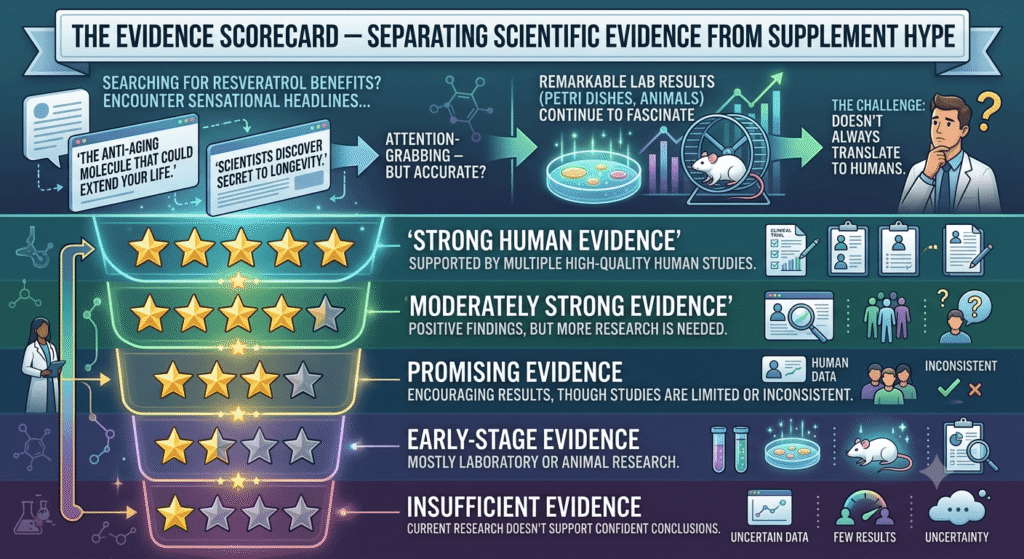 If you’ve ever searched for Resveratrol Benefits online, you’ve probably encountered headlines like these:
“The Anti-Aging Molecule That Could Extend Your Life.”
Or perhaps:
“Scientists Discover the Secret to Longevity.”
These claims are certainly attention-grabbing—but do they reflect the current state of scientific research?
Not entirely.
One reason Resveratrol continues to fascinate researchers is that it has shown remarkable results in laboratory experiments. The challenge is that what happens in a petri dish or animal model doesn’t always translate into meaningful health benefits in humans.
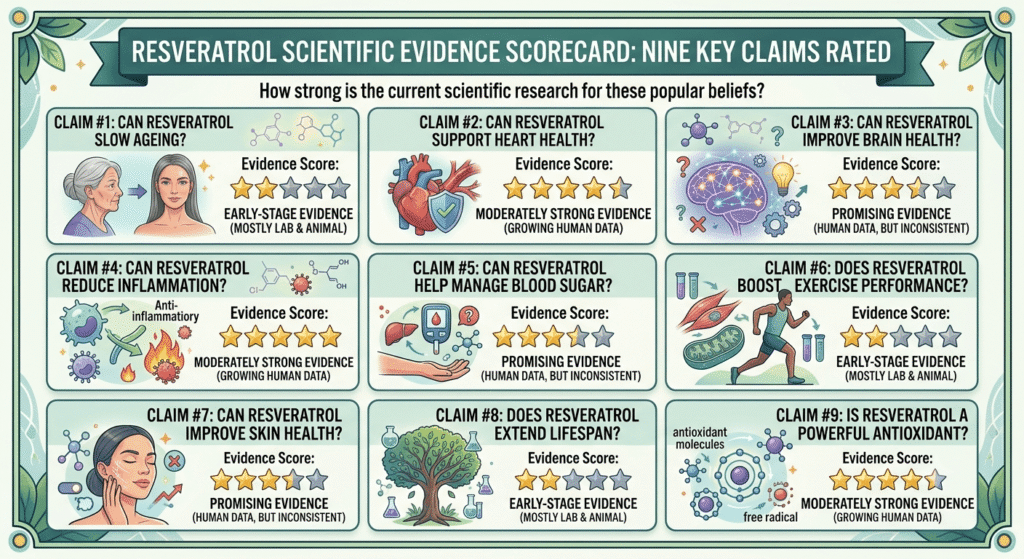
To make sense of the research, we’re using a simple Evidence Scorecard.
How the Evidence Score Works
⭐⭐⭐⭐⭐ Strong Human Evidence – Supported by multiple high-quality human studies.
⭐⭐⭐⭐☆ Moderately Strong Evidence – Positive findings, but more research is needed.
⭐⭐⭐☆☆ Promising Evidence – Encouraging results, though studies are limited or inconsistent.
⭐⭐☆☆☆ Early-Stage Evidence – Mostly laboratory or animal research.
⭐☆☆☆☆ Insufficient Evidence – Current research doesn’t support confident conclusions.
Let’s examine the biggest claims surrounding Resveratrol.
Claim #1: Can Resveratrol Slow Ageing?
Evidence Score
⭐⭐☆☆☆
Why This Claim Became Famous
Resveratrol Benefits entered the spotlight after laboratory studies suggested it might influence sirtuins, proteins involved in cellular maintenance, DNA repair, and energy metabolism.
In yeast, worms, and some animal models, researchers observed effects that sparked excitement about healthy ageing.
Headlines quickly transformed these findings into:
“Resveratrol slows ageing.”
But the human story is far more complicated.
What Human Studies Show
Clinical trials have explored whether Resveratrol can influence biomarkers associated with ageing, such as inflammation, oxidative stress, and metabolic function.
While some studies report modest improvements in these markers, there are currently no convincing evidence that Resveratrol Benefits slows biological ageing or extends human lifespan.
Practical Takeaway
Resveratrol remains one of the most promising compounds in longevity research—but promising isn’t the same as proven.
If you’re buying it solely to “live longer,” today’s evidence doesn’t justify that expectation.
Claim #2: Can Resveratrol Support Heart Health?
Evidence Score
⭐⭐⭐⭐☆
Why Researchers Became Interested
This question traces back to the French Paradox, where moderate red wine consumption was proposed as one possible explanation for unexpectedly low rates of heart disease in certain populations.
Since Resveratrol is naturally present in red wine, scientists investigated whether it could support cardiovascular health.
What the Research Suggests
Human studies indicate that Resveratrol may help support:
- Healthy endothelial function (the inner lining of blood vessels)
- Normal blood vessel flexibility
- Healthy inflammatory responses
- Protection against oxidative stress
Some research also suggests modest effects on blood pressure and cholesterol-related markers, although findings remain inconsistent.
Practical Takeaway
Among the many proposed benefits, cardiovascular health currently has some of the strongest human evidence, though Resveratrol should be viewed as a complement—not a replacement—for heart-healthy habits.
Claim #3: Can Resveratrol Improve Brain Health?
Evidence Score
⭐⭐⭐☆☆
Why This Matters
As populations age, maintaining memory and cognitive function has become a major focus of wellness research.
Scientists are investigating whether Resveratrol’s antioxidant and vascular effects might help support brain health.
What Studies Show
Several small human studies suggest Resveratrol may:
- Improve blood flow to certain regions of the brain
- Support aspects of memory performance
- Help maintain normal cognitive function
However, results are mixed, and many studies involve relatively small numbers of participants.
Importantly, there is no evidence that Resveratrol prevents or cures Alzheimer’s disease or other forms of dementia.
Practical Takeaway
Brain health remains a promising area of research, but stronger clinical evidence is still needed.
Claim #4: Can Resveratrol Reduce Inflammation?
Evidence Score
⭐⭐⭐⭐☆
Why It’s Being Studied
Chronic, low-grade inflammation has been linked to numerous age-related conditions.
Researchers have explored whether Resveratrol influences inflammatory signalling pathways, including those involving cytokines and oxidative stress.
Current Findings
Several clinical studies suggest Resveratrol may help reduce certain inflammatory biomarkers in specific populations.
However, the magnitude of these effects varies considerably between studies.
Practical Takeaway
Resveratrol benefits appears to have meaningful anti-inflammatory potential, though it’s best viewed as part of a healthy lifestyle rather than a standalone solution.
Claim #5: Can Resveratrol Help Manage Blood Sugar?
Evidence Score
⭐⭐⭐☆☆
Why Researchers Are Interested
Metabolic health plays a central role in healthy aging.
Researchers have investigated whether Resveratrol influences:
- Insulin sensitivity
- Glucose metabolism
- Cellular energy production
Human Evidence
Some clinical trials involving individuals with type 2 diabetes or metabolic syndrome have reported improvements in insulin sensitivity and fasting blood sugar markers.
Other studies found minimal or no significant effects.
Practical Takeaway
The evidence is encouraging but inconsistent.
Resveratrol should never replace prescribed diabetes treatment, and anyone with diabetes should consult their healthcare provider before adding supplements.
Claim #6: Does Resveratrol Boost Exercise Performance?
Evidence Score
⭐⭐☆☆☆
The Theory
Because Resveratrol may influence mitochondrial function and oxidative stress, researchers wondered whether it could improve endurance and recovery.
What Studies Show
Animal studies have produced encouraging results.
Human trials, however, have generally shown limited and inconsistent improvements.
For healthy athletes, current evidence doesn’t support Resveratrol as a reliable performance enhancer.
Practical Takeaway
If your primary goal is athletic performance, supplements such as Cordyceps or evidence-based sports nutrition strategies currently have stronger practical support.
Claim #7: Can Resveratrol Improve Skin Health?
Evidence Score
⭐⭐⭐☆☆
Why It’s Trending
The beauty industry has embraced Resveratrol because oxidative stress contributes to visible skin aging.
Researchers are exploring whether its antioxidant properties may help support skin health.
Current Research
Early studies suggest Resveratrol may help protect skin cells from oxidative damage and support collagen-related pathways.
Most evidence, however, comes from laboratory research or topical skincare studies rather than oral supplementation.
Practical Takeaway
Interesting research exists, but don’t expect oral Resveratrol supplements alone to dramatically transform skin appearance.
Claim #8: Does Resveratrol Extend Lifespan?
Evidence Score
⭐⭐☆☆☆
This Is the Biggest Question
If you’ve heard of Resveratrol benefits, you’ve probably heard this claim too.
Here’s the reality.
In several simple organisms, including yeast and certain animal models, researchers observed lifespan-related effects under specific experimental conditions.
Human studies have not demonstrated that Resveratrol extends lifespan.
Because ageing is influenced by countless biological, environmental, and lifestyle factors, proving lifespan extension in humans is extraordinarily difficult.
Practical Takeaway
This remains one of the most exciting—and most misunderstood—areas of longevity research.
At present, the claim is not supported by human evidence.
Claim #9: Is Resveratrol a Powerful Antioxidant?
Evidence Score
⭐⭐⭐⭐☆
The Science
This is one area where researchers generally agree.
Resveratrol benefits demonstrate antioxidant activity in laboratory studies and may help support the body’s natural defenses against oxidative stress.
However, modern research increasingly suggests that Resveratrol’s effects extend beyond simple antioxidant activity, influencing multiple cellular signalling pathways.
Practical Takeaway
Calling Resveratrol “just another antioxidant” understates its biological complexity.
The Reality Check: Why Scientific Headlines Can Be Misleading
One challenge with supplement research is that positive laboratory findings often receive far more media attention than cautious human trial results.
For example:
Laboratory Study
Resveratrol activates specific cellular pathways.
Media headline:
“Scientists discover anti-ageing miracle.”
The truth usually lies somewhere in between.
Responsible health decisions should rely on the total body of evidence, not a single exciting study.
Evidence Scorecard Summary
| Health Claim | Evidence Rating |
| Supports Heart Health | ⭐⭐⭐⭐☆ |
| Reduces Inflammation | ⭐⭐⭐⭐☆ |
| Antioxidant Activity | ⭐⭐⭐⭐☆ |
| Brain Health | ⭐⭐⭐☆☆ |
| Blood Sugar Support | ⭐⭐⭐☆☆ |
| Healthy Aging | ⭐⭐☆☆☆ |
| Exercise Performance | ⭐⭐☆☆☆ |
| Lifespan Extension | ⭐⭐☆☆☆ |
One pattern stands out:
Resveratrol benefits performs best where researchers measure biological markers—such as oxidative stress and vascular function—rather than dramatic outcomes like extending lifespan.
What Surprised Me Most While Reviewing the Research
One of the biggest surprises isn’t that Resveratrol has promising research.
It’s that many of its most famous claims are also its least proven.
The strongest evidence doesn’t support miracle anti-ageing promises.
Instead, it points toward something more realistic:
Resveratrol may help support several biological processes associated with healthy ageing—but it isn’t a shortcut to living longer.
That’s a much less sensational headline.
It’s also more honest.
Part 3: Buy Smarter – How to Choose a Resveratrol Supplement Without Falling for Marketing Hype
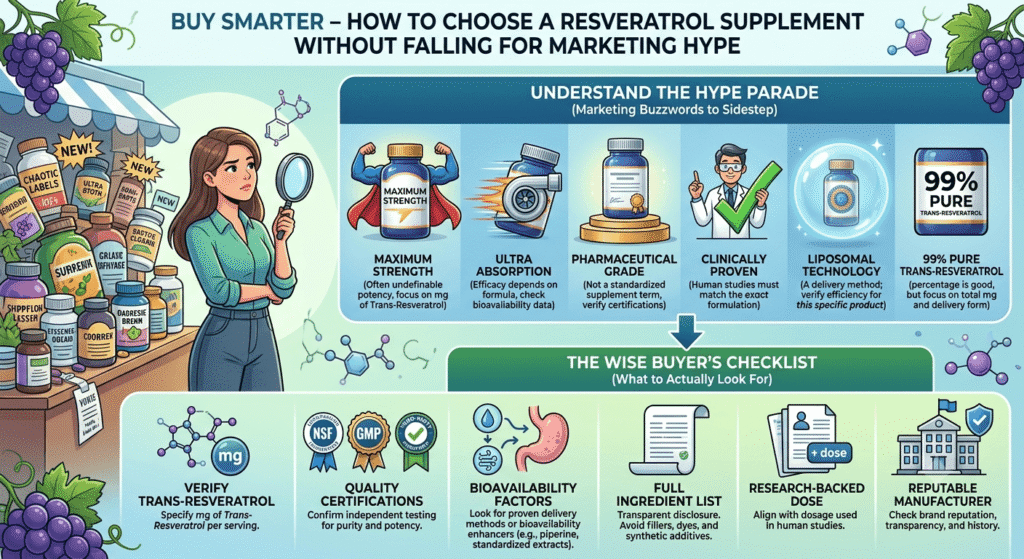 Imagine standing in the supplement aisle or scrolling through an online marketplace.
Within minutes, you’re faced with dozens of products claiming to be:
- “Maximum Strength”
- “Ultra Absorption”
- “Pharmaceutical Grade”
- “Clinically Proven”
- “Liposomal Technology”
- “99% Pure Trans-Resveratrol”
Some cost $15, while others exceed $90 for a month’s supply.
At first glance, they all appear to offer the same thing.
They don’t.
One of the biggest surprises when researching Resveratrol Benefits isn’t the science—it’s how differently products are manufactured.
Choosing a supplement based solely on price or marketing claims can leave you paying premium prices for features that may provide little practical benefit.
Let’s break down what actually matters.
The First Decision: What Form of Resveratrol Are You Buying?
Not all Resveratrol molecules are equally active.
This is one of the first details experienced supplement buyers check.
Trans-Resveratrol
This is the naturally occurring form that has been used in the majority of scientific research.
When clinical studies discuss Resveratrol Benefits, they’re usually referring to trans-Resveratrol.
Why it’s preferred
✔ Better studied in human research
✔ More biologically active than its counterpart
✔ Commonly used in quality supplements
Cis-Resveratrol
This form can develop when Resveratrol is exposed to light or certain processing conditions.
Compared with trans-Resveratrol, it has been studied far less.
Practical Advice
If a label doesn’t specify trans-Resveratrol, look more closely before purchasing.
Transparent brands typically highlight this information.
Where Does Supplement Resveratrol Come From?
Resveratrol isn’t manufactured out of thin air.
Manufacturers extract it from natural plant sources.
The two most common are:
Japanese Knotweed
Despite being considered an invasive plant in some regions, Japanese Knotweed has become the leading commercial source of supplemental Resveratrol.
Advantages:
- Naturally rich in Resveratrol
- Widely used in research-grade ingredients
- Cost-effective for manufacturers
Grape Extract
Some supplements derive Resveratrol from grape skins.
While grapes are the source most consumers recognize, they generally contain much lower concentrations than Japanese Knotweed.
Both sources can produce high-quality supplements when manufactured responsibly.
The important question isn’t which plant—it’s how well the extract is standardized and tested.
The Marketing Buzzword You Should Understand: Bioavailability
One criticism of Resveratrol has remained consistent across scientific studies:
It has relatively low bioavailability.
In simple terms, that means the body rapidly breaks down and processes much of the compound after consumption.
Researchers continue exploring ways to improve how much Resveratrol reaches the bloodstream.
This has inspired numerous product innovations—and plenty of marketing.
Liposomal Resveratrol: Breakthrough or Branding?
One increasingly popular option is liposomal Resveratrol.
Liposomal technology surrounds active ingredients with tiny fat-like particles called liposomes.
The idea is that these structures may improve absorption.
Sounds impressive.
But here’s the important distinction:
While liposomal delivery is scientifically plausible and used successfully for certain compounds, evidence specifically demonstrating superior long-term health outcomes for liposomal Resveratrol remains limited.
That doesn’t make these products ineffective.
It simply means consumers should avoid assuming that higher prices automatically translate into better results.
Does a Higher Dose Mean Better Results?
It’s easy to assume:
More milligrams = better supplement.
Not necessarily.
Clinical studies have evaluated a wide range of daily amounts, from relatively modest doses to much higher ones.
Researchers have not established one universally optimal dosage for every individual or every health goal.
More importantly:
Taking extremely large amounts doesn’t guarantee greater benefits.
A well-manufactured supplement with transparent labeling often matters more than chasing the highest number on the bottle.
Read the Label Like an Informed Consumer
The front of a supplement bottle is designed to attract attention.
The back label tells the real story.
Before buying, check for these details.
Botanical Source
Does the manufacturer clearly state where the Resveratrol comes from?
Examples include:
- Japanese Knotweed
- Grape-derived extract
Transparency is generally a positive sign.
Standardization
High-quality products often specify the percentage of active Resveratrol.
Rather than vague claims like:
“Premium Proprietary Blend”
look for clear information about the amount of trans-Resveratrol provided per serving.
Ingredient List
Shorter ingredient lists are often easier to evaluate.
Avoid products loaded with unnecessary fillers, artificial colors, or undisclosed proprietary blends.
You should know exactly what you’re taking.
Serving Size
Pay attention to:
- Amount per serving
- Number of capsules
- Daily recommended intake
Sometimes a low-priced bottle contains fewer effective servings than it first appears.
Third-Party Testing: One of the Strongest Quality Signals
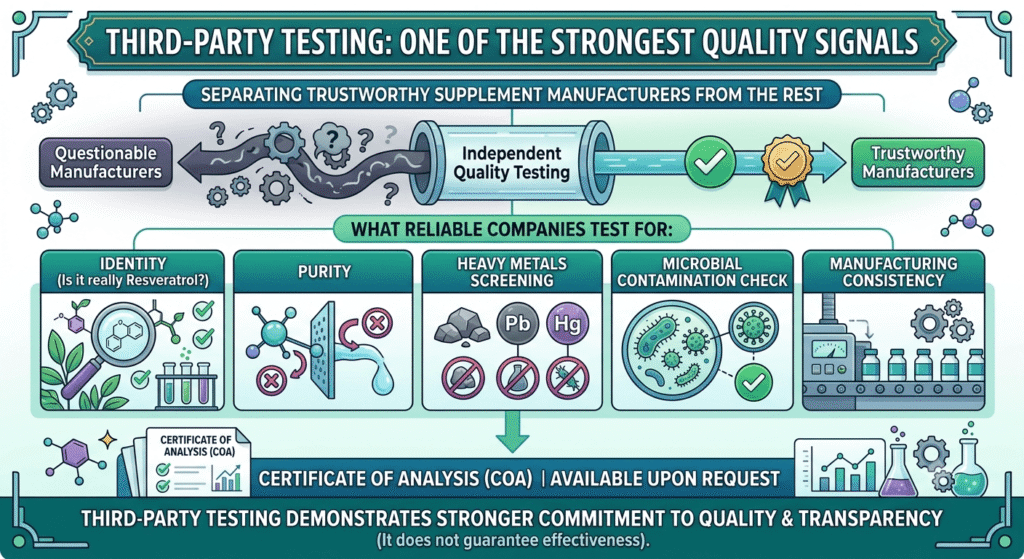 One of the easiest ways to separate trustworthy manufacturers from questionable ones is by looking for evidence of independent quality testing.
Reliable companies often test for:
- Identity (Is it really Resveratrol?)
- Purity
- Heavy metals
- Microbial contamination
- Manufacturing consistency
Some brands also make Certificates of Analysis (COAs) available upon request.
While third-party testing doesn’t guarantee effectiveness, it does demonstrate a stronger commitment to quality and transparency.
Five Marketing Tricks Worth Questioning
Supplement companies compete in a crowded market.
Unfortunately, that sometimes leads to exaggerated advertising.
Here are five claims worth approaching with healthy skepticism.
“Clinically Proven”
Ask yourself:
Clinically proven to do what?
One small study isn’t the same as overwhelming scientific consensus.
“Anti-Aging Miracle”
No dietary supplement has been proven to stop or reverse human aging.
Be cautious whenever products promise extraordinary outcomes.
“Doctor Recommended”
Which doctor?
How many?
Is there independent evidence?
Specific details matter more than vague endorsements.
“Maximum Strength”
This often refers only to the amount of an ingredient—not its quality or effectiveness.
“Exclusive Formula”
Sometimes this means genuine innovation.
Sometimes it’s simply another way of describing a proprietary blend that reveals very little.
Who Probably Doesn’t Need Resveratrol?
One question surprisingly few supplement websites ask is:
“Who might not benefit from buying this?”
Here are a few situations where Resveratrol may not deserve top priority.
If your primary goal is stress management
Evidence for Ashwagandha is generally stronger in this area.
If your focus is joint discomfort and inflammation
Curcumin has been studied more extensively for musculoskeletal health.
If you’re looking for digestive wellness
Supplements like Triphala or Psyllium Husk are likely to align more closely with your goals.
If you’re already eating a nutrient-rich diet and have no specific longevity goals
The additional benefit of supplementation may be less clear.
This doesn’t mean Resveratrol lacks value—it simply highlights the importance of matching supplements to your personal health priorities rather than following trends.
The Smart Buyer’s Checklist
Before purchasing a Resveratrol supplement, run through this quick checklist.
✅ Does the label clearly specify trans-Resveratrol?
✅ Is the botanical source identified?
✅ Does the manufacturer disclose the amount per serving?
✅ Has the product undergone third-party testing?
✅ Are the health claims realistic rather than sensational?
✅ Is the ingredient list straightforward and transparent?
If you answered “yes” to all six questions, you’ve significantly improved your chances of choosing a quality product.
One Thing Experienced Supplement Users Understand
The most expensive supplement isn’t always the best.
Likewise, the cheapest option isn’t always poor quality.
Experienced buyers focus on transparency, evidence, and manufacturing standards rather than flashy packaging or celebrity endorsements.
In the long run, those factors are far more likely to influence product quality than marketing slogans.
Part 4: Should You Actually Take Resveratrol? A Practical Guide to Making the Right Decision
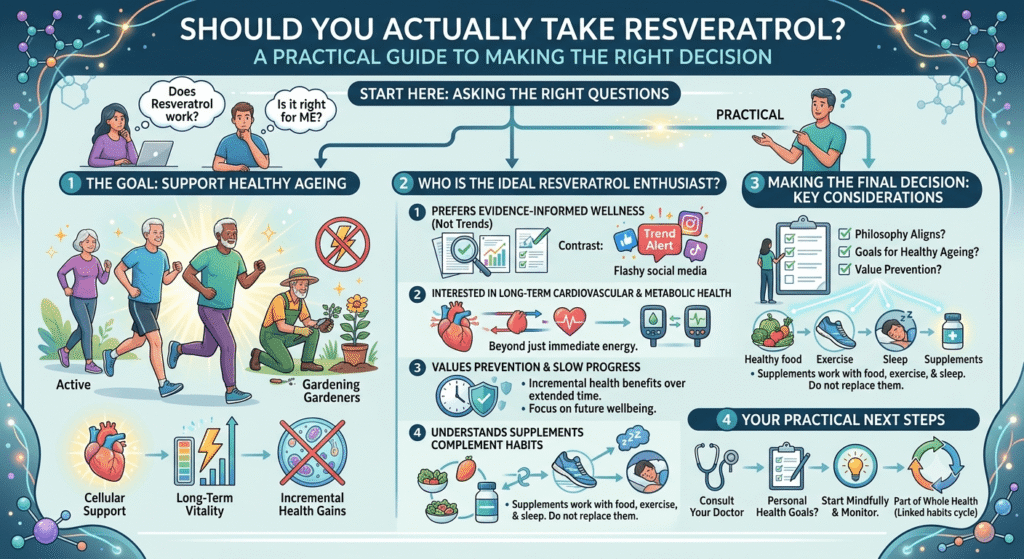 You’ve reached the end of this guide, but perhaps the most important question is still unanswered.
Not:
“Does Resveratrol work?”
We’ve already explored what the research says.
The better question is:
“Does it make sense for someone like me?”
This subtle shift changes everything.
Too many supplement websites try to convince every visitor to buy the product they’re discussing. That’s not how informed health decisions should work.
A supplement isn’t “good” simply because it’s popular or heavily researched. It’s valuable only if it aligns with your health goals, expectations, lifestyle, and medical circumstances.
Let’s make that decision together.
A Simple Decision Framework
Instead of asking whether Resveratrol is the “best” supplement, start by asking:
What am I hoping to achieve?
Goal: Support Healthy Ageing
Resveratrol may be worth considering.
Much of the scientific interest in Resveratrol benefits focuses on cellular health, oxidative stress, and biological pathways associated with ageing.
If your long-term wellness strategy includes nutrition, exercise, quality sleep, and preventive healthcare, Resveratrol may fit naturally into that approach.
Notice the wording:
Support healthy ageing.
Not reverse it.
Goal: Improve Heart Health
Possibly—but don’t rely on supplements alone.
Among Resveratrol’s researched benefits, cardiovascular support has some of the strongest human evidence.
That said, no supplement can replace:
- Regular physical activity
- A heart-healthy eating pattern
- Blood pressure management
- Cholesterol management
- Smoking cessation
Think of Resveratrol Benefits as a possible addition to healthy habits—not a substitute for them.
Goal: Boost Daily Energy
Resveratrol probably shouldn’t be your first choice.
Although it’s involved in research on cellular energy, most people looking for more noticeable improvements in vitality may find that other supplements better align with that goal.
You may prefer exploring:
- Shilajit for cellular energy
- Ginseng for mental and physical vitality
- Cordyceps for endurance-focused wellness
Choosing the right supplement often matters more than choosing the most popular one.
Goal: Reduce Everyday Stress
Resveratrol isn’t primarily studied for stress management.
If your biggest challenge is feeling overwhelmed or mentally exhausted, Ashwagandha currently has stronger evidence in this area.
That’s why understanding your objective before shopping can save both time and money.
Goal: Support Joint Comfort
While Resveratrol has anti-inflammatory properties, Curcumin has been investigated more extensively for joint-related concerns.
Again, matching the supplement to your goal is the smarter strategy.
Who Is Most Likely to Appreciate Resveratrol Benefits?
After reviewing the evidence, Resveratrol Benefits may appeal most to people who:
- Prefer evidence-informed wellness rather than trend-driven supplements.
- Are interested in supporting long-term cardiovascular and metabolic health.
- Value prevention and healthy ageing over quick results.
- Understand that supplements complement healthy habits—they don’t replace them.
In other words, Resveratrol tends to attract people thinking about where they’ll be in ten years, not just how they’ll feel tomorrow morning.
Who Should Be More Cautious?
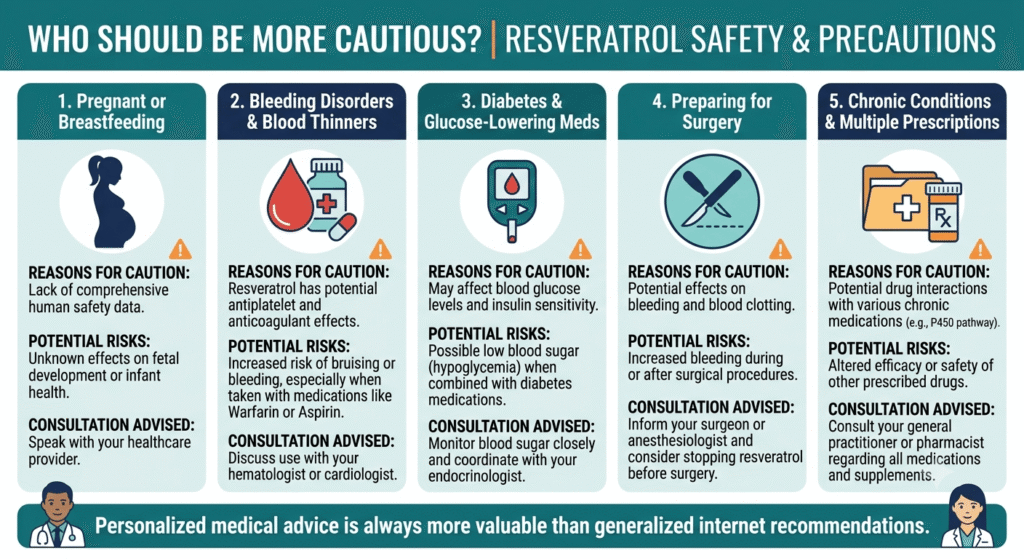 Even well-studied supplements aren’t appropriate for everyone.
Before taking Resveratrol, speak with a qualified healthcare professional if you:
- Are pregnant or breastfeeding.
- Have a bleeding disorder.
- Take blood-thinning medications.
- Have diabetes or use glucose-lowering medication.
- Are preparing for surgery.
- Have a chronic medical condition requiring ongoing treatment.
- Take multiple prescription medications.
Natural compounds can still interact with medications and medical conditions.
Personalized medical advice is always more valuable than generalized internet recommendations.
Possible Side Effects
Most human studies suggest that Resveratrol is generally well tolerated when used as directed.
However, some individuals may experience:
- Mild digestive discomfort
- Nausea
- Headache
- Temporary stomach upset
These effects are usually mild, but if symptoms persist or worsen, discontinue use and consult a healthcare professional.
Three Common Myths About Resveratrol
Let’s clear up a few misconceptions that continue circulating online.
Myth #1: Drinking Red Wine Gives You Enough Resveratrol
Not really.
While red wine naturally contains Resveratrol, the amount is relatively small and varies widely depending on grape variety and production methods.
Increasing alcohol intake isn’t an evidence-based strategy for obtaining Resveratrol.
Myth #2: More Is Always Better
Higher doses don’t automatically produce better outcomes.
Many biological processes follow a point of diminishing returns.
The goal isn’t to take the most Resveratrol possible.
It’s to choose a high-quality product used responsibly within a healthy lifestyle.
Myth #3: Resveratrol Is a Proven Anti-Aging Cure
supplement has demonstrated the ability to stop or reverse human aging.
Resveratrol remains one of the most promising compounds in longevity research—but promising science should never be confused with established fact.
How Does Resveratrol Benefits Compare with Other Wellness Supplements?
One reason supplement shopping becomes confusing is that many products claim to support “overall health.”
Here’s a simpler way to think about it.
| If Your Main Goal Is… | Consider Learning About… |
| Healthy aging & cellular wellness | Resveratrol |
| Cellular energy & mitochondrial support | Shilajit |
| Stress resilience | Ashwagandha |
| Physical & mental vitality | Ginseng |
| Exercise endurance | Cordyceps |
| Inflammation & joint support | Curcumin |
| Digestive wellness | Triphala or Psyllium Husk |
Notice that these supplements aren’t competitors.
They’re tools designed for different purposes.
Understanding that distinction helps you build a wellness routine based on your needs—not marketing trends.
Frequently Asked Questions
Q1. Can I take Resveratrol every day?
Many commercial supplements are formulated for daily use. Always follow the manufacturer’s directions and consult a healthcare professional if you have medical conditions or take prescription medications.
Q2. Is food enough?
Foods like grapes, blueberries, cranberries, peanuts, and pistachios naturally contain Resveratrol.
A nutrient-rich diet provides many beneficial plant compounds, although supplemental doses are typically much higher than dietary intake.
Q3. Should younger adults take Resveratrol and avail Resveratrol Benefits ?
Most longevity research focuses on healthy aging rather than treating disease.
Whether supplementation is appropriate depends on individual goals, health status, and guidance from a healthcare professional.
Q4. Can I combine Resveratrol with other supplements?
Some products combine Resveratrol with ingredients such as quercetin or CoQ10.
If you’re new to supplementation, beginning with a single-ingredient product can make it easier to evaluate how you respond before adding more complex formulations.
How We Research Our Content
At AYURVEDA-SB, we believe readers deserve more than recycled marketing claims.
Every article follows the same editorial principles:
We Review Scientific Evidence
We evaluate peer-reviewed human clinical trials, systematic reviews, and respected scientific literature whenever available.
We Respect Traditional Knowledge
Historical use provides valuable context, but tradition alone isn’t treated as proof of effectiveness.
We Separate Evidence from Marketing
When research is preliminary, we say so.
When evidence is strong, we explain why.
And when claims are exaggerated, we don’t repeat them simply because they’re popular.
Our goal isn’t to persuade you to buy supplements.
Our goal is to help you make informed decisions.
Final Verdict: Does Resveratrol Deserve Its Reputation?
Few supplements have generated as much excitement—or as much misunderstanding—as Resveratrol Benefits.
Its story began with observations about red wine, expanded through fascinating laboratory discoveries, and continues today in the rapidly evolving field of longevity research.
Along the way, headlines often promised more than the evidence could support.
The reality is both more modest and more meaningful.
Resveratrol isn’t a miracle molecule.
It won’t stop ageing.
It won’t replace exercise, nutritious food, or quality sleep.
But it has earned scientific attention because researchers continue to uncover ways it may support cardiovascular health, oxidative balance, inflammation, and cellular function.
That’s a respectable achievement—even if it’s less sensational than the marketing suggests.
If your goal is to invest in long-term wellness with realistic expectations and an evidence-informed mindset, Resveratrol may be a worthwhile conversation to have with your healthcare provider.
The smartest wellness decisions aren’t driven by hype.
They’re built on curiosity, critical thinking, and consistency.
And that’s exactly how longevity should be approached.
Medical Disclaimer
This article is intended for educational and informational purposes only and should not be considered medical advice. It is a dietary supplement, not a medicine, and it is not intended to diagnose, treat, cure, or prevent any disease. Scientific research is ongoing, and individual responses may vary. Always consult a qualified healthcare professional before starting any new supplement, especially if you are pregnant, breastfeeding, have kidney disease, iron overload disorders, diabetes, cardiovascular conditions, or take prescription medications.
Continue Your Ayurveda Wellness Journey
If you found this guide helpful, explore other evidence-based articles in our Ayurveda Wellness Journey:
Related Ayurvedic Wellness Articles
Ashwagandha Benefits: Uses, Dosage, Side Effects & More
Shilajit Benefits: Science, Uses, Safety & How to Choose the Best Supplement